
Spring air duct cleaning makes sense in Central Texas because your ducts have been collecting dust all winter, and pollen season and the first long stretches of AC are about to push that buildup through every room. Once the system runs daily, anything sitting in the ducts gets blown into the air your family breathes, which matters most if someone has spring allergies or there’s a baby in the house. Waiting until the heat arrives means cleaning while the system is working hardest, so the best moment is just before that. The real question is whether your ducts show signs of buildup now, and which local cleaner you trust to do the job properly.
Is Spring the Right Time for Air Duct Cleaning?
Spring is an ideal window because your ducts sit at the intersection of winter dust accumulation and the heavy pollen season that precedes full AC operation.
- Winter dust and debris settle in ductwork while heating systems run at lower, intermittent cycles.
- Spring pollen counts in Central Texas rank among the highest in the country, filling ducts with allergens.
- Cleaning before peak AC season prevents months of recirculated contaminants from entering living spaces.
- Families with allergies or infants benefit most from clearing ducts before daily cooling begins.
The timing matters because once the intense Texas heat arrives and air conditioning becomes a constant, the system operates too frequently to allow for thorough cleaning without disrupting comfort. Spring offers a practical window, typically March through May, where temperatures fluctuate enough that a day without HVAC use for cleaning remains manageable. For homeowners looking to understand the full process, a comprehensive guide to air duct cleaning explains what to expect from start to finish.
Why Spring Puts Extra Stress on Your Ducts and Your Allergies
Central Texas spring brings a convergence of irritants that your ducts absorb right as your cooling system ramps up. The pollen situation in Austin is unique, with cedar, oak, and ragweed allergens each taking their turn filling the air. These particles enter homes through doors, windows, and clothing, eventually settling inside ductwork. When you flip that thermostat to cooling for the first long stretch, all that trapped material moves into your living areas.
The transition from heating to cooling creates problems beyond simple dust accumulation. Systems that sat relatively dormant during mild winter days undergo stress when they suddenly run for extended periods. The temperature differential inside ducts can cause condensation, especially if insulation is poor, creating a welcoming environment for mold spores that activated during spring rains. The advantages of proper duct cleaning become obvious once you see what actually built up over winter and how it affects your family’s breathing.
- Pollen enters through open windows and doors during приятный spring weather before AC season locks everyone inside.
- Dust from winter heating settles in ducts and mixes with new pollen creating a complex contaminant layer.
- Spring humidity fluctuations cause condensation inside ductwork that can encourage mold growth.
- AC systems running full-time after being idle circulate accumulated debris throughout the home.
- Families returning to indoor activities after mild winter days breathe more recirculated air carrying these contaminants.
Anyone living in Austin knows the spring air carries a visible haze some days. That same haze coats your car, your porch furniture, and inevitably your air ducts. For households with children, the elderly, or anyone with respiratory sensitivities, this invisible load inside the ductwork translates to sneezing, congestion, and poor sleep just as the weather turns beautiful outside.
Signs Your Ducts Need Attention Before the Heat Arrives
Certain situations make duct cleaning necessary regardless of the calendar, but spring makes these signs more noticeable as you start using your cooling system more frequently. Recognizing these indicators early prevents weeks of breathing contaminated air once AC becomes constant.
Homeowners often mistake allergy symptoms for outdoor pollen when the real culprit sits inches from where the air enters their rooms. Ducts that have never been cleaned, or were cleaned years ago, accumulate a surprising amount of material. One local homeowner recently described finding construction debris from a renovation done three owners ago, meaning they had been breathing that dust for years without knowing it was there.
- Visible dust or dark lines forming around supply registers and vent grilles indicate airflow pushing buildup outward.
- A noticeable musty or stale odor when the AC first starts suggest mold or bacteria in the ductwork.
- Recent home renovation projects, especially drywall work or flooring, generated fine dust that entered the HVAC system.
- Purchasing a new home with no service history means ducts could contain decades of the previous owners’ accumulation.
- Family members experience unexplained allergy symptoms, headaches, or congestion that improve when away from home.
- Visible mold growth on vent covers, around registers, or near the air handler signals a moisture problem requiring attention.
These signs do not mean you need to panic, but they do suggest scheduling an inspection. The benefits of regular residential duct cleaning extend beyond just allergy relief, including improved system efficiency and reduced dusting requirements around the house.
What a Spring Duct Cleaning Visit Looks Like, Step by Step
Knowing what to expect from professional air duct cleaning helps you prepare your home and understand the value of the service. A legitimate cleaning follows a structured process designed to remove contaminants without spreading them into your living space.
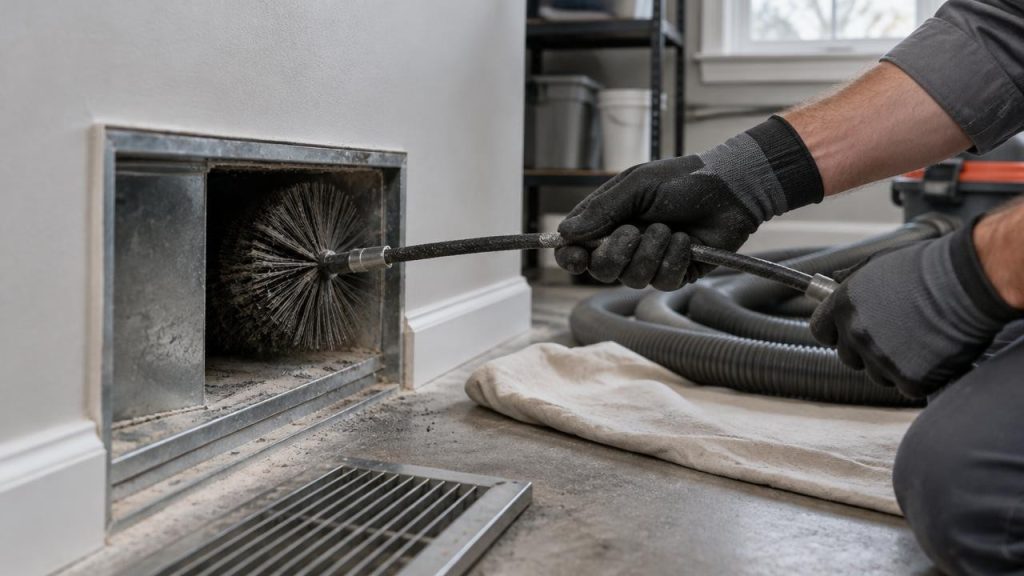
Technicians arrive equipped with tools the average homeowner does not own or rent. The process typically begins with protecting your floors and furniture near access points, then moves through the system methodically. The goal is agitating debris so the vacuum equipment can capture it before it ever reaches the air you breathe.
- Inspection and Assessment Technicians use inspection cameras to view inside the ductwork, identifying contamination levels, blockages, or damage that needs addressing before cleaning.
- System Preparation and Access The team creates access points in the ductwork as needed and seals off supply and return registers to create negative pressure so debris flows toward the vacuum collection system.
- Agitation and Cleaning Using rotating brushes, air whips, or compressed air nozzles, technicians dislodge debris from duct walls while high-powered vacuum equipment extracts the material.
- Final Inspection and System Reset After cleaning main trunk lines, branch runs, registers, and grilles, technicians reseal access points, remove equipment, and perform a final camera inspection to confirm results.
The entire process depends heavily on the equipment quality and the thoroughness of the technicians. Some companies also offer optional sanitizing treatments to inhibit mold and bacterial growth, which matters particularly in humid climates. However, sanitizing should follow thorough physical cleaning, not replace it.
How to Choose a Duct Cleaner in Austin and Central Texas
Finding a trustworthy duct cleaner in the Austin area means looking beyond the lowest advertised price and evaluating whether a company follows industry standards and understands local conditions. Central Texas homes face specific challenges, from cedar fever allergens to the humidity swings of spring storms, and a local company features technicians who understand those conditions intimately.
A family-owned business typically relies on reputation more than advertising budget. Their technicians often live in the same communities they serve, giving them an incentive to provide thorough service rather than cutting corners for volume. When researching air duct cleaning in Austin, TX, apply the same scrutiny you would for any service entering your home.
- Confirm technicians follow standards established by organizations like NADCA (National Air Duct Cleaners Association) for equipment and methods.
- Ask whether the company performs a camera inspection before quoting a price so you understand the actual scope.
- Verify the business carries proper licensing and insurance to protect your home during the service visit.
- Request references or check reviews that specifically mention thoroughness, cleanup, and professionalism of the team.
- Avoid companies using bait-and-switch pricing or guaranteeing results like allergy cures or energy savings percentages.
Be wary of coupons offering impossibly low prices for whole-home duct cleaning. Legitimate service requires time, proper equipment, and trained technicians. Cheap offers often lead to rushed work, surprise upcharges, or services you did not actually need.
Spring Air Duct Cleaning FAQs
Can I clean my air ducts myself before spring allergy season?
No, effective duct cleaning requires professional equipment most homeowners lack. Consumer-grade vacuums and brushes cannot generate the airflow or agitation needed to remove debris from deep inside ductwork. DIY attempts often dislodge dust without capturing it, making indoor air quality worse. Professionals use truck-mounted or portable systems designed specifically for this task.
Is spring duct cleaning worth it if nobody in my home has allergies?
Yes, cleaning still provides value beyond allergy symptom reduction. Dust accumulation affects HVAC system efficiency and creates more household dust requiring frequent cleaning. Families with schedule a duct cleaning appointments often notice improved airflow and reduced odors. The service protects your equipment investment and reduces the dust circulated throughout your home.
Is duct cleaning safe to schedule when I have a baby at home?
Yes, with proper precautions. Professional duct cleaning uses containment methods that prevent debris from entering living spaces. Technicians seal registers and use negative pressure systems. Parents should keep the baby in a room farthest from the work area or arrange for them to be out during the service. The result is cleaner air for a developing respiratory system.
Should I clean my ducts after a spring renovation project?
Yes, renovation debris frequently enters HVAC systems during construction work. Drywall dust, sawdust, and particulate matter from flooring work travel through air returns and settle in ductwork. Running the AC after renovation circulates these fine particles throughout the home. Cleaning removes construction byproducts that regular HVAC filters cannot catch completely.
Will duct cleaning get rid of mold I can see around my vents?
No, cleaning alone does not solve mold problems permanently. Visible mold indicates a moisture issue that must be addressed first. Cleaning removes existing mold but without fixing the underlying humidity or leak source, mold can return. After addressing the moisture, sanitizing treatments may help inhibit regrowth. Professional inspection determines whether mold remediation steps are needed before duct cleaning.
What should I do besides duct cleaning to keep spring pollen out of my HVAC system?
Regular maintenance including filter changes and system checks provides the best defense. Use high-quality filters rated for pollen and change them monthly during heavy allergy season. Keep windows closed during high pollen days. Consider adding a UV light system to the air handler to reduce biological growth. These steps work together to protect your indoor air quality throughout spring and beyond.