
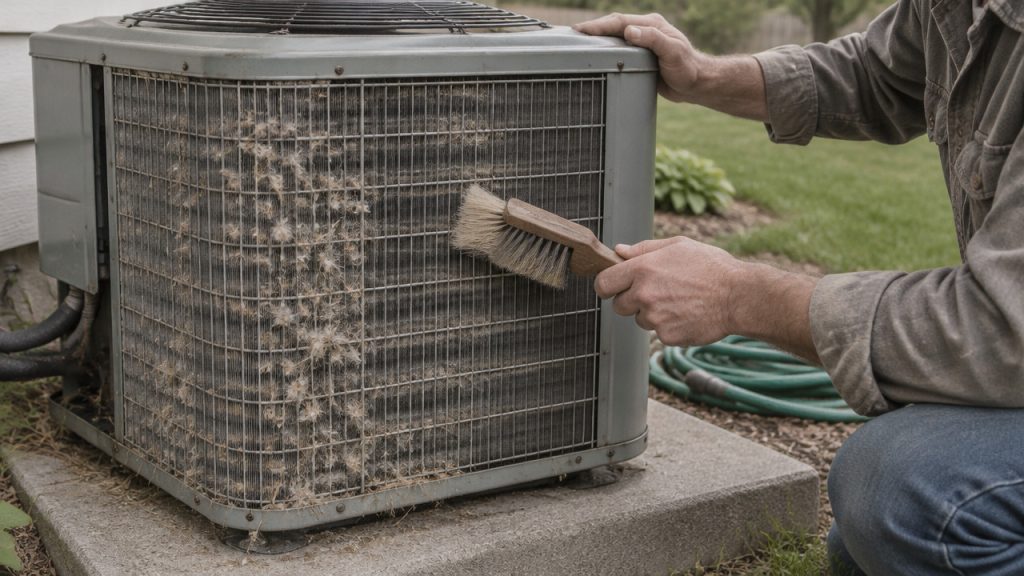
To clean a central air unit, follow the path the air takes: the outdoor condenser, the filter, the indoor coil and condensate drain line, and finally the ducts. A hose, a soft brush and routine air filter replacement cover the first two stops, which is most of everyday central air conditioner maintenance. The evaporator coil and the ducts sit behind panels and walls, and that is where dust, moisture and mold tend to collect, a real concern in a home with allergies or a baby. So the decision comes down to where your own Saturday project ends and a professional visit begins.
How Do You Clean a Central Air Unit? The Short Version
Cleaning a central air unit means clearing debris from the outdoor condenser, swapping the filter, flushing the drain line, and knowing when the indoor coil and ductwork need professional attention. Homeowners can safely handle the exterior cleaning and basic maintenance, while internal components require specialized tools and training.
- The outdoor condenser fins need gentle rinsing with a garden hose, not high pressure.
- Air filter replacement should happen every one to three months for proper airflow.
- The condensate drain line benefits from occasional flushing with a mild solution.
- Evaporator coil cleaning requires chemical agents and access behind the service panel.
- Air duct cleaning demands professional-grade vacuum equipment to avoid releasing dust.
Before You Start: Safety Steps and Supplies
Before reaching for a single tool, cut the power. This is the one step you cannot skip. Turn the thermostat to “off,” then find the breaker for both the indoor air handler and the outdoor condenser and switch those off too. Capacitors inside AC units hold a charge even after power is cut, so treat every component as if it is live. Once the power is safely disabled, gather your supplies so you are not running back and forth to the garage.
A successful DIY session only requires a short list of items. You will need a soft brush (a standard toilet brush or a dedicated fin brush works well), a garden hose with a spray nozzle, a fin comb for straightening bent fins, a shop vacuum, a bottle of mild coil cleaner and a basic screwdriver. You can find most of these at any hardware store in the Austin area. For a deeper dive into what lurks inside your ductwork, check out our homeowner’s guide to effective duct cleaning.
- Soft brush: for sweeping loose debris from the condenser fins without bending them.
- Garden hose: for rinsing the outdoor unit on a gentle spray setting.
- Fin comb: a plastic tool designed to straighten bent aluminum fins carefully.
- Shop vacuum: for sucking up leaves and debris inside the condenser cabinet.
- Mild coil cleaner: a foam or spray detergent formulated for outdoor AC use.
- Screwdriver: for removing access panels and guard grilles safely.
Central Texas weather is tough on equipment. Between the oak pollen in spring, the cottonwood fluff in early summer, and the constant dust kicked up by dry spells, the outdoor condenser takes a beating. Having the right supplies ready makes it easier to give the unit the attention it needs without turning a simple cleaning into an all-day ordeal.
How to Clean Your Central Air Unit, Step by Step
Once the power is off and your supplies are ready, start with the outdoor unit and work your way inside. The goal here is to remove the visible contamination that restricts airflow and forces the system to work harder than it should. Austin’s particular blend of pollen, cedar and cottonwood means the outdoor cabinet often looks like a lint trap by mid-summer, so a thorough cleaning can make a noticeable difference in performance.
- Clear the area around the condenser. Remove any leaves, branches, or debris within a two-foot radius of the unit. Trim back shrubs or plants so the unit has breathing room.
- Remove the outer grille and fan guard. Use your screwdriver to take off the top grille carefully. This gives you access to the inside of the cabinet and the fan blades.
- Vacuum loose debris from the cabinet interior. Use the shop vacuum to suck out leaves, grass clippings, and dirt that have settled at the bottom of the unit near the compressor.
- Brush the condenser fins gently. Sweep vertically along the fins with your soft brush to knock dust loose. Do not brush horizontally or you risk bending the delicate aluminum fins.
- Straighten any bent fins. Carefully run a fin comb up and down the fins to realign bent sections. This restores proper airflow through the coil.
- Rinse the unit with a garden hose. Spray from the inside out if possible, or gently wash the exterior fins with a steady stream. Never use a pressure washer, which can flatten fins.
- Check and replace the indoor air filter. Locate the filter rack on the indoor air handler or return duct. Pull the old filter, check its condition, and slide in a fresh one with the airflow arrow pointing toward the unit.
This sequence covers the parts of the system that are safe and straightforward for a homeowner to address. For the parts you cannot reach, scheduling professional air duct cleaning ensures the rest of the system gets the same level of care without risking damage to sensitive components.
What DIY Cleaning Can’t Reach: Coils, Ducts and Hidden Buildup
The DIY steps keep the outdoor unit breathing and the filter fresh, but the real trouble spots often hide deep inside. The evaporator coil sits inside the indoor air handler, usually in a closet, attic, or basement. As warm air passes over this cold coil, moisture condenses and drips into a pan. That moisture, combined with the dust that slips past even a good filter, creates a sticky surface where mold and biological growth can take hold. A homeowner cannot easily access this coil without specialized tools and chemical cleaners.
Beyond the unit itself, the ductwork runs behind walls and ceilings. Dust settles there over years of operation, and if that dust gets damp from high humidity or a leaky duct connection, it becomes a problem you cannot see. Professionals use camera inspections to verify the condition inside the ducts before applying high-powered vacuum equipment and aggressive brushing tools.
| Task | DIY Approach | Professional Service |
|---|---|---|
| Condenser Exterior | Hose rinse, fin brushing | Chemical coil cleaning |
| Air Filter | Monthly replacement | High-efficiency upgrades |
| Condensate Drain | Vinegar/bleach flush | High-pressure vacuuming |
| Evaporator Coil | Visual check only | Deep chemical cleaning |
| Air Ducts | Vent wiping | HEPA vacuum extraction |
| Blower Motor | No access | Cleaning and inspection |
Homeowners often wipe down the vent registers and assume the ducts are clean, but that only touches the tip of the iceberg. The buildup happens further down the line, where a simple vacuum hose cannot reach. For a full picture of what might be hiding, learn more about deep cleaning your air ducts. A professional team applies negative pressure to the entire system, ensuring that dust and debris are pulled out rather than blown back into your living spaces.
Signs Your System Needs More Than a Wipe-Down
Sometimes a cleaning is just maintenance, and sometimes it is a response to a developing issue. Knowing the warning signs can help you decide when to call in a professional. If you spot visible mold growth near the vents, on the evaporator coil, or around the drip pan, the humidity balance inside the system is off. Mold spores circulate through the home every time the AC kicks on, which is a particular concern for anyone with respiratory sensitivities.
A persistent musty or “dirty sock” smell when the air starts blowing is another red flag. That odor often means biological growth on the coil or drain pan. Heavy dust accumulation around the supply vents specifically dark, fuzzy dust clinging to the vent edges indicates the duct walls are saturated and pushing particles into your rooms. If your allergies seem worse indoors than outdoors, or you find yourself dusting furniture more frequently despite regular filter changes, the system might be recirculating contaminants. If you are moving into a newly built home or one that had recent renovations, construction dust has likely found its way into the ductwork. A professional cleaning gives you a fresh start and prevents that fine drywall dust from circulating indefinitely.
- Visible mold: Black or greenish spots on vent registers, the evaporator coil, or drain pan.
- Musty odors: A stale or dirty-sock smell when the AC first turns on.
- Dusty vents: Dark debris buildup on supply vent grilles or ceiling surfaces near openings.
- Worsening allergies: Household members sneezing or congested indoors.
- Post-renovation: Fine dust filling the home after recent construction or remodeling work.
These symptoms suggest that a simple filter change will not solve the problem. For more guidance on identifying these warnings, review our article on the top signs your air ducts need cleaning. Addressing the root cause improves air quality and protects the equipment from long-term strain.
Central Air Cleaning FAQs
Can I spray my AC unit with a pressure washer?
No. A pressure washer creates a focused jet that can easily crush the delicate aluminum fins on your outdoor condenser. Bent fins block airflow and reduce efficiency. Use a garden hose on a gentle spray setting instead.
Is it okay to clean the condenser while the system is running?
No. You must turn off power at the thermostat and the breaker before cleaning. Working on a running system risks electrical shock, damage to the fan blade, or injury from moving parts. Safety first, always.
Does cleaning my AC help with allergies or a baby’s nursery air?
Yes. A clean system with a fresh filter captures more dust, pollen, and particulates before they circulate through the nursery. To understand the deeper connection between system cleanliness and family health, read our guide on how duct cleaning affects indoor air quality and health.
What is the white or musty smell coming from my vents after cleaning?
It depends. A slight odor can occur if residue from coil cleaner remains, but a strong musty smell often indicates microbial growth. If the smell persists longer than a few hours, have a professional inspect the coil and drain pan.
Should I clean the ducts and the AC unit on the same visit?
Yes. Scheduling both services together often makes sense. Cleaning the coil and then immediately cleaning the ducts ensures the entire air path is clear, preventing dust from settling back into the system.
Can I use bleach or vinegar in the condensate drain line?
Yes. Pouring a cup of white vinegar or a diluted bleach solution down the drain line can help clear mild algae buildup. Use this method once a year as preventive maintenance, but do not use it if the drain is fully clogged.