
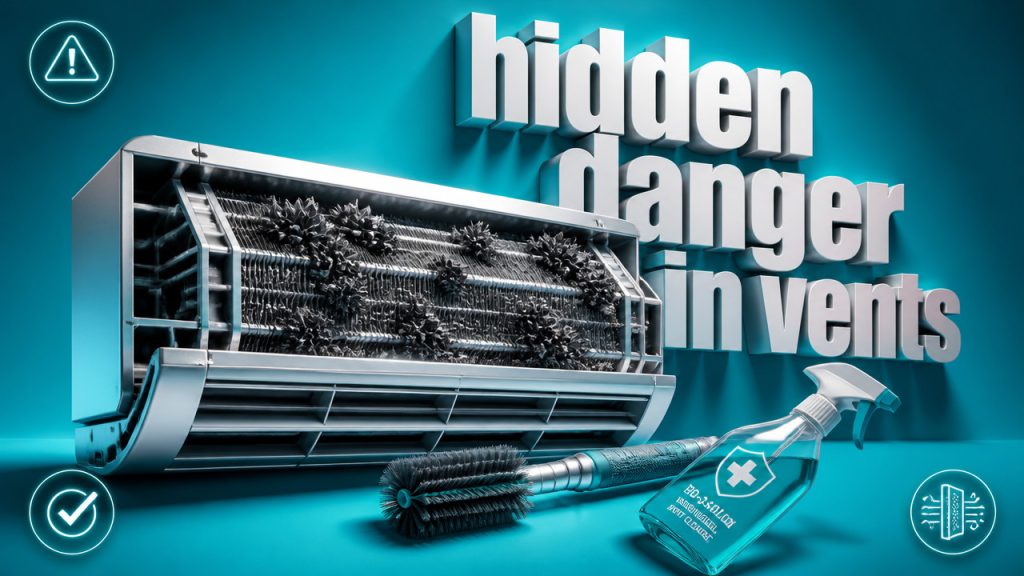
Mold in your AC vents isn’t just unsightly it’s a direct threat to your family’s respiratory health, particularly dangerous in Central Texas where humidity levels create ideal fungal breeding grounds. This comprehensive guide walks you through professional-grade mold removal techniques used by HVAC specialists in Austin, from identifying contaminated vents to implementing permanent prevention strategies that stop spores before they colonize. You’ll learn the exact cleaning protocols, safety equipment requirements, and when DIY crosses into territory requiring certified remediation.
Quick Answer: Three-Phase Mold Removal Protocol for AC Vents
Learning how to clean mold from AC vents requires a systematic approach that prioritizes containment, removal, and prevention. Rushing this process often spreads spores deeper into your HVAC system, turning a minor annoyance into a whole-house contamination event. The National Air Duct Cleaners Association (NADCA) recommends a specific sequence for effective professional duct mold cleaning that minimizes exposure while maximizing removal efficacy.
Professional remediation follows a strict protocol because disturbing mold colonies without proper containment releases millions of microscopic spores into your living space. These spores can colonize new areas within 24 to 48 hours, particularly in Austin’s moisture-rich environment. Before you grab a spray bottle and start scrubbing, understand the three-phase methodology that keeps your family safe.
- Phase 1: Isolation and Containment
- Turn off the HVAC system completely to prevent spore circulation
- Seal the vent opening with plastic sheeting and painter’s tape
- Create a negative air pressure environment using a HEPA-filtered vacuum
- Phase 2: Physical Removal and Chemical Treatment
- Remove and bag vent covers for off-site cleaning
- HEPA-vacuum visible growth from duct interiors
- Apply EPA-registered biocide to affected surfaces
- Phase 3: Prevention and System Restoration
- Address the moisture source causing the growth
- Apply mold-inhibiting coating to cleaned surfaces
- Install UV-C lights for ongoing spore neutralization
Why Austin AC Vents Attract Mold Faster Than Other Climates [Study]
Central Texas homeowners face a unique combination of environmental factors that make their HVAC systems particularly vulnerable to fungal colonization. The region’s subtropical climate creates a perfect storm of heat and moisture that accelerates mold growth exponentially compared to drier climates. Understanding these localized challenges explains why signs you need air duct cleaning appear more frequently in Austin homes.
During Austin’s extended cooling season, which typically runs from April through October, air conditioning systems run almost continuously. This constant operation creates significant temperature differentials between the cool air inside ducts and the hot, humid air surrounding them in attics and wall cavities. When surface temperatures fall below the dew point, condensation forms on duct exteriors and eventually saturates insulation, creating the damp environment mold requires.
Austin summers average 70-85% relative humidity for extended periods, with dew points often exceeding 70°F. This moisture-laden air readily condenses on any surface cooler than 75°F, turning uninsulated or poorly sealed ductwork into mold incubators.
The problem compounds because many Austin homes feature attics that reach temperatures exceeding 140°F during summer months. Air conditioning ducts running through these spaces experience extreme thermal stress. Even well-installed insulation can shift or degrade over time, creating cold spots where condensation accumulates. Once moisture penetrates the insulation layer, it rarely dries completely without intervention.
| Factor | Austin, TX | National Average | Mold Risk Impact |
|---|---|---|---|
| Summer Humidity Range | 70-85% | 45-65% | High – optimal growth |
| Cooling Season Length | 6-7 months | 3-4 months | Extended exposure time |
| Attic Peak Temperature | 140-160°F | 110-130°F | Greater condensation |
| HVAC Runtime Hours | 2,500+/year | 1,200/year | More moisture cycling |
Identifying Mold Species in Your Ventilation System [2026 Data]
Not all mold presents the same health risks or requires identical remediation approaches. Recognizing what type of fungal growth has colonized your AC vents helps determine whether DIY cleaning is appropriate or if you need certified professionals. The most common varieties found in Austin HVAC systems range from nuisance allergens to potentially toxic species that demand immediate attention.
Identifying mold types through visual inspection alone is challenging because color varies based on growth stage and surface material. However, understanding appearance patterns helps you communicate effectively with warning signs your air ducts need attention professionals who can provide definitive laboratory testing.
- Aspergillus – Appears as green, yellow, or white fuzzy patches. Commonly grows on dust accumulation in ducts. Produces allergens affecting asthma sufferers and individuals with compromised immune systems.
- Cladosporium – Presents as olive-green to brown suede-like texture. Tolerates cooler temperatures, often found on vent covers and return ducts. Primary trigger for allergic rhinitis and sinus infections.
- Stachybotrys (Black Mold) – Dark greenish-black, slimy appearance when wet. Requires constant moisture source. Produces mycotoxins linked to neurological symptoms and severe respiratory distress. Requires professional remediation.
- Penicillium – Blue-green or white velvet texture. Spreads rapidly through HVAC systems. Common allergen causing chronic sinus issues and skin irritation.
- Alternaria – Dark gray to black with velvety texture. Often enters through outdoor air intakes. Major asthma trigger, particularly dangerous for children and elderly residents.
The Texas Department of State Health Services reports that mold exposure causes particular concern for infants, whose respiratory systems are still developing. Studies indicate early mold exposure correlates with increased asthma development risk by age seven.
Essential Safety Equipment Before Starting Mold Remediation
Before attempting any mold removal, assemble proper personal protective equipment. Mold spores become airborne during cleaning, and inhaling concentrated doses can cause allergic reactions, respiratory infections, and long-term sensitization. Professional remediation teams follow OSHA protocols for a reason mold removal without adequate protection creates health risks that may exceed leaving the contamination undisturbed.
The comprehensive air duct cleaning approach requires equipment that creates a barrier between you and the fungal material. Improper protection means you are actively breathing in the very spores you are trying to eliminate.
- N95 or N100 Respirator Mask – Filters 95-99.97% of airborne particles including mold spores. Must form a tight seal against your face. Replace filters according to manufacturer specifications.
- Full-Face Air Purifying Respirator – Recommended for extensive contamination. Provides eye protection and superior filtration. Required when dealing with Stachybotrys species.
- Disposable Nitrile Gloves – Chemical-resistant gloves that prevent mold contact with skin. Double-glove for heavy contamination. Never touch your face while wearing contaminated gloves.
- Protective Coveralls with Hood – Disposable Tyvek suits prevent spore transfer to clothing. Tape sleeve and leg openings over gloves and boots. Remove before entering clean areas of home.
- Sealed Safety Goggles – Mold spores irritate mucous membranes including eyes. Goggles must have indirect ventilation to prevent fogging while maintaining seal.
- HEPA Vacuum Cleaner – Standard vacuums blow fine spores back into air. Only HEPA-filtered units capture particles down to 0.3 microns, effectively containing mold during removal.
Step-by-Step: Cleaning Mold from AC Supply and Return Vents
Executing proper deep cleaning air ducts technique requires patience and attention to containment procedures. Each step builds upon the previous one skipping steps or working out of sequence compromises the entire remediation effort.
- System Shutdown and Area Preparation – Turn off your HVAC system at the thermostat and the breaker panel. This prevents accidental activation during cleaning. Remove or cover furniture within six feet of the vent opening with plastic sheeting. Close interior doors to adjacent rooms.
- Vent Cover Removal and Containment – Using a screwdriver, carefully remove the vent cover from the wall, floor, or ceiling. Immediately place the cover in a sealable plastic bag. Do not carry uncovered vent covers through your home this spreads spores.
- Surface Vacuuming with HEPA Equipment – Attach a brush nozzle to your HEPA vacuum. Gently vacuum the visible duct interior, working from the outer edges inward toward the duct opening. Avoid aggressive scrubbing that releases spores into air.
- Biocide Application – Apply an EPA-registered antimicrobial cleaner specifically formulated for HVAC systems. Follow dwell time instructions most require 10-15 minutes of contact time to kill remaining growth. Never use bleach, as it does not penetrate porous surfaces and harmful fumes can circulate through your system.
- Physical Scrubbing – Using a stiff-bristle brush on an extension pole, scrub the treated surfaces to remove dead mold colonies. Work in sections, vacuuming loosened material immediately with your HEPA unit.
- Clean Water Rinse – Wipe treated surfaces with a damp not soaking microfiber cloth. Excess water creates new moisture problems. Follow with a dry cloth to remove residual moisture.
- Vent Cover Sanitization – Clean removed vent covers in a utility sink using hot water and antimicrobial soap. Scrub all surfaces, especially the grille edges where mold accumulates. Allow to air dry completely before reinstalling.
- Prevention Coating Application – Once surfaces are completely dry, apply a mold-inhibiting coating designed for HVAC use. These antimicrobial sealants prevent regrowth for 6-12 months under normal conditions.
When DIY Mold Removal Becomes a Health Code Violation
Texas law regulates mold remediation for good reason. Improper removal of extensive contamination can create health hazards that affect not only your household but neighboring properties. Understanding when your situation exceeds DIY limits protects your family and prevents potential legal liability.
The Texas Mold Assessment and Remediation Rules establish clear thresholds that separate minor cleaning from regulated remediation. When mold contamination exceeds 25 contiguous square feet, state law requires a licensed mold assessment consultant and certified remediation contractor. This is not arbitrary large-scale removal without proper containment has documented public health consequences.
Professional professional air duct cleaning services become mandatory when growth extends beyond visible vent surfaces into main trunk lines, air handlers, or return plenums. These areas require specialized equipment including rotary brushes, high-volume negative air machines, and fogging systems that homeowners simply cannot access or operate safely.
| Contamination Level | DIY Appropriate? | Texas Requirements |
|---|---|---|
| Less than 10 sq ft (vent covers only) | Yes, with proper PPE | None |
| 10-25 sq ft (visible surface mold) | Caution – assess moisture source | None, but professional recommended |
| Over 25 sq ft or inside ductwork | No | Licensed remediation required |
| Black mold (Stachybotrys) any size | No | Professional assessment required |
| HVAC system contamination | No | NADCA certified professional |
UV Light Technology and Long-Term Mold Prevention [Analysis]
After completing remediation, preventing recurrence becomes the priority. Austin’s climate ensures that moisture challenges return every cooling season, making passive prevention systems valuable investments for long-term air quality. UV-C germicidal light technology offers continuous spore neutralization without chemicals or ongoing maintenance beyond bulb replacement.
UV-C light works by disrupting the DNA of microorganisms, preventing reproduction and killing existing growth. When installed inside your air handler or at strategic points in your ductwork, these systems neutralize mold spores, bacteria, and viruses as air passes through the irradiated zone. Austin air duct cleaning specialists typically recommend dual-lamp systems for homes with previous mold history.
Clinical studies demonstrate that properly installed UV-C systems achieve 99.9% elimination of airborne mold spores on first pass. Continuous operation reduces overall microbial load by maintaining sterilization conditions within the air handler.
Cost-benefit analysis for Austin homeowners favors UV-C installation when you factor in the recurring expense of professional remediation. A quality system costs between $600-$1,200 installed, while mold remediation for a single contamination event often exceeds $2,500. Given Central Texas’ mold-friendly climate, most systems pay for themselves within three years through avoided remediation costs and reduced health impacts.
Key Takeaways: Protecting Your Austin Home from AC Vent Mold
Mold prevention in Central Texas requires vigilance and proactive maintenance. The region’s climate fundamentally favors fungal growth, making passive approaches inadequate. Recognizing signs your ducts need professional cleaning early prevents minor issues from escalating into whole-house problems.
- Control Humidity at the Source – Maintain indoor humidity between 35-50% using whole-house dehumidifiers. This single step prevents 90% of mold growth scenarios before they start.
- Schedule Bi-Annual HVAC Inspections – Spring and fall inspections catch condensation problems before they create mold. Early detection saves thousands in remediation costs.
- Address Water Damage Within 24 Hours – Mold colonizes wet materials rapidly. Any flooding, leaks, or condensation accumulation requires immediate drying and treatment.
- Install UV-C Prevention Systems – Proactive spore elimination prevents recurrence. These systems work continuously, protecting your family during peak mold seasons.
- Replace Filters Monthly During Summer – Austin’s extended cooling season creates heavy particle loads. Monthly filter changes capture spores before they enter deep ductwork.
FAQ: AC Vent Mold Cleaning Questions from Central Texas Homeowners
Can I clean mold from AC vents myself without professional help?
Yes, but only for small areas under 10 square feet. If mold is limited to visible vent covers and hasn’t penetrated into ductwork, DIY cleaning with proper PPE is acceptable. For any contamination extending beyond vents or covering larger areas, professional remediation prevents spore spread and ensures complete removal.
Does bleach effectively kill mold in air conditioning vents?
No, bleach is not recommended for HVAC mold removal. Bleach lacks the ability to penetrate porous surfaces where mold roots embed, and its fumes circulate through your system causing respiratory irritation. EPA-registered antimicrobial products specifically formulated for HVAC applications achieve complete elimination without hazardous fumes.
How long does professional AC vent mold removal take?
Professional remediation typically requires 4-8 hours for average residential systems. Contaminated systems requiring deep duct cleaning, sanitizer fogging, and prevention coating application may extend to a full day. Your contractor should provide a detailed timeline based on contamination extent and system complexity.
Does homeowners insurance cover AC vent mold removal?
Coverage varies significantly by policy and cause. Most standard policies exclude mold remediation unless it results from a covered water damage event. Review your policy’s mold endorsement carefully some Austin homeowners add specific mold riders given local climate conditions.
Will running my AC spread mold throughout my house?
Yes, operating the system distributes airborne spores. Once mold establishes in ductwork, every system activation circulates spores to every room. This spreads contamination and increases exposure risk. Always keep the system off during active mold growth until professional cleaning is complete.
How often should Austin homeowners have ducts professionally inspected?
Annual inspections are recommended for Central Texas homes. Given Austin’s humidity and extended cooling seasons, recommend yearly professional assessment. Homes with previous mold history, residents with respiratory conditions, or properties over 20 years old benefit from bi-annual inspections.