
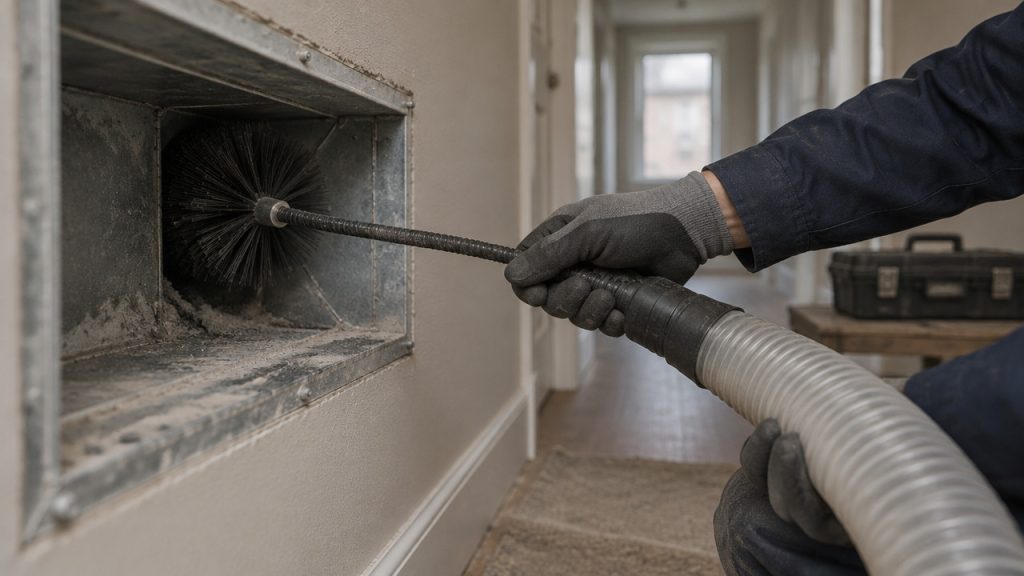
Yes, your apartment’s air ducts can be cleaned, and with Austin’s cedar fever and endless cooling season, they probably should be. Dust, pollen, pet dander, and leftover construction debris ride the same airflow you breathe all night. The catch is that you share a building, a lease, and sometimes a landlord’s patience. Here’s how apartment air duct cleaning works in 2026, what it asks of you, and how to tell when your vents are quietly sabotaging your sleep, your allergies, and your baby’s nursery.
Yes, Your Apartment Ducts Need Cleaning, and Austin Sets the Clock
Yes, apartment air duct cleaning is recommended every 3-5 years, but Austin’s cedar fever season and year-round AC runtime may accelerate that schedule. If you have allergies, pets, or a newborn, you should inspect your ducts annually. Austin’s climate creates unique demands on indoor air quality in apartments, pushing systems harder than in milder regions.
Your lease might say “HVAC maintenance included,” but that usually means filter changes and emergency repairs, not duct cleaning. Landlords often skip it between tenants, meaning you could be breathing in what the previous resident left behind. Austin’s infamous cedar fever season dumps mountain juniper pollen into the air from December through February, and that pollen finds its way into every crack and vent. Add our 100-degree summer days where the AC runs nonstop, and your ductwork becomes a high-traffic zone for recirculating particles.
Knowing when to ask for cleaning is half the battle. You don’t need specialized equipment to spot the warning signs, just a flashlight and a little curiosity. If you’re unsure what normal looks like, this purpose of residential air duct cleaning guide breaks down the basics.
- Visible dust clumps or black debris around vent covers
- Musty or stale odors when the AC or heat kicks on
- Increased allergy symptoms or congestion at home
- Uneven airflow or weak output from specific vents
Fresh Paint, Stale Air: What the Last Tenant and the Turnover Crew Left in Your Vents
That fresh coat of “Agreeable Gray” on the walls looks great, but the sanding dust and paint particulates from the turnover process often land somewhere else: your ductwork. Apartment turnover crews work fast, focusing on what prospective tenants can see. The HVAC system rarely makes the checklist unless it’s visibly broken. This means you might be moving into a unit where the indoor air quality in apartments is compromised before you even unpack your first box.
Construction debris is a sneaky culprit. Drywall dust, sawdust, and even insulation fibers can get pulled into the return vents during renovations. Once inside, they coat the duct interiors and break free every time the system cycles. If you’ve ever moved into a newly “renovated” unit and found yourself sneezing for weeks, you’re not imagining it. That renovation dust is now your dust, circulating through your bedroom and living room until someone removes it.
This is why apartment vent cleaning is particularly valuable for new tenants. You’re establishing a baseline for your home’s air. Instead of spending your first six months breathing traces of the previous tenant’s cat dander or the maintenance crew’s drywall work, you start fresh. For a deeper dive into what professional cleaning actually removes, check out this comprehensive guide to air duct cleaning. It explains the process in detail so you know exactly what you’re paying for.
Cedar Fever, Kitchen Grease, and Shared Walls: What Really Clogs Apartment Ductwork
Apartments face a unique concentration of contaminants that single-family homes rarely see. You’re not just dealing with your own dust and dander; you’re dealing with proximity contaminants that drift in from shared spaces, balconies, and neighboring units. In Austin, the big three offenders are pollen, kitchen grease, and the debris from those smaller closet-mounted air handlers that many apartments use.
Let’s talk about what’s actually lurking in there. Cedar fever isn’t just a marketing term for Austin allergies; it’s a real phenomenon where mountain juniper pollen counts can spike so high that the air looks hazy. That pollen is microscopic and sticky, adhering to duct walls and filters. Then there’s cooking. If your kitchen isn’t on a proper exterior vent (and many apartment “recirculating” hoods are essentially fans with no ductwork), cooking oils and smoke get pulled into your return air. Over time, that residue creates a sticky film that traps even more dust.
Smaller closet air handlers, common in older Austin apartments, have tighter ductwork configurations with more bends and turns. These bends are prime spots for debris accumulation because airflow slows down at each curve. Professional testing has shown that ductwork in occupied spaces accumulates significant debris over time. Recent 6-month testing data confirms that even well-maintained residential systems show measurable particle buildup, proving that you can’t just ignore your vents and expect clean air. For an inside look at residential duct cleaning and what professionals actually find, the evidence is compelling.
| Contaminant | Likely Source in an Austin Apartment | Symptom to Watch For |
|---|---|---|
| Mountain Cedar Pollen | Open windows, unsealed door frames, balcony doors | Seasonal sneezing fits, itchy eyes in Dec-Feb |
| Cooking Grease Film | Recirculating range hoods, unvented stovetops | Sticky vent covers, kitchen odors in bedroom |
| Pet Dander | Previous tenant’s animals, your own pets | Stuffy nose, scratchy throat at night |
| Drywall Dust | Turnover renovations, unit upgrades | Fine white powder near vents, gritty surfaces |
| Mold Spores | AC leaks, condensation buildup in closets | Musty smell, visible dark spots on registers |
Renter’s Permission Slip: Who Approves, Who Pays, and What Your Lease Probably Says
Here’s where duct cleaning for renters gets tricky. You don’t own the ductwork, but you breathe the air. Most standard lease agreements have a clause about “HVAC maintenance,” but interpretation varies wildly. Some landlords consider duct cleaning a capital improvement; others see it as routine maintenance. The difference matters because it determines who writes the check.
In a renter-owned unit scenario, like a condo you own and rent out, the owner typically pays for and approves duct cleaning. In a landlord-managed system, common in large apartment complexes, you’ll need written permission before any contractor touches the building’s infrastructure. The landlord may approve the service but require you to pay, or they may refuse entirely. In shared building systems, often found in older multi-unit buildings with central HVAC, individual units usually can’t be isolated for cleaning, making the process more complex or impossible without building-wide service.
The key is getting it in writing. A polite email to your property manager explaining your concerns about allergies or air quality, along with a request for cleaning, creates a paper trail. If they approve, great. If they deny it, you have documentation that you attempted to address a health concern. This matters if you ever need to break a lease for health reasons. Understanding the difference between residential and commercial duct cleaning needs helps you speak the right language when negotiating with property management.
| Scenario | Who Approves | Who Pays |
|---|---|---|
| Renter-Owned Condo Unit | Owner (you) | Owner (you) |
| Landlord-Managed Apartment | Property manager/landlord | Negotiable: tenant request or landlord responsibility |
| Shared Building HVAC System | Building management/HOA | Building (common area expense) or not possible |
| SFH Rental Property | Landlord | Often landlord, sometimes tenant with approval |
How to Book Apartment Duct Cleaning in 6 Steps Without Starting a Landlord War
You’ve decided the sneezing needs to stop. Now what? Booking apartment HVAC cleaning doesn’t have to be a bureaucratic nightmare if you follow the right steps. The goal is to protect your security deposit, get cleaner air, and keep your landlord happy enough to say yes next time.
Start by doing your own inspection. Pull off a vent cover (gently, with a screwdriver) and shine your phone flashlight inside. Take photos of what you see. Dusty surfaces are normal; clumps of debris, black mold-looking spots, or construction residue are not. Documenting the issue before you request service gives you evidence and shows you’re being proactive, not complaining.
- Inspect and photograph your vents Document visible dust, debris, discoloration, or odors before reaching out to anyone.
- Review your lease for HVAC clauses Check if maintenance, alterations, or contractor requirements are mentioned before you ask permission.
- Submit a written request to your landlord A polite email with photos explaining your concerns about allergies or air quality creates a formal record.
- Get written approval before scheduling Never roll a contractor into your building without the landlord’s sign-off; it can violate your lease terms.
- Schedule with a reputable local provider Choose a company like Noble Air that understands Austin apartments, provides documentation, and works efficiently in smaller spaces.
- Prep your space and verify the work Clear access to vents and air handlers, then check for cleanliness and proper vent reinstallation after service.
When you’re ready to schedule professional duct cleaning, choose a provider that understands multi-unit buildings. Noble Air is a local, family-owned business that has worked in Austin apartments for years. They know how to get in and out efficiently, work with property managers, and provide the documentation that cautious landlords require.
Red Flags and Receipts: How to Vet an Apartment Duct Cleaner Before They Touch a Vent
Not all duct cleaners are created equal, and some are barely cleaners at all. The apartment duct cleaning market has its share of bait-and-switch operators who lure you in with impossibly low prices and then upsell you on services you don’t need. If you see a $99 whole-house duct cleaning sign on a telephone pole, keep driving. Real, professional air duct cleaning Austin TX services cost more than that for a reason.
Professional duct cleaning requires specialized equipment, particularly negative-pressure vacuum systems that pull debris out without blowing it into your living space. A company that shows up with a Shop-Vac and a brush isn’t cleaning your ducts; they’re rearranging the dust. Look for companies that offer before-and-after photos, video inspection, and a clear written scope of work. If they can’t show you what they’re removing, they’re probably not removing much.
Insurance matters too. If a contractor damages your apartment’s ductwork or accidentally pulls down a section of ceiling drywall, you need to know they’re covered. A reputable company carries liability insurance and workers’ comp without hesitation. They should also offer post-service support if the air quality issue persists. Here’s your checklist for vetting any contractor:
- Do you use negative-pressure vacuum equipment and trained technicians?
- Can you provide a written scope of work and price before starting?
- Do you offer before-and-after photos or video documentation?
- Are you fully insured for work in multi-unit residential buildings?
- What happens if my symptoms persist after cleaning?
- Can you provide references from other apartment tenants in Austin?
If a company can’t answer these questions clearly, keep looking. Your allergy-friendly apartment air depends on the quality of the work, not just the fact that someone showed up with a vacuum. For more guidance on finding reputable providers, this resource helps you find the best air duct cleaning companies in your area.
Key Takeaways: The Apartment Duct Cleaning Cheat Sheet for 2026
Cleaning apartment ducts isn’t complicated, but it requires coordination. You’re navigating a lease, a shared building, and a landlord who may or may not see the value. The payoff is real: better sleep, fewer allergy symptoms, and peace of mind knowing what you’re breathing.
- Clean every 3-5 years minimum, or sooner if you have allergies, pets, or infants in the home.
- Always get written landlord approval before hiring any contractor to work on building systems.
- Vet providers carefully: avoid bait pricing and demand negative-pressure equipment and documentation.
- Consider add-ons like dryer vent cleaning and UV light disinfection for comprehensive air quality.
- Austin’s cedar season and year-round AC use make duct cleaning more urgent than in milder climates.
If you’re ready to breathe easier in your Austin apartment, Noble Air offers comprehensive multi-unit duct cleaning services tailored to renters and property managers alike. As a local, family-owned company, they understand Austin’s unique air quality challenges and work efficiently to minimize disruption. Noble Air’s air duct cleaning service is just a click away.
FAQ: Straight Answers on Apartment Air Duct Cleaning
Does apartment air duct cleaning really make a difference for allergies?
Yes, it genuinely helps. Professional cleaning removes accumulated pollen, dust mites, and pet dander that standard filter changes miss. Austin residents often notice a significant reduction in cedar fever symptoms and nighttime congestion after service.
How much does apartment air duct cleaning cost in Austin?
Expect $300 to $500 for a standard apartment unit. Pricing depends on the number of vents, the unit’s size, and the specific services included, such as sanitizer application or dryer vent add-ons. Always get a written quote upfront.
Can my landlord refuse my request for duct cleaning?
Yes, they legally can. Unless your lease specifically mandates it or you have a documented medical accommodation, landlords retain discretion over building systems. Offering to pay for the service yourself often improves your chances of approval.
Is the duct cleaning process safe for babies and pets?
Yes, when done by professionals. Reputable companies use HEPA-filtered equipment that contains debris, and they can use plant-based sanitizers instead of harsh chemicals. Keep kids and pets away during the service and ventilate afterward.
What if mold is found in my apartment’s ductwork?
Report it to your landlord immediately. Mold in HVAC systems is a habitability issue in most leases. Landlords are typically responsible for remediation, which may require professional mold removal beyond standard duct cleaning.
How long does apartment duct cleaning usually take?
About two to four hours for most apartments. Smaller units with accessible systems finish faster, while units with complex ductwork or discovered issues may take longer. Technicians should explain any delays.
For a complete breakdown of what professional service includes and how to prepare, check out this essential guide to professional air duct cleaning. Cleaner air in your apartment is closer than you think.