

Austin homeowners pay between $350 and $850 for professional heating duct cleaning in 2026, with the typical Central Texas home running around $550 for comprehensive service. Your final price depends on system size, contamination level, and whether your contractor discovers mold or damaged ductwork during inspection. Understanding these pricing variables helps you budget accurately and avoid the surprise fees that plague 40% of first-time buyers in the Austin metro area.
Quick Answer: What Austin Homeowners Actually Pay in 2026
Pricing for heating duct cleaning cost in Central Texas varies based on your home’s footprint and the complexity of your HVAC system. Most reputable companies charge by the square foot or by the number of supply and return vents, with additional charges for services like sanitization or dryer vent cleaning. Getting a transparent, itemized quote upfront prevents those unwelcome surprises.
| Home Size | Square Footage | Estimated Cost Range | Average # of Vents |
|---|---|---|---|
| Small Home/Condo | 800 – 1,200 sq ft | $350 – $450 | 6 – 10 |
| Medium Single-Family | 1,500 – 2,500 sq ft | $480 – $700 | 12 – 18 |
| Large Estate Home | 3,000+ sq ft | $750 – $1,200+ | 20+ |
These figures align with broader industry data. According to Home Advisor, homeowners spend an average of $350 to $1,000 for professional air duct cleaning services, making Austin’s pricing competitive within the national landscape.
It’s worth noting that the cheapest advertised price rarely reflects your final bill. “$49 whole house” specials often lead to aggressive upselling once the technician arrives. Understanding average air duct cleaning costs helps you recognize a legitimate service offer versus a bait-and-switch tactic.
Seven Cost Factors That Control Your Final Invoice
Your invoice isn’t random. It is calculated based on specific, physical factors that dictate how much time and labor the job requires. When a technician provides a quote, they are essentially estimating the crew hours and equipment needed for your specific situation.
- System Size & Vent Count: More vents mean more points of access to clean, directly increasing labor time.
- Accessibility: Ductwork hidden behind walls, in tight attics, or crawl spaces takes longer to reach and service.
- Contamination Level: Heavy debris, pet dander, or dust buildup requires more powerful equipment and extra passes.
- Home Age: Older Austin homes (pre-1990s) may have deteriorating flex duct or asbestos tape requiring careful handling.
- Mold Presence: If mold is detected, remediation protocols add necessary safety steps and specialized treatments.
- Duct Condition: Crushed, disconnected, or leaking ducts often need repair before cleaning can be effective.
- Geographic Location: Central Texas service rates reflect local labor costs and fuel prices for mobile crews.
Central Texas homeowners face a unique challenge: cedar pollen. During the winter months, this allergen accumulates in ductwork, aggravating “cedar fever.” If your systen hasn’t been cleaned in several years, that layer of pollen adds to the contamination level, potentially moving you from a standard cleaning to a heavy-duty service tier. This is one of the primary reasons why regular maintenance matters for indoor air quality.
Hidden Fees Most Austin Companies Don’t Advertise Upfront
Nothing stings like a final invoice that doubles the estimate. Some less scrupulous companies lure customers withImpossibly low advertised prices, only to pile on fees once they have access to your home. Knowing what to watch for protects your wallet and ensures you aren’t pressured into services you don’t need.
Commonly undisclosed charges include:
Mold Testing & Remediation: If a technician claims to “see mold” but wants to charge for testing, ask for a lab confirmation. Visual identification isn’t enough. If mold is confirmed, remediation is separate from cleaning and carries its own pricing structure based on square footage.
Sanitization & Deodorizing: Some companies include this; others treat it as an optional add-on costing $50-$100 extra. If you have pets or allergy sufferers, this might be worth it, but it should be discussed upfront, not sprung on you at the end.
Access Panel Creation: Older homes may lack sufficient access points for cleaning equipment. Cutting and sealing new access panels can add $25-$75 per panel. A reputable Austin technician will point this out during the initial inspection, not halfway through the job.
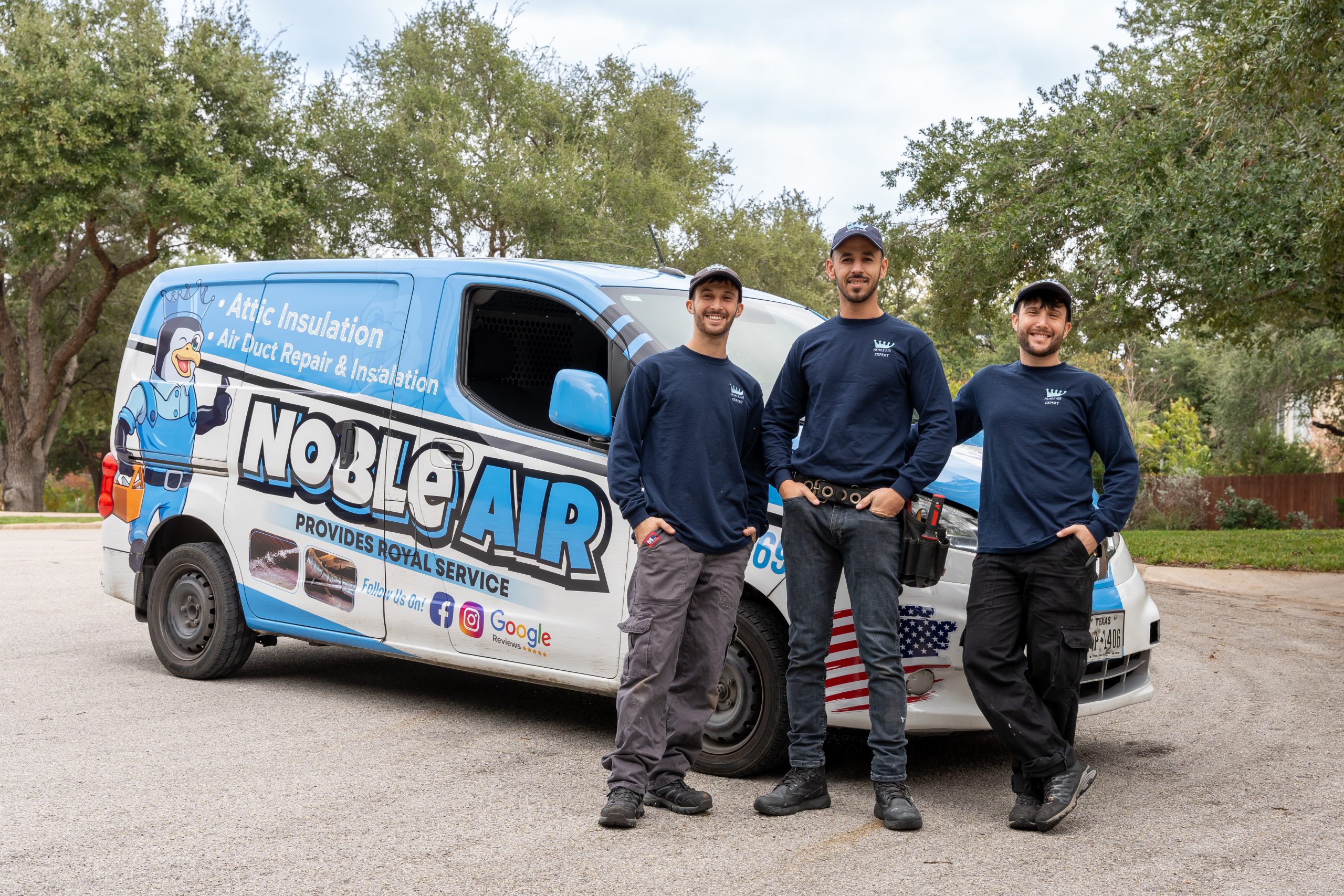
Noble Air believes in a different approach. Their technicians perform a thorough inspection before any work begins, identifying potential issues and providing an itemized quote. This transparency ensures homeowners understand the benefits of thorough duct cleaning without worrying about hidden costs escalating the bill.
How Central Texas Climate Impacts Your Ductwork Maintenance Schedule
Austin’s climate poses unique challenges for HVAC systems. Our long, hot summers mean air conditioning runs nearly non-stop from May through October, constantly circulating air and whatever particles are in it through your ductwork. This heavy usage accumulates dust, construction debris, and allergens much faster than in milder climates.
Then comes winter, and with it, mountain cedar season. Cedar pollen counts in Central Texas are among the highest in the world, causing severe allergic reactions for thousands of residents. If your ductwork is coated with cedar dust, your HVAC system distributes those allergens every time it turns on, prolonging symptoms even after the outdoor pollen season ends.
Add in our spring humidity spikes, and you have an environment where mold can thrive in dark, cool ductwork. These factors suggest Austin homes benefit from more frequent cleaning than the national average. Many local homeowners find scheduling service every 2 to 3 years maintains optimal air quality, especially for those with allergies, young children, or pets. Understanding the comprehensive benefits of regular cleaning helps you make informed decisions about your family’s health.
How Professional Technicians Calculate Your Exact Quote
A legitimate quote isn’t a number pulled from thin air. It’s a calculation based on a systematic inspection of your home’s ventilation system. When you schedule an estimate, here’s what a qualified technician evaluates:
First, they measure your home’s square footage. This gives a baseline for estimating system scope. Next, they count the supply and return vents. Supply vents push conditioned air into rooms; return vents pull air back to the HVAC unit. Both need cleaning, and the total count directly affects labor time.
The technician then inspects duct accessibility. Are the ducts in an open attic, a cramped crawl space, or hidden behind drywall? Access difficulties add time. They also check for existing access panels doors that allow technicians to insert cleaning tools. If panels are missing or insufficient, creating them becomes a line item on your quote.
Finally, they assess contamination visually. Heavy debris, pet hair, construction dust, or signs of moisture intrusion all signal that standard cleaning might not suffice. A detailed inspection like this one that NADCA-certified technicians are trained to perform ensures the quote reflects actual work needed, not a guess. For more details on what this process entails, see this guide on professional duct cleaning services.
Money-Saving Strategies Without Compromising Service Quality
Paying less doesn’t have to mean getting less. Smart homeowners know how to time their service and bundle needs to maximize value. Here are practical ways to manage your heating duct cleaning cost without cutting corners on quality.
- Schedule During Off-Peak Seasons: Late winter (February) and early fall (October) are slower for HVAC companies. Some offer scheduling flexibility or promotional pricing.
- Bundle Services: Pair duct cleaning with dryer vent cleaning or chimney sweep services. Technicians are already on-site, reducing travel overhead.
- Join Maintenance Plans:annual service plans often include discounted cleanings and priority scheduling during peak seasons.
- Prepare Before the Appointment: Clear access to vents and the HVAC unit ahead of time. This reduces technician labor time.
- Address Repairs Immediately: Fix minor duct leaks now rather than waiting for system failure. Prevention costs less than emergency repairs.
Consider the ROI. A clean system runs more efficiently. When airflow is unrestricted, your HVAC unit doesn’t work as hard to maintain temperature. This efficiency translates to lower monthly energy bills savings that compound over time. Many homeowners discover that how duct cleaning reduces energy bills makes the service pay for itself within a year or two.
When DIY Becomes More Expensive Than Hiring Professionals
The DIY instinct is strong in Austin. We’re a city of makers and fixers. But duct cleaning is one area where attempting it yourself often costs more than hiring a pro. The equipment alone tells the story.
Consumer-grade vacuums and shop-vacs lack the suction power needed for effective duct cleaning. Professional trucks mount industrial vacuums creating negative pressure that consumer equipment can’t match. Renting professional-grade equipment might seem like a solution, but rental fees add up quickly, and you’re still investing your own labor.
| Factor | DIY Approach | Professional Service |
|---|---|---|
| Equipment | Rental: $150-$300/day | Industrial truck-mount systems included |
| Time Investment | Full weekend (16+ hours) | 2-4 hours (crew of 2-3) |
| Cleaning Quality | Surface level only | Deep scrub with agitation tools |
| Risk of Damage | High (duct tearing, seal damage) | Insured work, no liability to you |
| Inspection | Limited visual access | Camera inspection included |
Beyond cost, there’s risk. Flex duct common in Texas attics is delicate. One misstep can tear the lining, requiring hundreds in repairs. You also risk dislodging more debris into your living space than you remove. When you weigh the true cost of DIY including time, equipment rental, and risk the professional route often comes out ahead. Homeowners exploring residential duct cleaning benefits quickly see why professional service is the safer investment.
Key Takeaways: Budgeting for Heating Duct Cleaning in Austin
Planning for heating duct cleaning cost doesn’t require a degree in HVAC engineering. It does require knowing what factors matter and what red flags to watch. Here’s your cheat sheet for confident budget decisions.
- Base Budget: Expect $350-$850 for most Austin homes, averaging $550 for standard service.
- Frequency: Every 2-3 years for Central Texas homes; more often with pets or allergy sufferers.
- Watch for Add-Ons: Mold remediation, sanitization, and access panel creation should be quoted separately and approved before work begins.
- Value Over Price: The lowest advertised price often means upsells or incomplete service.
- Local Expertise Matters: Austin’s cedar pollen and humidity require knowledge of regional air quality challenges.
- Certification Counts: NADCA-certified technicians follow industry standards and provide more accurate, transparent quotes.
The cheapest option is rarely the best option when it comes to your home’s air quality. A thorough cleaning by trained professionals protects your family’s health, improves HVAC efficiency, and prevents costly repairs down the line. For those tracking long-term savings, reducing energy costs through duct cleaning offers compelling evidence that this maintenance pays dividends.
FAQ: Heating Duct Cleaning Cost Questions Austin Homeowners Ask
Does homeowners insurance cover heating duct cleaning costs?
No | Standard policies treat duct cleaning as routine maintenance, which is the homeowner’s responsibility | Insurance typically only covers ductwork repairs if damage results from a covered peril like a fire or sudden pipe burst.
How long does a professional duct cleaning service take?
2-4 hours | A typical 2,000 square foot Austin home requires about 3 hours for a comprehensive cleaning | Homes with complex systems, multiple units, or heavy contamination may take a full workday for proper service.
Will I see a difference in my energy bills after cleaning?
Yes | Clean ductwork improves HVAC airflow efficiency by 20-30% in systems with significant buildup | Monthly savings vary, but many homeowners report noticeable reductions during peak cooling months in Austin summers.
Are $49 whole-house duct cleaning offers legitimate?
No | These “blow-and-go” operations rarely include proper cleaning and focus on aggressive upselling | Legitimate service requires technicians, specialized equipment, and hours of labor costs that cannot be covered at rock-bottom prices.
Should I stay home during the cleaning process?
Yes | Being present allows you to ask questions and approve any additional findings | Technicians may need access to all rooms and your presence ensures they can proceed without delay if unexpected issues arise.
Do I need sanitization added to my duct cleaning service?
Sometimes | Houston’s humidity makes mold-resistant treatments valuable, but not every home needs them | If your home has suffered water damage or has persistent odors, antimicrobial fogging provides an extra layer of protection worth the add-on fee.
Can air duct cleaning reduce allergy symptoms in my home?
Yes | Removing dust, pet dander, and pollen from ductwork reduces allergens circulating through your home | Families with Cedar Fever sensitivity notice significant improvement, especially during Central Texas’ notorious winter allergy season.