
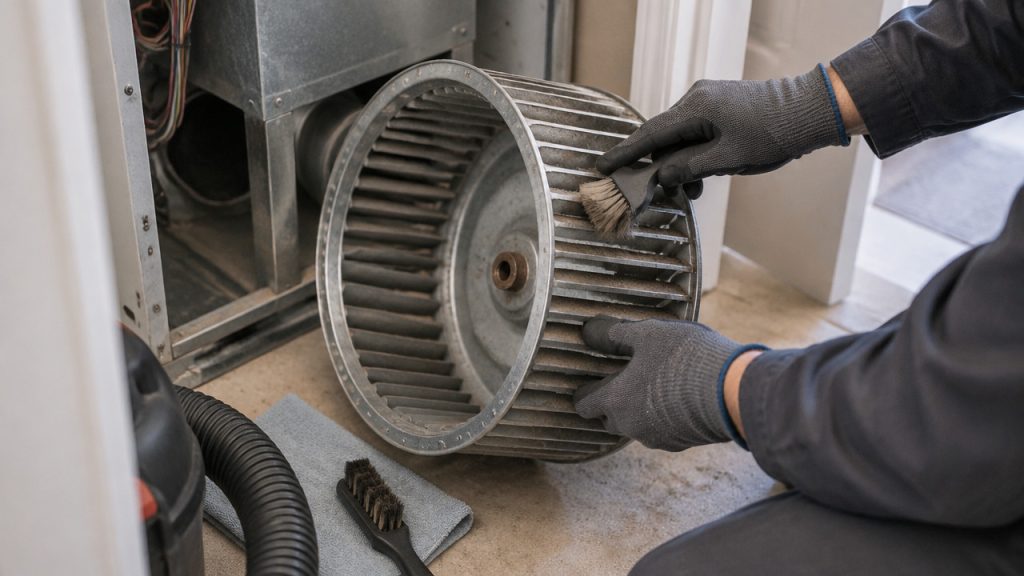
A furnace cleaning service removes dust and debris from the parts that make and move heat, so the furnace runs more efficiently and sends cleaner air through your home. It’s a different job from air duct cleaning: it focuses on the furnace itself, including the blower and heat exchanger, while the ducts and the wider HVAC system are separate jobs. In Austin, where the furnace may sit idle through long stretches of mild weather, dust has plenty of time to settle, and that matters most in homes with allergy sufferers or a baby. The real decision is whether your system needs the furnace cleaned on its own, paired with duct work, or folded into broader HVAC maintenance, and which company has earned the right to open it up.
What Does a Furnace Cleaning Service Actually Include?
A thorough furnace cleaning service tackles the internal components that directly affect heating performance and air quality, not just the exterior casing or the area around the unit. The job goes beyond swapping out a filter. A technician opens the furnace cabinet to access working parts that collect dust during normal operation and especially during the long idle periods common in Central Texas climates. These components include the furnace blower and heat exchanger, both of which can quietly accumulate layers of particulate matter that reduce efficiency and strain the system over time.
- A furnace cleaning clears dust from the blower wheel, heat exchanger, and internal cabinet surfaces to restore proper airflow.
- Technicians inspect electrical connections and the furnace filter as part of a full HVAC maintenance check.
- This service focuses on the appliance itself, while air duct cleaning addresses the separate ductwork that moves air through the home.
- Homes with allergy concerns or infants benefit most from pairing furnace work with broader HVAC and air quality services.
The distinction between furnace cleaning and duct cleaning trips up many homeowners. The furnace is the heart of the system, generating heat, but the ductwork is the vascular system, moving that warmth to each room. Cleaning one but neglecting the other leaves a portion of the problem untouched. A proper furnace cleaning service isolates the unit, vacuums accumulated debris from its internal cavities, and ensures the parts that spin, heat, and cycle are free of obstructions. It’s targeted work, and for Austin residents, it’s often the missing piece in an indoor air quality strategy that otherwise focuses solely on ducts.
Signs Your Austin Furnace Is Overdue for a Cleaning
Furnaces rarely fail without warning. More often, they send subtle signals that buildup is affecting performance, signals that are easy to miss until a cold front arrives and the house won’t warm up. In Austin’s climate, where heating systems might sit dormant for months, those warning signs can appear gradually, masked by the general quiet of a furnace that rarely runs. Homeowners who know what to look for can catch issues before they become emergency repairs. If your system is showing any of these indicators, it is time to schedule a professional cleaning before temperatures drop further.
- Visible dust gathering on vent covers or around the furnace cabinet suggests the system is recirculating particulate matter rather than trapping it.
- Weak or uneven airflow from registers, even when the fan runs at full speed, points to a clogged blower wheel or a blockage inside the unit.
- A burning smell when the furnace starts is often dust burning off the heat exchanger after a period of inactivity, common in mild climates.
- Unusual noises like rattling or hums can indicate debris inside the blower assembly or a motor struggling against buildup.
- Increased allergy symptoms inside the home, especially in households with a baby or sensitive individuals, may signal the furnace is reintroducing irritants.
- Higher energy bills without a corresponding increase in usage mean the system is working harder to produce the same output.
For families with young children or allergy sufferers, waiting until the system struggles is not ideal. A dirty furnace does not just heat less efficiently; it becomes a source of airborne dust and irritants that affect the entire household. That concern is amplified in homes with a baby, where respiratory systems are still developing and indoor air quality matters more. If you have noticed any of these signs, reviewing a comprehensive guide to air duct cleaning can also help determine if the issue extends beyond the furnace itself.
Furnace Cleaning vs. Duct Cleaning vs. Full HVAC Care: Which Do You Need?
Not every home needs every service every year. The right choice depends on what the system is doing, what problems are appearing, and what goals the homeowner has for air quality and efficiency. Furnace cleaning, duct cleaning, vent cleaning, and disinfection services each address a different part of the puzzle. Matching the service to the symptom prevents overspending on unnecessary work while ensuring the actual problem gets solved.
Furnace cleaning is targeted. It fixes issues inside the unit, addressing weak airflow caused by a dusty blower or heating inefficiencies from a coated heat exchanger. Duct cleaning, by contrast, addresses the pathways that move air. If dust is visible at the registers or rooms feel stuffy regardless of furnace settings, the ductwork is the likely culprit. Vent cleaning is a smaller, surface-level service that clears the immediate register area, while UV light HVAC disinfection targets microbial growth inside the system. Each service has its place, and knowing which one fits your situation starts with a clear comparison.
| Service | Primary Purpose | Best-Fit Situation |
|---|---|---|
| Furnace Cleaning | Removes dust from internal heating components like the blower wheel, heat exchanger, and burners. | Weak airflow from the unit, burning smells at startup, or reduced heating efficiency. |
| Air Duct Cleaning | Cleans the ductwork pathways to remove accumulated dust, debris, and allergens from the distribution system. | Visible dust from registers, musty odors from vents, or allergy symptoms worsening indoors. |
| Air Vent Cleaning | Cleans the register and immediate vent area where air enters or exits a room. | Surface dust on vent covers or minor airflow restrictions at specific rooms. |
| UV Light HVAC Disinfection | Neutralizes microbial growth like mold and bacteria inside the HVAC system using ultraviolet light. | Persistent musty smells, known mold issues, or homes with immunocompromised residents. |
For many Austin, TX homeowners, the best approach combines services. A furnace that runs cleanly will still underperform if the ducts are clogged, and clean ducts will not solve airflow issues caused by a dirty blower. Pairing professional air duct cleaning with furnace maintenance in a single visit often delivers the most noticeable improvement in air quality and heating performance.
How to Choose a Furnace Cleaning Company: A Verification Checklist
Choosing a service provider for furnace work requires more than a quick online search. The company will be inside your home, handling an appliance that affects your family’s comfort and safety. A trustworthy provider is transparent about what the service includes, willing to answer questions, and locally established within the community. Noble Air, a family-owned business serving the Austin metro area, offers a full range of air quality solutions including ducts, vents, dryer vents, chimney sweep services, and HVAC disinfection. The right company earns trust before the work begins.
Before booking, ask these vetting questions to confirm the provider is qualified and straightforward about the scope of work.
- “Are you local to the Austin area?” A local company understands regional climate patterns and is invested in its community reputation.
- “What exactly does the furnace cleaning include?” Look for specifics on blower access, heat exchanger cleaning, and filter checks rather than vague promises.
- “Do you provide a written scope before starting?” Transparency on the front end prevents surprise charges or incomplete work.
- “Are technicians trained and certified for HVAC work?” Furnace components are delicate and require knowledge beyond basic duct cleaning.
- “Can the visit be combined with other services?” Pairing furnace cleaning with duct or dryer vent work saves time and money.
- “Do you offer UV disinfection if microbial growth is found?” A provider with this option can address a broader range of air quality issues in one visit.
- “What is the minimum warranty or satisfaction policy?” A company willing to stand behind its work signals confidence in the service quality.
A provider worth hiring will answer every question clearly and without hesitation. For homeowners serving Austin, TX homeowners and surrounding Central Texas communities, Noble Air operates with that level of transparency, treating each home with the care expected of a family-owned local business.
What Happens During a Professional Furnace Cleaning Visit
A professional furnace cleaning follows a structured sequence designed to inspect, clean, and verify system performance. It is not a hurried pass with a vacuum hose. Technicians take the time to access internal components, remove accumulated debris, and confirm the furnace operates correctly before they pack up. For Austin homeowners, it is also an opportunity to catch issues that developed during the long idle season. The process typically unfolds in a predictable order.
- Initial inspection and safety check. The technician examines the furnace exterior, checks for obvious damage or leaks, and tests the system’s basic operation before shutting it down for cleaning.
- Filter assessment and replacement. The existing filter is inspected for buildup that could restrict airflow. If replacement is needed, the technician installs a new furnace filter replacement matched to the system.
- Accessing the blower assembly. The cabinet is opened, and the blower wheel, a component prone to heavy dust accumulation, is carefully cleaned using specialized tools.
- Cleaning the heat exchanger and burners. Dust is removed from the heat exchanger surfaces and burner area to ensure efficient combustion and heat transfer.
- Vacuuming the internal cabinet. All accessible surfaces inside the furnace cabinet are vacuumed to remove settled dust and loose debris that could recirculate.
- Final testing and airflow check. The furnace is closed, restarted, and tested. The technician measures airflow and confirms the system cycles properly before completing the visit.
This sequence delivers a comprehensive cleaning that addresses the root causes of inefficiency and poor air quality. For homes scheduling additional work, like air vent cleaning in Austin, the process can often be completed in the same appointment, minimizing disruption to the household.
Furnace Cleaning Questions Austin Homeowners Ask
Can I clean my furnace myself, or should I hire a professional?
Hire a professional. Homeowners can and should replace filters regularly, but internal furnace components require specialized tools and training to access safely. The blower assembly, electrical connections, and heat exchanger are not designed for DIY cleaning, and improper handling can damage the system or create unsafe operating conditions. A professional furnace cleaning also includes a safety inspection that catches issues a homeowner would likely miss.
Does a gas furnace need a different cleaning than an electric one?
Yes. Gas furnaces require attention to the burners, ignition system, and heat exchanger, areas where combustion byproducts and soot can accumulate. Electric furnaces do not have combustion components but still need blower cleaning and internal vacuuming. Both types benefit from regular maintenance, but the cleaning process differs based on the components involved. A qualified technician adjusts the service scope to match the specific unit.
Is furnace cleaning worth it in a mild climate like Central Texas?
Yes. Austin’s mild winters mean furnaces often sit idle for extended periods, allowing dust to settle inside the unit during the long cooling season. When the furnace finally runs, that dust burns off or circulates through the home. Regular cleaning prevents that buildup, which is especially valuable for households with allergy sufferers or infants. The service also improves energy efficiency, which matters even in a climate where heating bills are relatively low.
Should I schedule furnace cleaning before or after duct cleaning?
The order matters less than completing both. If done separately, furnace cleaning first prevents the unit from pushing new dust into clean ductwork. However, many providers offer both in a single visit, addressing the entire system at once. For Austin homeowners focused on indoor air quality, combining the services in one appointment is typically the most practical approach, ensuring no part of the system is neglected.
Can a dirty furnace make allergy symptoms worse for a baby’s room?
Yes. A furnace with a dusty blower or clogged filter can reintroduce particulate matter into the air, aggravating allergies and respiratory sensitivities in any room. For a baby’s room, where air quality is a significant concern for developing lungs, reducing airborne irritants is particularly important. Furnace cleaning paired with UV light HVAC disinfection can further reduce microbial contaminants that affect sensitive household members.
Does a fireplace or chimney need cleaning at the same time as the furnace?
Not necessarily, but it is worth inspecting both. Chimneys serving fireplaces collect creosote and debris, which is a fire hazard unrelated to furnace dust. However, in homes where a chimney also serves as a furnace flue, blockages can affect heating system safety. A provider offering both chimney sweep and furnace services can assess whether both need attention during the same visit, simplifying home maintenance for the homeowner.