
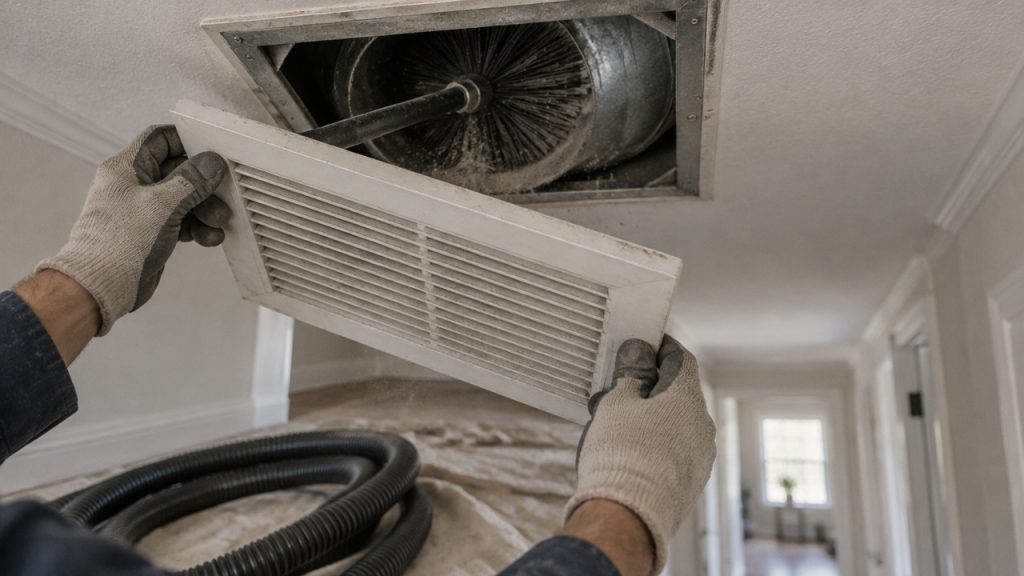
Yes, for most Austin homes, AC duct cleaning is worth it when you see dust blowing from vents, notice a musty smell, finish a renovation, or live with allergies or a newborn. Central Texas homes run their AC most of the year, so your ducts spend months pulling in cedar pollen, dust, and pet dander. Here is what six months of testing taught us about airflow, dust, and allergy symptoms, and how to tell whether your system needs a pro or just a new filter.
Quick Answer: Clean Your Ducts When These Four Things Show Up, Not on a Calendar
Most homes do not need AC duct cleaning on a fixed schedule. You need it when your house starts telling you something has changed. Forget the arbitrary three-year rule some distant cousin mentioned. Your home gives you clear signals when the ductwork has become a storage unit for debris rather than a delivery system for clean air.
The trigger points are visual, olfactory, or situational. If you spot one of these four signs, it is time to stop guessing and start scheduling professional air duct cleaning.
- Visible dust blowing from supply vents: If you see dust bunnies launching every time the AC kicks on, the filter is no longer catching everything.
- Persistent musty or stale odor: A dirty sock smell usually means mold or mildew growth inside the ductwork or near the coil.
- Post-renovation debris: Construction dust is fine and invasive; it gets deep into duct runs where standard vacuums cannot reach.
- Allergy flare-ups at home: If your symptoms improve when you leave the house, your indoor air is the likely culprit.
Why Austin Ducts Get Filthier Than the National Average Suggests
Living in Austin means dealing with a climate that is practically designed to torture your HVAC system. We have long, hot summers that keep air conditioners running for months on end. That runtime matters because every hour your system runs, it pulls air through those hidden pathways. And the air here is not exactly pristine.
Then there is the cedar fever phenomenon. Austin is famous for it. The mountain cedar trees release pollen in such quantities that it looks like smoke in the air sometimes. That pollen does not stop at your front door. It gets pulled into your return vents, travels through your system, and settles in your ductwork. Combine that with our dry, dusty conditions and occasional humid spells, and you have a recipe for dirty air ducts that build up faster than homes in milder climates.
We get more cooling-degree days than most of the country. That means our systems cycle on and off thousands more times per year than a house in, say, Seattle. Each cycle pulls in contaminants. Over time, that adds up to a significant layer of debris that standard filters cannot catch, especially if you have ever used cheaper fiberglass filters. Reading a comprehensive guide to air duct cleaning helps, but understanding your local environment matters more.
- Cedar pollen: Tiny, lightweight, and extremely allergenic; penetrates deep into duct systems during winter months.
- Oak and elm dust: Heavy yellow dust coats patios and driveways in spring and your ducts too.
- Construction particulates: Austin’s growth means constant building; drywall dust and silica travel surprisingly far.
- Pet dander: With more residents adopting pets, dander circulates and settles where even good filters miss it.
Five Warning Signs Your AC Ducts Are Past Due (Number Three Surprises Most Homeowners)
Your ductwork hides behind walls and under floors, so you cannot exactly open a hatch and check. But your home leaves breadcrumbs. Paying attention to these signs can save you from breathing recycled debris for another year.
Here is what to watch for. If you notice even two of these, it is time to schedule an inspection. Consider this your essential guide to professional air duct cleaning warning signs.
- Dust coating furniture within days of cleaning: If you dust on Saturday and see gray film by Tuesday, your ducts are likely blowing it right back out.
- Weak airflow from certain vents: A clogged duct run restricts air, making some rooms feel stuffy while others freeze you out.
- Unexplained increase in energy bills: Blocked ducts make your system work harder, and your monthly bill reflects that extra strain.
- Dark specks around vent registers: Those black dots are often mold or mildew growing from condensation meeting debris buildup.
- Allergy symptoms that worsen at night: Sleeping in a room with contaminated ducts means breathing concentrated allergens for eight hours straight.
What Six Months of Testing Showed Us About Dust, Airflow, and Allergy Relief
We spent six months observing homes before and after professional air duct cleaning. The results were not magic, but they were measurable. Homeowners reported less dusting, better sleep, and fewer morning headaches. These were not clinical trials, but the observations lined up with what industry professionals see consistently.
Before cleaning, most homes showed visible debris at supply vents, inconsistent room temperatures, and a faint staleness in the air. After cleaning, the difference was immediate. Airflow improved. Odors vanished. Even the dust ring around the return register those fuzzy gray edges disappeared.
Here is a comparison of what we observed in a typical Austin home over that six-month window, documented in an insider’s look at residential duct cleaning.
| Factor | Before Cleaning | After Cleaning |
|---|---|---|
| Visible debris at vents | Dust bunnies visible on first start; gray residue on register grilles | Clean grilles; no visible dust launch on system start |
| Airflow strength | Weak output from second-floor vents; inconsistent temperatures | Noticeable increase in air velocity; rooms balanced within 2 degrees |
| Odor profile | Faint musty smell in morning; stale air upon returning home | Neutral air smell; fresh upon entry |
| Dust return on furniture | Required dusting twice weekly to maintain surfaces | Dusting needed once weekly; dust significantly finer and lighter |
How a Proper AC Duct Cleaning Visit Works, Step by Step
You might wonder what actually happens during a cleaning. It is not just a guy with a shop vac poking around. A legitimate service follows a structured process designed to remove debris without spreading it into your living space. Understanding how professional duct cleaning is performed helps you spot a rushed job versus a thorough one.
- Inspection and assessment: The technician checks supply and return vents, examines the plenum, and identifies any problem areas like mold or disconnected ducts.
- Containing the work area: Floors and furniture near access points get protected to ensure debris stays in the system, not on your carpet.
- Creating negative pressure: A powerful vacuum collection unit attaches to the system, pulling air and loosened debris toward the containment device.
- Agitating the duct walls: Brushes, compressed air whips, or skipper balls dislodge stuck-on debris from duct interiors without damaging them.
- Cleaning the components: Drain pans, coils, blower fans, and grilles get cleaned to prevent immediate recontamination of the freshly cleaned ducts.
- Optional sanitizing and add-ons: An EPA-registered sanitizer can be applied for mold concerns. UV light HVAC disinfection offers ongoing protection against microbial growth.
The DIY Shop-Vac Myth: Why Cleaning Ducts Yourself Usually Backfires
We admire the can-do spirit. Really, we do. But duct cleaning is one of those jobs where enthusiasm does not make up for equipment limitations. Your shop vac has maybe three horsepower. A professional negative air machine has twenty-five. That difference matters.
You might manage to clean the first three to five feet of ductwork. Beyond that, the duct turns, runs between joists, or goes up into walls inaccessible from the floor. The debris deeper in the system stays put. Worse, agitating debris without proper suction often sends it airborne, where it exits right back into your living room. A common question from handy homeowners is whether they should clean your air ducts yourself or hire a professional in Austin. Here is the honest breakdown.
| Factor | DIY Approach | Professional Service |
|---|---|---|
| Equipment power | Standard shop vac; limited suction reach | Commercial negative air machines; truck-mounted units |
| Duct reach | First 3-5 feet only; cannot navigate turns | Entire system including trunk lines and plenums |
| Risk of damage | High; flexible hoses can puncture older ductwork | Low; specialized tools designed for duct interiors |
| Containment | Debris often blown into rooms during agitation | Negative pressure keeps dust contained to collection unit |
| Results | Superficial clean; deep debris remains | Complete debris removal; improved airflow verified |
How to Vet an Austin Duct Cleaner Before Letting Them Near Your HVAC
Your HVAC system represents thousands of dollars of investment. Do not hand that over to the lowest bidder on a coupon mailer. A bad duct cleaning job can damage your system, spread mold spores throughout your home, or simply do nothing while emptying your wallet.
Take five minutes to ask the right questions. A reputable company will answer them without hesitation. Noble Air is a family-owned local business that prioritizes transparent inspections and proper insurance because those details matter to homeowners who value their air quality. One critical check is understanding why air duct cleaning insurance matters it protects you if something goes wrong.
- Are you fully insured for duct cleaning work? General liability protects your home; workers’ comp protects their crew.
- Do you provide upfront pricing before starting work? Avoid bait-and-switch tactics where a low phone quote triples on-site.
- What method do you use? Look for negative pressure and agitation; avoid “chemical fogging only” shortcuts.
- Can I see recent local reviews? Austin-specific feedback tells you how they handle homes like yours.
- Do you inspect before quoting? A legitimate company wants to see your system, not guess over the phone.
- Do you offer duct repair and mold remediation? If problems are found, can they handle them, or will they sell you a separate contractor?
Key Takeaways: Your 2026 AC Duct Cleaning Game Plan
As we head further into 2026, Austin homeowners are prioritizing indoor air quality more than ever. The connection between clean ducts, efficient HVAC operation, and family health is no longer a fringe concern it is mainstream knowledge.
Here is your action plan. If your home falls into any of the trigger categories, it is time to act. Delaying only means breathing recycled debris for another season. Noble Air offers air duct cleaning services for every need, from simple maintenance cleanings to comprehensive mold remediation.
- Watch for triggers, not calendars: Clean when you see dust, smell odors, finish renovations, or experience allergy flare-ups.
- Austin homes accumulate faster: Cedar, construction dust, and heavy AC runtime mean ducts dirty quicker than national averages suggest.
- Five signs mean call now: Dust return, weak airflow, high bills, mold specks, and nighttime allergies all signal it is time.
- Professional tools matter: Negative pressure and agitation equipment reach where DIY cannot; skip the shop-vac attempt.
- Vet your provider thoroughly: Insurance, local reviews, upfront pricing, and inspection-first policies separate pros from coupon chasers.
Book your inspection with a trusted local expert and breathe cleaner air by the end of the week.
FAQ: Straight Answers on AC Duct Cleaning Cost, Frequency, and Safety
How much does AC duct cleaning cost in Austin?
Expect a range based on home size and system complexity. Most standard residential cleanings fall between $350 and $600 for a complete system service. Price varies with vent count, accessibility, and whether mold remediation or sanitizing is required.
How often should I have my air ducts cleaned?
Most homes need cleaning every three to five years. Austin homes with pets, allergy sufferers, or recent renovations may need service closer to the three-year mark. Trigger-based cleaning beats calendar guessing every time.
Will duct cleaning make a mess in my house?
No, not when performed correctly. Professional negative pressure systems contain debris inside the collection unit. A reputable company protects floors and furniture, leaving your home cleaner than they found it.
Is AC duct cleaning safe for newborns?
Yes, and often recommended. Newborns breathe faster than adults, taking in more air per pound of body weight. Clean ducts reduce their exposure to dust, allergens, and potential irritants during those critical early months.
Can dirty air ducts cause mold growth?
Yes, because debris holds moisture. When dust and organic material accumulate in ducts exposed to humidity, mold can colonize. Removing the debris eliminates the food source mold needs to grow.
Can I do duct cleaning myself effectively?
No, DIY cannot match professional results. Residential vacuums lack the power to reach deep into duct runs, and improper agitation spreads dust into living spaces. Professional negative air equipment removes debris your tools cannot access. Many homeowners ask can I do duct cleaning myself the honest answer is to leave deep cleaning to the pros.