
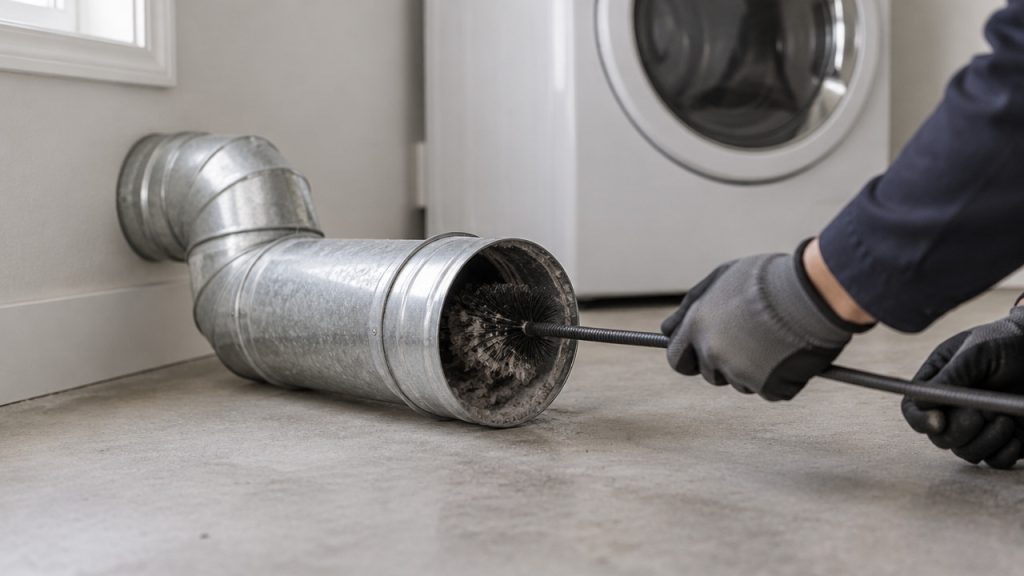
Dryer vent cleaning cost depends on the vent, not the dryer: how long the run is, how many turns it takes and how easy it is to reach. A short, straight vent behind the laundry room is a quick job, while a long route through walls, an attic or up to a roof exit takes more time and equipment, and the dryer vent cleaning price follows. Skipping the work has its own cost, because lint buildup is a real dryer fire hazard and leaves longer drying cycles and dustier air for families with allergies or a baby. The decision is whether your vent length and routing make this a job for a professional dryer vent service or one you can safely handle yourself.
How Much Does Dryer Vent Cleaning Cost in Austin?
Dryer vent cleaning cost in Austin varies based on your specific vent configuration, but it remains a modest, one-time service expense compared to the potential damage from a lint fire or the ongoing strain on your appliance. Homeowners often assume the price ties to their dryer model, yet the real factors live behind the walls.
- Vent length directly impacts cleaning time and equipment needs.
- Number of turns increases labor and requires specialized tools.
- Access difficulty affects how quickly technicians can reach the entire line.
- Roof or attic exits add complexity compared to standard wall vents.
- Heavy lint buildup may require additional passes and inspection time.
For homeowners in the Austin area, understanding these variables helps frame a fair quote. A short, straightforward job costs less than a complex run snaking through multiple stories. The investment pays off in faster drying times, lower energy bills, and genuine peace of mind for your household’s safety. Rather than guessing, let professional dryer vent cleaning experts assess your specific setup.
What Drives the Price Up or Down?
Price follows the time, tools and access a job requires, so no two vents cost exactly the same. Every home has a unique laundry setup, and the vent routing determines how much effort goes into clearing it properly. Understanding what makes your job simpler or more complex helps you anticipate where your quote might land.
- Vent length: Longer runs require more rods, cable and time to push through the entire line.
- Number of bends: Each 90-degree turn slows the cleaning process and demands flexible tooling.
- Roof access: Technicians need ladders, safety gear and additional time to reach roof vents safely.
- Second-story laundry rooms: Vertical runs add length and often require working from both ends.
- Heavy lint accumulation: Dense blockages need multiple passes and sometimes disassembly.
- Exterior wall construction: Brick or stone exteriors make access points harder to work through.
A vent that runs six feet straight through an exterior wall is a best-case scenario. The technician connects their equipment, makes a few passes, and verifies airflow. But many Central Texas homes feature laundry rooms tucked into interior spaces, pushing vents through attics, between studs and around plumbing before they ever see daylight. That routing makes all the difference.
Attic runs present particular challenges. Summer temperatures in Austin make attic spaces dangerous work environments, and technicians must navigate insulation, low clearance, and framing. Roof exits demand proper fall protection and experience working at heights. These factors add legitimate labor time, and a reputable service accounts for them in their quote.
Homes with pets or large families often accumulate lint faster, meaning more material to remove. If it has been years since the last cleaning, expect denser blockages that take longer to clear. It is worth learning the dryer vent cleaning basics so you can spot these factors in your own home before requesting service.
What Does a Professional Cleaning Actually Include?
A proper service goes beyond the lint trap and clears the full duct from dryer to exterior. Many homeowners clean the screen after every load and assume that is enough, but lint travels deep into the vent line where it settles and compacts. Professional equipment reaches that hidden accumulation.
The service typically begins with an inspection. Technicians assess the vent path, check for visible damage, and determine the best access points. Then comes the actual cleaning using rotating brushes, vacuum extraction, or air-whip tools designed to dislodge buildup without damaging the duct material.
- Initial inspection: Assess vent length, routing, and condition before starting work.
- Equipment setup: Connect vacuum collection system and flexible cleaning tools.
- Duct cleaning: Run rotating brushes or air tools through the entire vent line.
- Exterior flap check: Verify the outside termination opens and closes properly.
- Airflow confirmation: Test the system to ensure strong, unrestricted airflow.
Homeowners sometimes want to understand exactly what they are paying for. When you know what to expect, you can verify the technician did thorough work. A complete job means no part of the vent line gets skipped. Check out this homeowner’s guide to dryer vent cleaning for more details on what thorough service looks like.
Is Paying a Pro Worth It Versus DIY?
DIY kits cost less upfront but cannot always reach long, bent or roof-vented runs. Hardware stores sell flexible rods and brushes designed for homeowner use, and those tools work fine for short, straight vents with easy access. The problems start when your vent runs through walls, up through an attic, or out a second-story roof.
Safety matters too. Lint buildup is a fire and efficiency concern. Opening the dryer cabinet or disconnecting the vent indoors risks damaging seals or leaving connections loose. Without the right reassembly, you could create a new hazard inside the home where lint exhausts directly into living space.
Professional services have commercial-grade vacuum trucks or high-powered portable units that keep dust contained. They also carry specialty tools for navigating tight turns and vertical rises that DIY brushes simply cannot handle. Consider the comparison:
| Factor | DIY Cleaning | Professional Service |
|---|---|---|
| Reach | Limited to 10-15 feet with basic kits | Unlimited; handles any run length |
| Effort | High physical effort; requires moving dryer | Technicians handle all labor |
| Tools | Manual brushes; no vacuum extraction | Commercial vacuum and power brushes |
| Risk | Potential damage to vent or connections | Insured; warranty on work |
| Results | Surface cleaning; misses deep buildup | Full line clearance verified |
For homeowners with ground-floor laundry and a short exterior wall vent, a DIY kit might suffice as part of a regular dryer vent maintenance schedule. But once the vent travels beyond easy reach or exits through a roof, professional tools and training become essential. Good dryer vent maintenance tips can extend the time between cleanings, but the job still needs proper equipment when the time comes.
How to Get a Fair Quote and Keep Costs Down Over Time
Clear questions and regular upkeep keep dryer vent cleaning affordable and prevent costly problems. When you request service, providing accurate information about your home helps the company give you an honest estimate upfront. No one likes surprise charges after the work begins.
- Describe your vent routing: Do you know if it exits through a wall or roof?
- Mention access issues: Is the laundry room on a second floor or inside a closet?
- Estimate the last cleaning: When was the vent last professionally serviced?
- Note any problems: Have you seen longer drying times or excess lint around the dryer?
- Ask about their process: What does the service include and how long does it take?
Homes in Lakeway and Leander often feature complex floor plans with laundry rooms tucked into unconventional spaces. Those routings mean longer vent runs and more turns. Austin homes closer to the city center might have simpler layouts. Either way, a local service familiar with Central Texas construction styles can give you a realistic quote.
Regular maintenance also keeps costs predictable. A vent cleaned every one to two years typically stays manageable. Waiting five years or more allows lint to compact and harden, turning a routine cleaning into a tougher job. Local Noble Air service covers Austin, Lakeway and Leander, and a regular schedule avoids heavy-buildup jobs that take extra time. Many homeowners schedule service alongside other HVAC maintenance to stay on track.
For reliable dryer vent cleaning in Austin, working with a team that understands local construction makes the process smoother.
Dryer Vent Cleaning Cost FAQs
Does a roof-vented dryer cost more to clean?
Yes. Roof-vented dryers require ladder work, safety equipment and additional time to access the exterior termination. Technicians must work from the roof to ensure the exit flap functions properly and to clear any blockages at that endpoint. The height and pitch of the roof influence the scope of work. Compared to a standard wall vent at ground level, roof access adds legitimate labor and preparation. A local professional service includes those factors when preparing your quote.
Is dryer vent cleaning often bundled with air duct cleaning?
Yes. Many homeowners combine dryer vent cleaning with air duct cleaning since both services improve indoor air quality and HVAC efficiency. Bundling makes sense if a technician is already on site, and some companies offer package pricing when scheduling multiple services together. It is worth asking when you book. For context on related services, see air duct cleaning costs to understand what goes into maintaining your entire ventilation system.
How often should I pay for dryer vent cleaning if I have a large family or a baby at home?
Annually. Households with large families or a baby at home typically run the dryer more frequently, which accelerates lint accumulation. The U.S. Fire Administration recommends cleaning dryer vents at least once a year, but heavy-use households benefit from inspecting every six months. For families concerned with allergies or a baby’s respiratory health, clean vents mean fewer airborne particles and safer air quality throughout the home.
Will a cheap quote cost me more later?
Potentially. A quote significantly lower than local averages might indicate the service cuts corners or skips essential steps like inspecting the full length of the vent or checking the exterior termination. Incomplete cleaning leaves lint behind that continues to restrict airflow and create fire risks. A reputable service includes a thorough inspection, full duct cleaning and airflow verification as part of their standard package.
Do Lakeway and Leander homes get quoted differently than Austin homes?
No. Geographic location within the Austin metro area rarely changes the base pricing model, though vent routing in those homes might differ. Homes in Lakeway or Leander often feature two-story layouts or hillside construction that means longer vent runs, which affects the quote. The key factor remains the vent itself and not the ZIP code. A professional service assesses the job based on the work involved rather than neighborhood boundaries.