
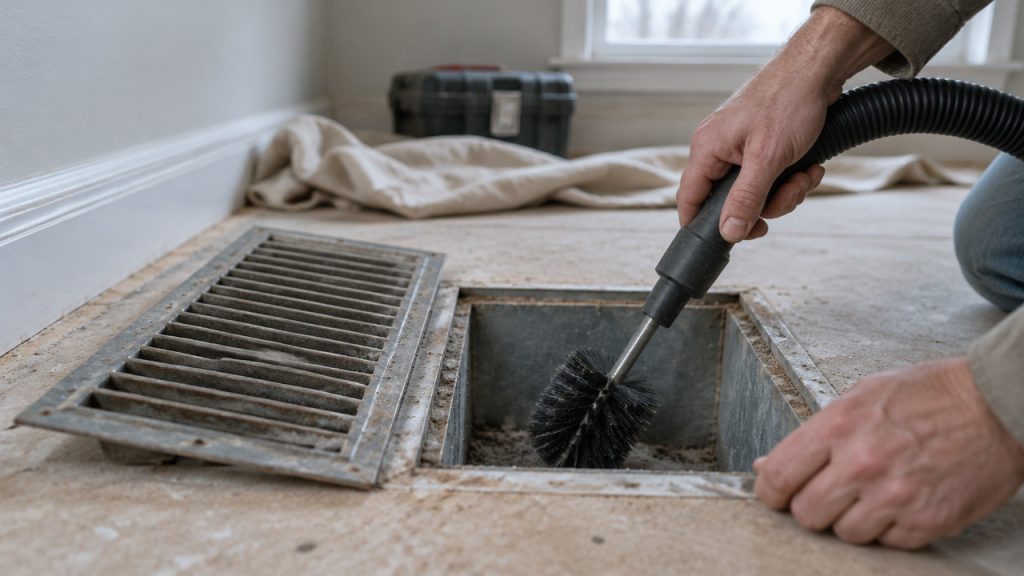
To clean air ducts in your house yourself, wash the vent covers and registers, vacuum what you can reach with a HEPA vacuum, and swap the filter; the ductwork running through walls and attic takes professional equipment. That split matters most in homes with allergy sufferers or a baby, because dust sitting deep in the HVAC system keeps circulating even when every register looks spotless. A weekend of DIY improves what you can see and touch, while deep air duct cleaning deals with what you can’t. The decision comes down to whether a surface clean covers your situation or the whole system needs attention.
Can You Clean Air Ducts Yourself, or Should You Call a Pro?
DIY cleaning handles visible components like registers and filters, while professional duct cleaning addresses the full trunk line and internal HVAC components with commercial-grade equipment. The difference comes down to reach and power your household vacuum stops where the ductwork disappears into the wall, while pro rigs pull debris from 30+ feet of hidden runs.
- A DIY clean reaches vent covers, registers and the first few inches of visible ductwork.
- Professional equipment cleans deep trunk lines, supply runs and return air pathways.
- Pros clean blower fans, heat exchangers and interior HVAC components homeowners can’t access.
- Household vacuums lack the suction to remove stubborn debris stuck deep in the system.
- Professional cameras verify contamination before cleaning and confirm results after.
Before You Start: Tools, Safety Prep and When to Skip the DIY
Good preparation keeps dust in the vacuum and out of your lungs and living room. Before tackling any DIY duct work, you need the right gear and a clear sense of when the job exceeds your reach. Understanding the signs your air ducts need cleaning helps you decide whether a Saturday afternoon project handles the issue or whether it’s time for a professional inspection.
Certain red flags mean the job belongs in professional hands. If you spot visible mold growth inside ducts or on HVAC components, DIY cleaning won’t resolve the root cause and may spread spores further. Post-renovation debris drywall dust, sawdust, insulation fibers requires industrial extraction. Central Texas homeowners dealing with allergy flare-ups or unexplained respiratory issues should also consider that indoor air quality problems often stem from deep duct contamination a household vacuum simply cannot address.
- HEPA vacuum essential for capturing fine particles without blowing them back into living spaces.
- Screwdriver set for removing vent covers and register grilles safely.
- Cleaning brushes soft-bristle for dusting, stiff-bristle for scrubbing grime off vent covers.
- Damp microfiber cloths wipe down surfaces and trap dust instead of pushing it around.
- Gloves and safety glasses protect hands from sharp edges and eyes from falling debris.
- Dust mask or respirator prevents inhaling stirred-up dust, pollen and allergens during cleaning.
If anyone in your household has severe allergies, asthma or a compromised immune system, skip DIY and schedule professional service. The same goes for homes with infants their developing respiratory systems deserve cleaner air than a surface cleaning provides.
How to Clean the Air Ducts in Your House, Step by Step
A careful DIY clean means shutting off the system, cleaning vents and returns, then vacuuming accessible duct sections. Work from the vents inward, and wipe registers and grilles so dust does not resettle. The following steps walk you through the process more details are available in our homeowner’s guide to effective duct cleaning, but this sequence covers what most homeowners can safely tackle on their own.
- Turn off the HVAC system at the thermostat and the breaker to prevent dust from being pulled in while you work.
- Remove each vent cover and register grille using your screwdriver, setting screws aside in a small dish.
- Wash vent covers in warm, soapy water, scrubbing away built-up grime, then rinse and let them dry completely.
- Attach the hose extension to your HEPA vacuum and reach as far into the duct opening as you can safely reach.
- Vacuum the interior of each duct opening, working slowly to pull debris from the walls and floor of the duct.
- Wipe down the interior edges and surrounding wall or floor surface with a damp microfiber cloth.
- Replace your air filter with a fresh one before reinstalling the clean, dry vent covers and registers.
This process targets what’s visible and reachable. Dust trapped deep in trunk lines, returning from the attic, or coating the blower fan stays put that’s where professional equipment makes the difference.
What a Professional Duct Cleaning Does That a Vacuum Can’t
Professional duct cleaning goes far beyond what a homeowner can reach with a vacuum hose. Pros use inspection cameras to assess contamination levels, high-powered negative air machines to pull debris from the entire system, and powered brushes to dislodge buildup stuck to duct walls. After cleaning, they may apply an EPA-registered sanitizer to inhibit microbial growth. For Austin homeowners considering deep cleaning your air ducts, understanding this distinction helps set realistic expectations for the results.
Reaching the deep trunk lines, return air plenum, blower fan and heat exchanger makes the difference between a surface clean and a thorough one. Household equipment simply lacks the suction and agitation to remove years of dust and debris buildup from deep inside the HVAC system. The equipment gap is substantial: professional negative air machines generate far more suction than any retail vacuum, while powered whips and brushes scrub interior walls a homeowner can’t even see.
| Aspect | DIY Duct Cleaning | Professional Duct Cleaning |
|---|---|---|
| Reach | Vent covers and 3–6 inches of visible duct | Full trunk lines, supply runs and return ducts |
| Equipment | Household HEPA vacuum, brushes, cloths | Negative air machines, powered brushes, cameras |
| Components Cleaned | Registers, grilles and accessible duct openings | Entire duct system, blower fan, heat exchanger, coils |
| Best Use | Regular maintenance, visible dust on vents | Deep cleaning, post-renovation, mold, allergy relief |
This isn’t about doing a “better” job it’s about different tools for different scopes. DIY maintains what you can see; pros address what you can’t.
Keeping Ducts Clean Longer and Choosing the Right Help in Central Texas
Regular maintenance slows dust accumulation between cleanings, protecting your investment in cleaner air. Consistent air filter replacement, sealed duct joints and clean vent covers all reduce how quickly debris builds up inside the HVAC system. Cleaning makes the most sense after major life events: a renovation that released construction dust, moving into a previously owned home with unknown maintenance history, or discovering mold during a routine inspection. Learning how to find the best air duct cleaning companies in your area ensures you hire qualified professionals for those deeper jobs.
- Change filters every 1–3 months, or more often with pets, allergies or heavy dust in Central Texas.
- Seal visible gaps around vent registers to prevent unconditioned air from entering living spaces.
- Schedule professional inspection after renovations, before a new baby arrives or when buying a home.
- Ask providers about NADCA certification, experience with homes similar to yours and their full cleaning process.
- Vacuum and dust regularly to reduce the particulates that eventually settle in ductwork and recirculate.
Central Texas homeowners face unique considerations: high pollen seasons, new construction stirring up soil and long cooling seasons running the HVAC almost year-round. Those factors accelerate duct contamination, making maintenance timing more important than it might be in milder climates.
Air Duct Cleaning FAQs for Austin-Area Homeowners
Is it safe to clean air ducts myself if I have a baby in the house?
Yes, for surface cleaning, but DIY reaches only the first few inches of ductwork while dust deeper in the system continues circulating. Infants breathe faster than adults and their lungs are still developing, making them more sensitive to airborne particles. A professional cleaning pulls contaminants from the entire system, giving you cleaner air throughout the home rather than just at the registers. For homes with babies, the health benefits of having your air ducts cleaned professionally often outweigh the effort of a DIY approach.
Can I clean air ducts if I see mold inside the vents?
No, visible mold requires professional remediation. DIY cleaning cannot identify the moisture source causing growth or reach the full extent of contamination inside hidden duct runs. Scrubbing surface mold may release spores into the air, worsening indoor air quality and potentially spreading the problem. Professionals use containment protocols, antimicrobial treatments and equipment that captures spores before they escape. Addressing the underlying moisture issue is essential otherwise mold returns regardless of cleaning.
Will duct cleaning help with allergy symptoms?
Yes, it can reduce airborne triggers by removing accumulated pollen, pet dander and dust from the HVAC system that constantly circulates through living spaces. The EPA estimates indoor air can be more polluted than outdoor air, and HVAC systems recirculate that air multiple times daily. For allergy sufferers in Central Texas, where cedar and oak pollen are relentless, removing those particles from the ductwork reduces the total allergen load inside the home. The effect is often noticeable but varies based on individual sensitivity.
Should I clean my ducts after a home renovation or moving into a new house?
Yes, both scenarios warrant professional duct cleaning. Construction generates fine dust that infiltrates ductwork and resurfaces every time the system runs, while a previous owner’s maintenance history is unknown. New homeowners often discover debris, pet hair or even construction waste left in the system. Cleaning after renovation or move-in gives you a clean baseline and prevents years of accumulated debris from circulating through your living space.
What should I ask a duct cleaning company before booking?
Ask about certification, process and scope. Specifically: Are technicians NADCA-certified? Does the price include all supply and return ducts, plus the blower fan and coils? What equipment do they use negative air machines, brushes or just a shop vac? Do they perform a visual inspection before and after? How long does the service take? Reputable providers answer directly and explain their full process rather than giving vague assurances. This vetting ensures the service matches what your home actually needs.