
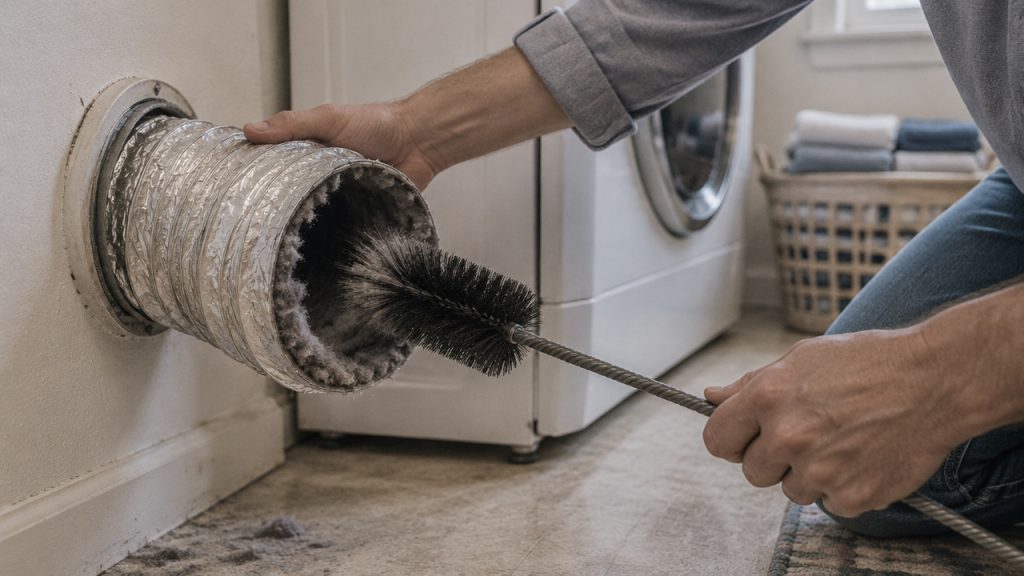
Dryer exhaust cleaning is the removal of lint, debris, and nesting material from the duct that carries hot, moist air from your dryer to the outdoors, and most Austin homes need it once every 12 months. Skip it and your dryer works harder, your energy bill climbs, and lint, which ignites easily, packs into a hidden fire hazard behind your laundry room wall. The good news: the warning signs are obvious once you know them, and the fix takes about an hour. Here’s how to spot trouble, clean safely, and know when to call a pro.
Quick Answer: Clean Your Dryer Exhaust Every 12 Months, Sooner If You See These Signs
Most Austin homes need dryer exhaust cleaning once a year, full stop. If you have a large family or pets, aim for every six months. That’s the baseline for 2026, and it comes down to simple math: the more you run your dryer, the faster lint accumulates in places your lint trap can’t catch.
Industry data supports an annual dryer vent inspection and cleaning cycle as the standard for preventing clogged dryer vent issues [2026 Data]. But “standard” doesn’t mean universal. Some households push that timeline significantly. If you’re wondering how often you should clean your dryer vent, check your situation against these frequency triggers:
- Pets in the home: Pet hair weaves into lint and creates denser, stickier blockages that form faster than lint alone.
- Large families: Daily laundry loads double or triple the lint input, cutting your cleaning timeline in half.
- Long duct runs: Vents longer than 15 feet give lint more places to settle and restrict dryer airflow before you notice a problem.
- Babies’ laundry: Small loads with delicate fabrics and frequent washing cycles add up to faster accumulation.
Lint Is Kindling: The Fire and Energy Math Behind a Clogged Dryer Exhaust
Here’s the uncomfortable truth about lint: it’s essentially kindling. Dry, fibrous, and sitting in a hot metal tube. When dryer airflow restriction prevents that heat from escaping, the temperature inside your duct climbs. Lint ignites at relatively low temperatures, and once it starts, it burns hot and fast.
The National Fire Protection Association (NFPA) and Consumer Product Safety Commission (CPSC) have long documented the role of dryer fire prevention failures in residential fires. The mechanisms are consistent: restricted airflow, heat buildup, and an ignition source. But fire risk is only half the equation. Longer drying cycles mean your dryer runs longer, consuming more energy per load. A clean dryer vent allows hot, moist air to escape quickly, shrinking cycle times.
| Metric | Clean Exhaust | Clogged Exhaust |
|---|---|---|
| Average Drying Time | 45-60 minutes | 90+ minutes |
| Energy Use Per Load | Standard | Up to 2x higher |
| Heat Buildup in Duct | Low (air moves freely) | High (trapped heat) |
| Fire Risk Level | Minimal | Significantly elevated |
| Dryer Component Wear | Normal lifespan | Accelerated wear |
If you want a deeper dive into the mechanics, this homeowner’s guide to dryer vent cleaning breaks down the full system and why each component matters.
Five Warning Signs Your Dryer Is Quietly Choking on Lint
Lint doesn’t announce itself. It builds slowly, cycle after cycle, until your dryer is working twice as hard for half the results. Most homeownersnormalize the warning signs until something breaks or worse. Here’s what to watch for, and what each symptom actually means:
- Clothes take forever to dry. If a normal load suddenly needs two cycles, your vent isn’t exhausting moisture. The air is staying trapped in the drum.
- The dryer is hot to the touch. Run your hand across the top or front panel after a cycle. Excess external heat means the heat isn’t escaping through the vent.
- A burning smell during cycles. This one is urgent. It usually means lint has already overheated somewhere in the system. Stop immediately and inspect.
- Clothes come out damp but hot. The moisture isn’t leaving, so clothes feel hot and clammy instead of dry. Airflow is blocked.
- The exterior vent flap doesn’t open. Go outside while the dryer runs. That little flapper should push open from air pressure. If it stays shut, air isn’t moving.
These symptoms are progressive. They start small and get worse. For a broader overview of dryer vent maintenance and how these signs interconnect, check out these dryer vent cleaning basics.
How to Clean Your Dryer Exhaust Yourself in Six Steps (and When to Stop)
DIY lint removal works for accessible, straight, and short duct runs. If your dryer vents straight through an exterior wall, you can probably handle this yourself. If it goes up, into an attic, or across the ceiling, call a pro. Here’s the process for the DIY-friendly scenarios:
- Unplug the dryer. Gas dryers need the gas valve shut off too. Never work on a connected appliance.
- Pull the dryer away from the wall. Give yourself room to access the back. Disconnect the transition duct clamp.
- Vacuum the lint trap housing. Remove the lint filter screen and use a long, narrow vacuum attachment to clean the cavity it slides into.
- Brush the duct run. Use a dryer vent brush kit to feed through the duct from the dryer end. Twist and pull back to grab lint. Vacuum what comes out.
- Clean the exterior termination. Go outside, remove the vent hood cover, and clear any lint or debris from the flap mechanism and screen.
- Reconnect and test. Reattach everything, plug the dryer back in, and run a test cycle. Check the exterior flap for proper airflow.
Stop and call a pro if: your duct run goes through walls, ceilings, or an attic. If you can’t see the full path, you can’t confirm you’ve cleaned it. Rigid or crushed flexible ducts also warrant professional help.
Want to see what you’re getting into with a professional? This breakdown shows what the professional cleaning process involves and why it goes deeper than most DIY setups.
Why Central Texas Homes Face Unique Dryer Exhaust Problems
Austin area homes have a few dryer vent quirks you won’t find in other parts of the country. The climate, construction styles, and local pests all conspire to make dryer exhaust cleaning more critical and sometimes more complicated.
Many Central Texas homes, especially newer builds, tuck laundry rooms toward the interior. That means longer duct runs to reach an exterior wall or roof. Long runs mean more surface area for lint to stick to, and more opportunities for kinks and sags that trap debris. Add to that:
- Attic and roof terminations: Common in Central Texas, but hard to inspect. Lint builds up where you can’t see it, and roof exhaust caps are prone to weather damage.
- Pet hair overload: Austin is a dog town. Pet hair mixes with lint to create dense, felted blockages that standard brushes sometimes can’t clear.
- Outdoor pests: Birds, wasps, and rodents love warm, protected dryer exhaust openings. A blocked termination flap is an invitation to nest.
- Pollen season impact: Spring in Austin coats everything in yellow dust, including outdoor vent terminations. That fine pollen mixes with lint and restricts airflow.
These factors stack. A long duct run in a pet-friendly home during pollen season is a triple threat for dryer airflow restriction. If that sounds like your house, dryer vent cleaning in Austin, TX isn’t optional maintenance; it’s essential home safety.
DIY Brush Kit vs. Professional Service: Where the Real Difference Shows Up
A $30 brush kit from the hardware store feels like a smart investment. And for simple, accessible vents, it can be. But the limitations show up quickly once you understand what professional dryer duct cleaning actually involves.
Professional technicians use rotary brush systems powered by drills, not hand-cranked flexible rods. They can reach 30+ feet of ductwork, navigate turns, and clean flexible foil or rigid metal ducts without damage. They also measure. After cleaning, a technician checks airflow with specialized tools to confirm the system is truly clear. DIY brush kits can’t do that. You’re guessing based on what you pulled out, not verifying what remains.
| Factor | DIY Brush Kit | Professional Service |
|---|---|---|
| Cost | $25–$40 for kit | $150–$300 typical |
| Time Required | 1–2 hours | 45–90 minutes |
| Duct Reach | Up to ~10 feet, straight runs | Full length, including bends |
| Airflow Verification | Visual inspection only | Measured airflow testing |
| Safety | Risk of duct damage | Insured, trained technicians |
| Thoroughness | Surface lint removal | Full duct wall cleaning |
The math shifts if you suspect deeper blockages, attic runs, or flexible foil ducts that could be damaged by improper technique. For complex systems, professional dryer vent cleaning is an investment in safety and thoroughness, not just convenience.
Key Takeaways: The 60-Second Dryer Exhaust Checklist for 2026
Let’s make this simple. Here’s your dryer vent maintenance cheat sheet for the year:
- Clean your dryer exhaust annually, minimum. Large households, pet owners, and homes with long duct runs need it twice a year.
- Watch for the big five warning signs: long dry times, hot dryer exterior, burning smells, damp/hot clothes, and stuck exterior flaps.
- DIY works for short, straight, accessible ducts. If your vent runs through walls, ceilings, or attics, hire a professional with rotary equipment.
- Central Texas homes face extra risks: pet hair, pollen, pests, and long attic duct runs all accelerate blockage.
- Form a 2026 habit: check the lint trap before every single load. A clean trap reduces what ends up in your duct.
Industry guidance recommends annual inspection and cleaning of dryer vents to remove accumulated lint and reduce fire risk [2026 Data].
For ongoing maintenance, these expert tips for dryer vent maintenance cover prevention strategies that extend the time between professional cleanings.
Dryer Exhaust Cleaning FAQ: Cost, Safety, and Baby-Laundry Concerns
How much does professional dryer vent cleaning cost?
Expect $150–$300 for standard service. Costs vary based on duct length, accessibility, and severity of buildup. Complex runs through attics or roof terminations may cost more. It’s a small price compared to dryer replacement or, worse, fire damage repair.
How long does dryer exhaust cleaning take?
Most jobs finish in under 90 minutes. Severe blockages or complex duct systems with multiple bends take longer. A straightforward accessible duct can be done in under an hour. Technicians measure airflow afterward to confirm results.
Do gas dryers require special cleaning precautions?
Yes, gas connections add risk. Gas dryers need the supply valve shut off before cleaning begins. Any work near gas lines warrants extra caution or professional service. Improper reconnection can cause gas leaks.
Can dryer vent cleaning help with allergies?
Yes, reduced indoor air contamination. A clogged vent can push lint, dust, and allergens back into your laundry room and home air. Clear vents exhaust those particles outside. This matters especially for baby laundry and sensitive household members.
Are flexible foil dryer ducts safe?
No, they’re a known fire hazard. The ridges trap lint, and the material can crush or sag, further restricting airflow. Rigid metal ducts are the safe choice. If your home has foil ducts, prioritize replacement during your next service.
For more on keeping your system running smoothly year-round, these top dryer vent maintenance tips offer practical next steps.