
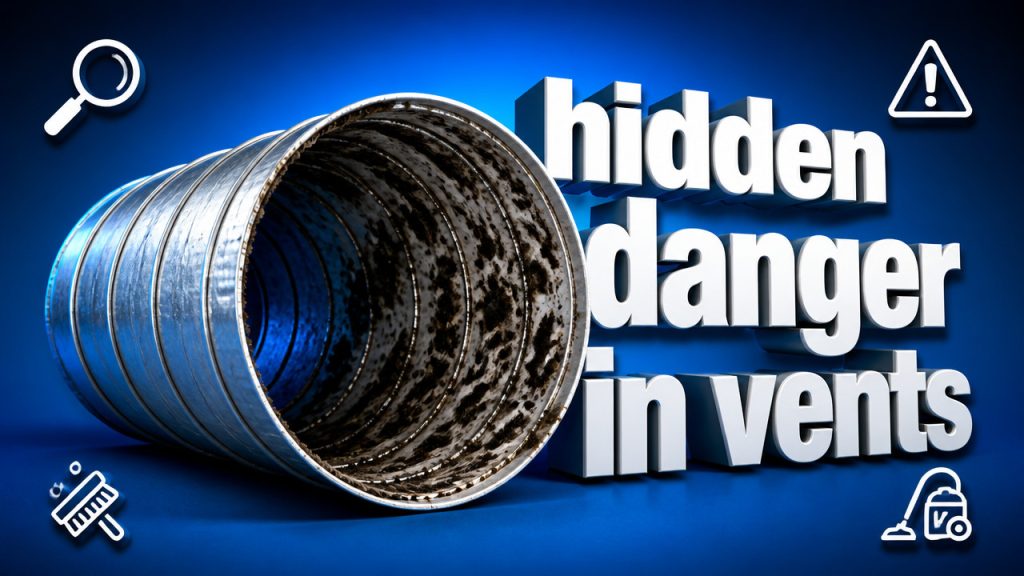
Central Texas humidity creates the perfect breeding ground for vent mold, turning your HVAC system into a spore distribution network throughout your home. Air vent mold cleaning removes visible fungal growth from registers and ductwork while addressing the moisture issues that allowed contamination in the first place. For Austin homeowners especially those with babies or allergy concerns professional vent mold remediation eliminates health risks and restores indoor air quality faster than DIY approaches that often spread spores to previously clean areas.
Quick Answer: What Air Vent Mold Cleaning Actually Entails
True vent mold removal goes far beyond wiping visible spots from your ceiling registers. Professional air vent mold cleaning involves a systematic approach that contains contamination, removes active growth, and treats surfaces to prevent recurrence. Without proper containment, those black specks you see on your registers are just the tip of a much larger colony thriving inside your ductwork.
The process starts with isolation. Technicians seal off affected sections of your HVAC system to prevent spore migration during cleaning. This containment phase matters more than most homeowners realize. Disturbing mold without barriers essentially turns your ductwork into a centrifuge, launching microscopic spores into every room connected to that system.
Surface cleaning alone won’t solve the problem. You might scrub away visible staining and think the job is done, but the root system often penetrates deeper into porous materials or hides in crevices where register boxes meet drywall. Professional duct mold cleaning services address both the visible contamination and the underlying colonization that DIY methods miss entirely.
- Containment setup with negative air pressure to trap airborne spores
- HEPA vacuuming of all visible growth from registers and surrounding areas
- Antimicrobial treatment applied to affected surfaces and duct interiors
- Source moisture identification and remediation recommendations
- Post-cleaning air quality testing to confirm spore reduction
Why Austin’s Climate Makes Vent Mold a Year-Round Threat
Austin homeowners face a double-edged sword when it comes to indoor air quality. Our climate delivers oppressive summer heat paired with humidity levels that make outdoor air feel like soup. Your air conditioning system works overtime to combat both, but that constant cycling creates its own mold-friendly conditions inside your ductwork.
Here’s what happens: when warm, moisture-laden air hits your cold evaporator coils, condensation forms. Properly maintained systems drain this water away. But when drain lines clog, insulation degrades, or airflow becomes restricted, that moisture accumulates. Add organic debris like dust and skin cells collecting in your ducts, and you’ve built a five-star resort for fungal growth.
The seasonal swings in Central Texas mean your HVAC system rarely gets a break. Spring brings cedar fever and tree pollen. Summer delivers triple-digit temperatures with 60-70% humidity. Fall introduces ragweed and mold spores from decaying vegetation. Winter such as it is in Texas still sees your system running, just in reverse mode. Each season deposits different contaminants into your ductwork, creating layers of organic material that feed mold colonies year-round.
| Season | Outdoor Humidity (Austin Avg.) | Indoor Target Humidity | Mold Risk Level |
|---|---|---|---|
| Spring (Mar-May) | 65-75% | 30-50% | High (Pollen + Moisture) |
| Summer (Jun-Aug) | 60-70% | 30-50% | Critical (Condensation Peak) |
| Fall (Sep-Nov) | 65-80% | 30-50% | High (Decaying Vegetation) |
| Winter (Dec-Feb) | 55-70% | 30-50% | Moderate (Stagnant Air) |
Recognizing signs you need air duct cleaning early can prevent small moisture problems from becoming full-blown mold infestations. Austin’s climate doesn’t give homeowners the luxury of ignoring HVAC maintenance. What starts as slight condensation in July can blossom into a widespread mold problem by September.
Health Risks: What Vent Mold Does to Your Family
Mold isn’t just an aesthetic problem. Those dark patches on your vents represent a biological hazard that affects everyone in your household, but some family members face exponentially higher risks. Infants, whose respiratory systems are still developing, breathe more air relative to their body weight than adults. When that air carries mold spores, their immature immune systems struggle to mount an effective defense.
The respiratory impacts vary based on the mold species and concentration. Common indoor molds like Cladosporium, Penicillium, and Aspergillus trigger allergic responses in sensitive individuals. But certain species particularly Stachybotrys chartarum, often called black mold produce mycotoxins that can cause more severe reactions. These toxic compounds aren’t just irritants. They’re capable of damaging lung tissue and suppressing immune function with prolonged exposure.
Research published in indoor air quality journals indicates that children exposed to visible mold in their homes during their first year of life have a significantly higher risk of developing asthma compared to children in mold-free environments.
Adults with pre-existing conditions don’t fare much better. Asthma sufferers may experience increased frequency and severity of attacks when mold spores circulate through their homes. Allergies that seemed manageable can become constant struggles. Even healthy adults report fatigue, headaches, and cognitive fog after prolonged exposure to elevated mold spore counts.
A comprehensive air duct cleaning guide explains the full scope of contaminants lurking in residential HVAC systems. But mold specifically poses risks that go beyond common dust and debris. The mycotoxins produced by certain species can linger even after the mold itself has been removed, which is why professional remediation often includes encapsulation treatments.
- Chronic coughing and throat irritation that worsens at home
- Recurring sinus infections and nasal congestion
- Wheezing or shortness of breath without obvious cause
- Skin rashes or hives with no clear allergen source
- Eye irritation redness, itching, watering upon entering affected rooms
- Fatigue and headaches that improve when leaving the house
How to Identify Mold in Your Air Vents (Before It Spreads)
Catching mold early saves you money and protects your family’s health. The problem? Most homeowners don’t inspect their air vents until they notice symptoms. By that point, the contamination has often spread beyond simple remediation. A quick visual inspection every few months especially before and after Austin’s humid summer season can reveal problems while they’re still manageable.
Start with the obvious: remove your vent covers and shine a flashlight into the duct opening. You’re looking for discoloration, fuzzy growth, or water staining. Mold comes in various colors not just black. Green, white, orange, and even pink molds can colonize ductwork. Pay attention to texture. Dust blows off easily. Mold tends to cling and may appear slightly raised or fuzzy.
Your nose knows. That musty, earthy smell we associate with basements and old books? That’s microbial volatile organic compounds MVOCs produced by actively growing mold. If you detect this odor strongest near your vents or your home smells this way when the AC first kicks on, you likely have hidden growth somewhere in your system. Trust that instinct. air vent cleaning becomes necessary the moment you notice this signature smell.
- Check supply register edges for dark staining or streaking patterns
- Remove vent covers and inspect the boot connection for gaps or moisture
- Look inside visible ductwork with a flashlight for fuzzy or powdery growth
- Smell each register after the system has been off for 30+ minutes
- Inspect areas around vents for water stains on ceilings or walls
- Check your air filter for excessive debris or visible mold growth
- Monitor for musty odors when the AC first cycles on
Professional vs DIY: When Air Vent Mold Cleaning Goes Wrong
We’ve all seen the DIY videos. Spray some cleaner, wipe with a rag, problem solved. But those tutorials don’t show what happens 24 hours later when disturbed spores settle into new areas of your home. They don’t mention that porous duct materials can’t be effectively cleaned with surface treatments. And they definitely don’t address the containment protocols necessary to prevent cross-contamination.
Here’s the reality: without proper equipment, attempting mold removal often makes the problem worse. Scrubbing growth releases spores into the air. Regular vacuums can’t capture particles small enough to matter. Even wiping with bleach long recommended for mold cleanup only addresses surface staining while leaving the root structures intact in porous materials. Within days, that “cleaned” area shows regrowth, often more aggressive than before.
Studies on DIY mold remediation effectiveness show that homeowners who attempt cleanup without proper containment spread mold spores to previously unaffected areas in over 80% of cases, increasing total contamination area rather than reducing it.
Professional deep cleaning your air ducts involves equipment and techniques most homeowners simply can’t access. Industrial HEPA vacuums capture 99.97% of particles down to 0.3 microns. That’s small enough to trap individual mold spores before they become airborne. Negative air machines create pressure differentials that prevent spores from migrating outside the work area. These aren’t optional extras they’re essential components of effective remediation.
| Factor | DIY Approach | Professional Service |
|---|---|---|
| Containment | None or plastic sheeting | Negative pressure enclosures |
| Filtration | Standard vacuum only | HEPA filtration systems |
| Treatment | Surface bleach/soap | Commercial antimicrobials |
| Verification | Visual inspection | Air quality testing |
| Safety | No respiratory protection | Full PPE and respirators |
| Recurrence Risk | High (often within weeks) | Low with proper moisture control |
The Noble Air Vent Mold Removal Process: Step-by-Step
Effective vent mold removal follows a precise sequence. Skip a step, and you compromise the entire remediation. Here’s how professional air duct cleaning services should approach your contamination exactly the process Noble Air technicians follow for Austin homeowners.
First comes assessment. Not every dark spot is mold, and not every mold problem requires the same approach. Technicians identify the species when possible, determine the extent of contamination, and locate the moisture source feeding the growth. Without addressing that moisture, any cleaning is temporary at best. We’re solving the problem, not just treating symptoms.
Containment setup follows. This means sealing off affected areas from the rest of your home. We establish negative air pressure using specialized equipment that pulls air and any airborne spores through HEPA filters. Think of it like a surgical environment. The contamination stays contained while we work, protecting your family and preventing spread to clean areas.
HEPA vacuuming removes loose growth and debris without releasing spores into your indoor air. This step alone can take hours depending on contamination severity. We’re thorough on purpose. After vacuuming, antimicrobial treatments kill remaining organic growth and create a hostile environment for future colonization. For persistent or severe contamination, we offer UV light HVAC disinfection an ongoing solution that prevents regrowth within your system.
- Initial assessment with moisture mapping and contamination documentation
- Negative pressure containment setup to isolate affected work areas
- HEPA vacuuming of all accessible duct surfaces and components
- Antimicrobial treatment application per EPA guidelines
- Physical removal of heavily contaminated materials if necessary
- Optional UV light installation for ongoing mold prevention
- Duct surface sealing or encapsulation for porous materials
- Final inspection and air quality verification testing
Prevention Strategies: Keeping Austin Vents Mold-Free
Remediation solves the immediate problem. Prevention keeps it solved. After investing in professional cleaning, Austin homeowners need strategies to ensure mold doesn’t return. The good news? Most prevention tactics cost far less than remediation and fit easily into regular household maintenance.
Humidity control tops the list. Your indoor environment should maintain 30-50% relative humidity. In Austin’s climate, that often requires running dehumidifiers during peak humidity months. Your HVAC system provides some dehumidification, but when outdoor dew points exceed 65 degrees as they regularly do in Central Texas summers supplemental dehumidification becomes necessary. Whole-home dehumidifiers integrated with your HVAC system offer set-and-forget convenience.
Regular maintenance on your HVAC system prevents moisture accumulation. That means quarterly filter changes, annual professional inspections, and prompt attention to drain lines. Clogged condensate drains represent one of the most common moisture sources in residential HVAC systems. When water can’t exit your system properly, it backs up, overflows, and creates ideal mold conditions.
Attic insulation plays an unexpectedly important role in vent mold prevention. Poor insulation at duct boot connections where your ductwork meets ceiling registers allows temperature differentials that promote condensation. When cool conditioned air meets humid attic air at inadequately insulated connection points, condensation forms on the outside of the duct. That moisture drips down and soaks into surrounding materials, eventually feeding mold growth. Proper dryer vent cleaning also helps reduce humidity loads in your home.
- Maintain indoor humidity between 30-50% with dehumidifiers as needed
- Replace HVAC filters monthly during peak usage seasons
- Schedule professional HVAC maintenance twice annually
- Inspect condensate drain lines quarterly for clogs or backups
- Seal and insulate all duct boot connections in the attic
- Address any water intrusion or leaks within 24-48 hours
Key Takeaways
Austin homeowners face unique challenges when it comes to air vent mold. Our climate doesn’t cooperate, our HVAC systems work harder than most, and the health stakes are too high to ignore. Understanding both the problem and the solution helps you make informed decisions about protecting your indoor air quality.
- Central Texas humidity creates year-round mold risks inside HVAC systems
- Infants and allergy sufferers face heightened health risks from mold exposure
- DIY cleaning often spreads contamination rather than resolving it
- Professional remediation includes containment, HEPA filtration, and antimicrobial treatment
- Prevention requires humidity control and regular HVAC maintenance
Whether you’re dealing with visible growth now or want to prevent future contamination, all Noble Air services are designed specifically for Austin homeowners facing these exact challenges. Local expertise matters when the solution needs to account for Central Texas climate realities.
FAQ
How much does professional air vent mold cleaning cost in Austin?
Costs typically range from $500-$2,000 depending on contamination severity. Factors affecting price include the number of affected vents, contamination extent, and whether ductwork requires access for thorough cleaning. Remediation addressing heavy growth throughout an entire system naturally costs more than treating isolated register contamination. Most Austin homeowners find the investment worthwhile compared to potential health costs and property damage from unchecked mold growth.
How long does vent mold removal take?
Most residential jobs complete within one day. Smaller contaminations may take just a few hours, while severe cases affecting extensive ductwork can require two or more days. The timeline depends heavily on contamination severity, duct accessibility, and whether additional services like UV light installation are included. Your technician can provide a specific time estimate after the initial assessment.
Will cleaning my vents solve my mold problem permanently?
No unless the underlying moisture issue is also addressed. Professional cleaning removes existing contamination and reduces spore counts dramatically. But without correcting the humidity, leak, or condensation source that allowed mold to grow originally, recurrence is likely. Effective remediation always includes moisture source identification and a prevention plan. Think of cleaning as resetting the clock prevention determines how long it stays reset.
Can I stay in my home during mold remediation?
Yes, in most cases you can remain home during the process. Professional containment protocols isolate work areas from the rest of your living space. Negative air pressure prevents spores from migrating outside the containment zone. However, family members with severe allergies, asthma, or compromised immune systems may prefer to leave during active remediation as an extra precaution.
Are black mold removal costs covered by homeowners insurance?
It depends entirely on your policy and the cause of contamination. Most standard policies don’t cover mold removal unless it results from a covered peril like a sudden pipe burst. Gradual issues like condensation from poor maintenance typically aren’t covered. Check your specific policy language and consider calling your insurer to discuss coverage options before beginning work.
How often should Austin homeowners have their ductwork inspected for mold?
Annual inspections are recommended given Austin’s climate conditions. Homes with previous mold issues, family members with respiratory conditions, or older HVAC systems may benefit from twice-annual checks. The best timing? Schedule inspections before summer humidity peaks and again after the highest AC usage months. Early detection means simpler, less expensive remediation.