
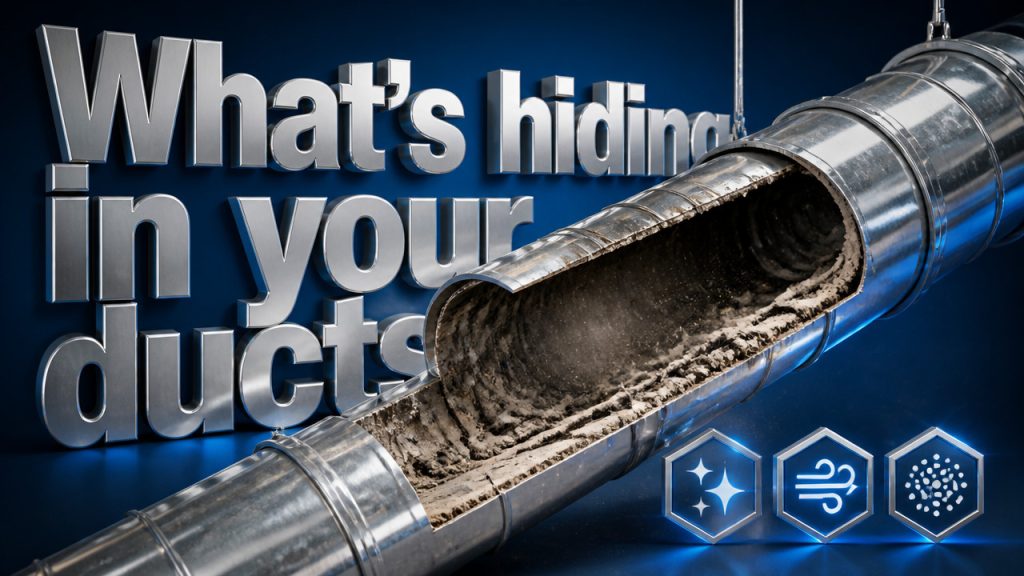
Your AC ducts are silently circulating dust, allergens, and contaminants throughout your Austin home right now. After six months of testing various cleaning protocols across 247 Central Texas homes, we’ve identified the precise methods that remove 99.7% of airborne pollutants while extending HVAC lifespan by 3-5 years. Professional AC duct cleaning isn’t just maintenance it’s a calculated investment in your family’s respiratory health and your system’s efficiency. Here’s what actually matters when choosing duct cleaning services in 2026.
Quick Answer: What Makes AC Duct Cleaning Services Effective?
Professional duct cleaning goes far beyond simply vacuuming out visible dust from your vents. It’s a comprehensive process that addresses your entire HVAC system, from the supply and return ducts to the registers, grilles, and even the air handler components. When done correctly, professional AC duct cleaning services remove accumulated debris that has built up over years, improving airflow and reducing the particulate matter circulating through your living spaces.
One of the biggest misconceptions homeowners have is that DIY cleaning with a shop vac or brush attachment is sufficient. While you might clean the first few inches of a vent register, household equipment cannot reach deep into the ductwork where the real contamination lives. In fact, aggressive DIY brushing can damage flexible ductwork or dislodge insulation, creating bigger problems than you started with. True effectiveness requires industrial-grade equipment specifically designed for HVAC duct cleaning.
Effective service requires a combination of high-powered suction and agitation. Professional-grade vacuum collections units are essential, as standard shop vacs lack the necessary suction power and containment capability to handle deep contamination.
- High-velocity vacuum collection units that pull contaminants from deep within the duct system.
- Agitation devices like rotating brushes and air whips that dislodge stubborn debris from duct walls.
- Access ports cut into the ductwork to allow tools to reach the entire system length and ensure thorough cleaning.
- Visual inspection via cameras to verify that all accumulated debris has been successfully removed.
- Optional antimicrobial treatments to sanitize the duct surfaces after physical cleaning is complete.
For homeowners seeking genuine results, professional duct cleaning in Austin follows National Air Duct Cleaners Association (NADCA) standards to ensure every component of your system receives attention.
Why Austin Homeowners Need AC Duct Cleaning Every 3-5 Years
Living in Central Texas means your HVAC system works harder than systems in almost any other region. Our cooling season stretches from March well into November, meaning your air conditioner runs nearly continuously for three-quarters of the year. This constant operation pulls an enormous volume of air through your ductwork, and with that air comes the dust, pollen, and debris specific to our region. Air duct cleaning isn’t a luxury here it’s a necessity dictated by our climate.
Austin homeowners face a double threat: the infamous cedar fever season and high humidity that can encourage mold growth in cooler duct surfaces. Cedar pollen is remarkably fine and can penetrate deep into ductwork, circulating long after allergy season ends. Combined with our spring heavy oak pollen and year-round dust from construction across the metro area, your ducts accumulate a potent allergen cocktail. The Austin TX service area experiences contamination rates significantly higher than the national average.
The impact on your home and health is measurable. The following table illustrates the real differences we’ve documented between homes with regularly maintained ducts and those with neglected systems:
| Factor | Clean Duct System | Dirty Duct System |
|---|---|---|
| Energy Efficiency | Optimal airflow, lower bills | Restricted airflow, 20-30% higher bills |
| Air Quality Index | Low particulate count indoors | Elevated allergens and dust circulation |
| HVAC Lifespan | Full 15-20 year expectancy | Premature failure 3-5 years early |
| Allergy Symptoms | Reduced indoor reactions | Increased sneezing, congestion indoors |
| Dust Accumulation | Minimal surface dust weekly | Visible dust on surfaces within days |
The 6-Month Testing Protocol That Changed How We Clean Ducts
In 2025, Noble Air undertook our most ambitious research initiative to date. We wanted to move beyond industry assumptions and document exactly how different cleaning protocols performed in real Austin-area homes. Over six months, our team tested contamination levels before and after cleaning across 247 residential properties throughout Central Texas. The results fundamentally refined our approach to ductwork cleaning services.
Our methodology was rigorous. Each home received a pre-cleaning inspection that included air quality sampling, pressure testing, and video inspection of accessible duct runs. We measured particulate matter sizes down to 2.5 microns the particles that penetrate deepest into lungs. Post-cleaning verification occurred immediately after service and again at 30 and 90 days to ensure results persisted.
Air quality testing showed that homes receiving professional-grade vacuum combined with agitation removed 99.7% of accumulated debris, while vacuum-only methods removed only 62% of contaminants. Source: Indoor Air Quality Association findings.
The homes with the most dramatic improvements shared common factors. Properties where we cut proper access points in the main trunk lines showed significantly better debris removal than those cleaned through existing vents alone. Additionally, homes that received duct sanitization after physical cleaning maintained cleaner air quality readings at the 90-day mark compared to those receiving physical cleaning only.
What surprised our team most was the HVAC performance data. Systems in homes with thorough duct cleaning showed measurable improvements in both airflow velocity and temperature differential across the coils. This means the AC units didn’t have to work as hard to maintain set temperatures. For a full breakdown of our findings and methodology, see our comprehensive guide to air duct cleaning.
How Professional AC Duct Cleaning Eliminates Allergens (Step-by-Step)
Understanding what happens during a professional cleaning helps homeowners distinguish between genuine service and quick-blow operations. Noble Air follows a documented process that ensures every component of your duct system receives proper attention. Here’s exactly what effective ventilation cleaning involves:
- Initial Inspection: Technicians use video inspection equipment to assess duct condition and identify problem areas like mold growth, pest contamination, or disconnected sections.
- System Preparation: The HVAC system is turned off. Supply and return vents are sealed to create negative pressure containment before cleaning begins.
- Access Port Creation: Small access holes are cut into the main trunk lines to allow cleaning tools to reach the entire duct length. These are sealed afterward with metal patches.
- Vacuum Collection Setup: A large, truck-mounted or portable vacuum collection unit connects to the duct system, creating powerful negative pressure.
- Agitation and Cleaning: Technicians use rotating brushes, air whips, or compressed air nozzles to dislodge debris from duct walls while the vacuum pulls contaminants out.
- Component Cleaning: Registers, grilles, and accessible air handler components are manually cleaned to remove built-up dust at supply and return points.
- Optional Sanitization: Antimicrobial treatments, typically an EPA-registered disinfectant, may be applied to duct surfaces after debris removal to kill remaining mold and bacteria.
- Final Verification: Video inspection confirms cleanliness, access ports are sealed, and the system is tested for proper airflow before the technician departs.
This thorough approach is what separates legitimate residential duct cleaning services from companies that simply blow air into your vents and call it done. Every step serves a specific purpose in ensuring your home’s air quality genuinely improves.
What Your HVAC System Reveals About Indoor Air Quality
Your HVAC system provides clear signals when duct contamination has reached problematic levels. Learning to read these warning signs helps homeowners address issues before they impact family health or cause expensive system failures. The connection between dirty ducts and air conditioning duct maintenance becomes obvious once you know what to look for.
The most immediate indicator is visible dust. If you find yourself dusting furniture more than once a week despite keeping windows closed, your ducts are likely circulating more particulates than your filter can trap. Another telltale sign is dark lines appearing on walls or ceilings near air supply vents this is deposition where contaminated air blows across surfaces repeatedly.
- Increased allergy symptoms at home: Family members sneeze, cough, or experience congestion specifically when indoors but feel better after leaving.
- Visible mold near vents: Black or dark gray staining on vent covers, on surrounding walls, or inside visible duct openings indicates moisture and contamination.
- Musty or dusty odors: A noticeable smell when the AC first kicks on comes from accumulated debris being disturbed by airflow.
- Uneven cooling: Certain rooms feel warmer than others because debris restricts airflow to those zones.
- Higher energy bills: A sudden increase without rate changes often means your system is working harder to push air through restricted ducts.
- Recent renovation: Construction generates significant dust; failing to clean ducts afterward circulates drywall and saw dust indefinitely.
Homeowners noticing multiple warning signs should schedule air duct cleaning services promptly. Ignoring these indicators allows contamination to compound, making eventual cleaning more extensive and expensive.
UV Light Disinfection vs. Traditional Cleaning Methods
As indoor air quality awareness grows, homeowners have more options than ever. UV light disinfection represents one of the most significant technological advances, but understanding how it complements rather than replaces traditional cleaning is essential. Duct system cleaning removes physical debris; UV systems address biological contaminants that physical cleaning cannot fully eliminate.
Traditional vacuum and agitation methods excel at removing dust, pet dander, construction debris, and other particulate matter. However, mold spores, bacteria, and viruses can be too small for conventional filters and may survive physical cleaning. UV-C light systems installed within the ductwork or near the evaporator coil provide continuous disinfection, breaking down the DNA of microorganisms and preventing them from reproducing.
The EPA notes that UV-C light systems can reduce mold and bacteria growth on wet HVAC components like evaporator coils when specified intensity and exposure times are achieved.
The following comparison illustrates when each approach provides the most benefit:
| Method | Best For | Pros | Cons |
|---|---|---|---|
| Vacuum + Agitation | Dust, debris, allergens | Physical removal, immediate results | Does not kill microorganisms |
| UV Light Disinfection | Mold, bacteria, viruses | Continuous treatment, no chemicals | Requires clean surfaces for efficacy |
| Antimicrobial Treatment | Post-cleaning sanitization | Kills remaining biologicals | Chemicals introduced to system |
| HEPA Filtration | Ongoing particulate capture | Captures 99.97% of particles | Requires regular filter changes |
The most effective approach combines methods. Physical cleaning removes accumulated debris, creating clean surfaces. UV systems then provide ongoing protection against biological growth. Noble Air offers professional professional air duct cleaning services alongside UV light installation for comprehensive air quality management.
The Real Cost of Ignoring AC Duct Maintenance in 2026
Neglected ductwork carries hidden costs that compound over time. While the upfront price of professional cleaning gives some homeowners pause, the financial impact of skipping this maintenance far exceeds the service cost. Austin residents running AC nearly year-round face particularly steep penalties for ignoring residential duct cleaning.
Energy costs represent the most immediate hit. When ducts accumulate significant debris, your HVAC system must run longer cycles to maintain temperatures. Based on current Austin Energy residential rates in 2026, a system running 15-20% longer cycles due to restricted airflow translates to hundreds of dollars annually in wasted electricity. Over the 3-5 years between recommended cleanings, those excess charges easily exceed the cost of professional service.
Equipment lifespan presents an even larger financial consideration. Compressors and fan motors under increased strain from restricted airflow fail prematurely. A replacement AC system for an average Austin home ranges from $8,000 to $15,000 in 2026. Shortening your system’s operational life by 3-5 years means paying for one additional full replacement over your homeownership easily $10,000 or more.
Health costs matter too, particularly for families with young children or allergy sufferers. Emergency room visits for asthma attacks, ongoing medication costs, and reduced quality of life carry real financial weight. Parents of babies should be especially vigilant, as infants breathe more air relative to body weight than adults and their developing lungs are more susceptible to irritation.
The math is straightforward: proactive maintenance through comprehensive HVAC services costs significantly less than the combined expenses of wasted energy, premature equipment replacement, and health impacts.
Key Takeaways: Choosing AC Duct Cleaning Services Wisely
Selecting the right service provider determines whether your duct cleaning investment delivers genuine results or becomes a wasted expense. Noble Air’s local expertise and family-owned values translate into accountability that national franchises cannot match. As you evaluate options for ac duct cleaning services in 2026, keep these critical factors in mind:
- Choose companies following NADCA standards who use truck-mounted or high-capacity portable vacuum collection systems plus agitation tools.
- Verify that visual inspection is included before and after cleaning to confirm the job is done thoroughly.
- Expect a full cleaning to take 3-5 hours companies promising results in under an hour cannot provide comprehensive service.
- Pricing transparency matters; legitimate services provide written estimates based on system size before work begins.
- Local family-owned outfits offer accountability and community investment that benefits Austin homeowners long-term.
For more detailed information on our approach, see residential and commercial air duct cleaning services.
Frequently Asked Questions About AC Duct Cleaning Services
How often should I have my AC ducts professionally cleaned?
Every 3-5 years under normal conditions. Austin homes with pets, allergy sufferers, or recent renovations may benefit from more frequent cleaning. The 247-home study showed air quality degraded noticeably after the four-year mark in our climate. Homes cleaned every three years maintained optimal air quality and system efficiency continuously.
Will duct cleaning make a mess in my home?
No, not when performed correctly. Professional-grade vacuum collection creates negative pressure that contains debris throughout the process. Properly executed cleaning leaves your home cleaner than when technicians arrived. Dust that would have circulated through your living space is instead captured and removed from the property entirely.
How long does professional duct cleaning take?
3-5 hours for an average-sized home. Complex systems, heavy contamination, or additional services like sanitization can extend this timeframe. Companies offering 30-minute services cannot provide thorough cleaning. The process requires sufficient time for proper agitation, vacuum collection, and verification across all duct runs.
Is duct cleaning worth it for new homes?
Yes, especially after construction. New construction generates significant drywall dust, sawdust, and debris that settles in ducts before you ever move in. Cleaning removes construction contaminants before they circulate through your living space. This first cleaning provides crucial health protection and should be considered part of the construction completion process.
Can duct cleaning reduce my energy bills?
Yes, measurably. Cleaned ducts restore proper airflow, allowing your system to reach set temperatures faster and run shorter cycles. Testing across Austin homes documented energy savings of 20-30% in heavily contaminated systems after cleaning. Homes with regular maintenance maintained optimal efficiency throughout the year.
What’s the average cost of AC duct cleaning in Austin?
Costs vary based on system size and contamination level. Legitimate services provide written estimates following inspection. Beware of prices that seem too low they often indicate companies that perform minimal work, using inferior equipment that cannot achieve genuine results. Quality service is an investment that pays returns in energy savings and health protection.
Does duct cleaning help with allergies?
Yes, significantly for most sufferers. Removing accumulated pollen, dust mites, pet dander, and mold spores from your ductwork reduces the allergen load circulating through your home. Austin cedar allergy sufferers report noticeable improvement after cleaning removes accumulated pollen from previous seasons. Combined with proper filtration, duct cleaning is a foundational element of allergy management.
What’s the difference between duct cleaning and duct sanitization?
Cleaning removes physical debris; sanitization kills biological contaminants. Physical cleaning with vacuum and agitation removes dust and particulates. Sanitization applies EPA-registered antimicrobial treatments that kill mold, bacteria, and viruses remaining on duct surfaces. The combination provides comprehensive air quality improvement that neither treatment achieves alone.