
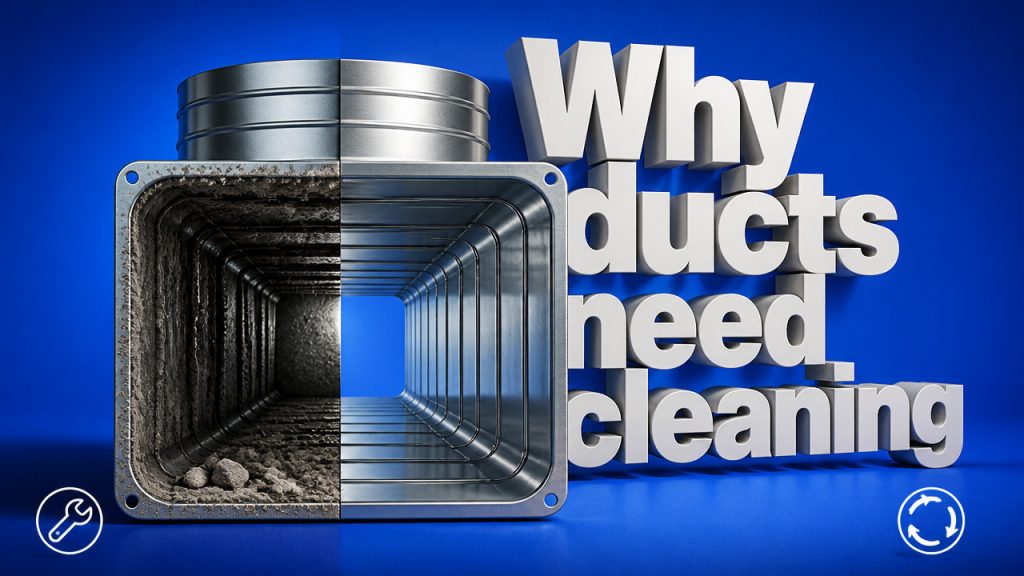
Air duct cleaning falls to specialized HVAC technicians and certified professionals who combine technical training with advanced equipment to remove contaminants from your home’s ventilation system. In Austin’s competitive service landscape [2026 Data], you’ll encounter NADCA-certified specialists, family-owned operations like Noble Air, and national franchises each offering distinct approaches to improving your Central Texas home’s indoor air quality. Understanding who performs this essential service helps homeowners make informed decisions about protecting their family’s respiratory health.
Quick Answer: The Three Types of Air Duct Cleaning Professionals
When Austin homeowners start researching air duct cleaning professionals, they often discover that not all service providers operate the same way. Three main categories dominate the Central Texas market, each with distinct qualifications, equipment capabilities, and service approaches.
NADCA-certified specialists represent the gold standard in the industry. These professionals have completed rigorous training through the National Air Duct Cleaners Association, demonstrating mastery of source removal techniques and comprehensive system cleaning. They understand the science behind contamination removal rather than just running a vacuum hose through your vents.
General HVAC contractors sometimes offer duct cleaning as an add-on service, but their primary focus remains system installation and repair. While they possess mechanical knowledge of air handling units, they may lack the specialized equipment and training that dedicated duct cleaning specialists bring to each job. Their approach often prioritizes speed over thoroughness.
Dedicated cleaning companies focus exclusively on air duct maintenance and related services like professional air duct cleaning services. These operations invest heavily in truck-mounted vacuum systems, HEPA filtration equipment, and specialized brushes designed specifically for ductwork. Their technicians perform this work daily rather than occasionally.
| Professional Type | Credentials | Equipment | Specialization |
|---|---|---|---|
| NADCA-Certified Specialist | Certified Air Systems Cleaning Specialist (ASCS) | Truck-mounted vacuums, HEPA filtration, inspection cameras | Whole-system cleaning, mold remediation, contamination removal |
| General HVAC Contractor | Texas HVAC Contractor License | Portable vacuums, basic brushes | System repairs, installation, basic maintenance |
| Dedicated Cleaning Company | Company certifications, manufacturer training | Negative air machines, rotary brushes, sanitizing equipment | Duct cleaning, dryer vent cleaning, air quality solutions |
NADCA Certification: Why Austin Homeowners Should Verify Credentials
The National Air Duct Cleaners Association established industry standards that separate legitimate professionals from opportunistic operators. For Austin families concerned about indoor air quality, verifying NADCA certification provides peace of mind that the technician entering your home meets rigorous competency requirements.
NADCA’s Source Removal Standard (ACR) defines proper cleaning methodologies and establishes measurable outcomes for contamination removal. Certified professionals must demonstrate understanding of these protocols before earning their credentials. This matters significantly in Central Texas, where understanding professional credentials helps homeowners avoid hiring unqualified service providers.
- Written Examination: Candidates must pass comprehensive testing on HVAC systems, cleaning methodologies, and safety protocols before certification is granted.
- Continuing Education: Certified professionals complete annual training requirements to maintain their credentials and stay current with industry developments.
- Code of Ethics: NADCA members commit to honest advertising, fair pricing, and protecting consumer interests through transparent business practices.
- Equipment Standards: Certification requires understanding of proper containment procedures and HEPA filtration requirements for residential properties.
- Safety Protocols: Technicians demonstrate knowledge of hazard identification, personal protective equipment requirements, and proper chemical handling.
- System Inspection: Certified cleaners must perform thorough pre-cleaning inspections using camera equipment to assess contamination levels.
According to NADCA standards, proper air duct cleaning requires removing visible contamination from all interior surfaces of the HVAC system and verifying cleanliness through visual inspection before concluding service.
Family-Owned vs. National Franchises: Austin’s Air Duct Service Landscape
Austin homeowners face a real choice when selecting air duct service providers. National franchises arrive with recognizable branding and standardized processes, while family-owned operations like Noble Air offer something different a personal investment in every job and genuine familiarity with Central Texas homes.
Consider response times alone. When cedar counts spike in January and your family starts sneezing, you need technicians who can schedule service quickly. Local companies maintain flexibility that corporate call centers cannot match. A family-owned operation understands that Austin parents cannot wait three weeks for an appointment while their children struggle with allergy symptoms.
Personalized service matters too. Local technicians remember your home, your system, and your specific concerns from previous visits. They notice when your air handler needs attention beyond the scheduled cleaning. This continuity of care builds relationships that franchises, with their rotating staff assignments, struggle to replicate.
For Austin residents seeking residential air duct cleaning services, understanding this distinction helps set realistic expectations. Franchises excel at consistent execution of standardized procedures. Local specialists excel at adapting their approach to each home’s unique requirements and building lasting trust with their customers.
How Professional Technicians Actually Clean Your Ductwork
Professional air system maintenance providers follow systematic procedures designed to remove contamination without redistributing dust throughout your home. The process involves specialized equipment that goes far beyond what homeowners can accomplish with standard vacuum cleaners and shop tools.
The cleaning sequence begins before any equipment touches your ductwork. Technicians protect your floors and furniture, then create access points in the duct system to insert cleaning tools. These strategic openings allow thorough cleaning without damaging your HVAC system’s components.
- System Inspection: Technicians use video camera equipment to examine interior duct surfaces, identifying contamination levels and documenting pre-cleaning conditions.
- System Protection: Drop cloths and corner guards protect your home while technicians prepare the work area for cleaning operations.
- Negative Air Setup: A powerful vacuum system creates negative pressure within the ductwork, ensuring dust removal occurs without contaminating living spaces.
- Agitation Process: Specialized brushes and air whips dislodge debris from duct walls, breaking loose accumulated dust, pollen, and contaminants.
- Continuous Extraction: The negative air machine continuously captures loosened debris through HEPA filtration, capturing particles as small as 0.3 microns.
- Component Cleaning: Registers, grilles, and accessible components receive detailed cleaning to remove visible contamination buildup.
- Final Inspection: Technicians verify cleaning effectiveness through camera inspection, confirming all accessible surfaces meet cleanliness standards.
Understanding effective duct cleaning techniques helps homeowners recognize quality work when they see it. Technicians should welcome questions about their process and equipment during service visits.
The Training Pipeline: From Entry-Level to Master Air Duct Technician
The path to becoming a qualified indoor air quality expert varies considerably across the industry. Some technicians arrive from HVAC installation backgrounds, bringing mechanical knowledge of air handling systems. Others enter specifically through duct cleaning apprenticeships, learning source removal techniques from their first day on the job.
Apprenticeship programs typically require 2,000+ hours of supervised fieldwork before technicians can work independently. During this training period, newcomers learn equipment operation, safety procedures, and customer service protocols under direct supervision. They progress from basic tasks like setup and cleanup to performing actual cleaning procedures as their skills develop.
Continuing education requirements ensure established technicians stay current with evolving best practices. The industry has changed significantly over the past decade, with new equipment technologies and cleaning methodologies emerging regularly. Technicians committed to excellence pursue ongoing training through manufacturer programs and industry associations.
Industry data [2026 Data] indicates that technicians completing formal apprenticeship programs demonstrate 60% higher customer satisfaction ratings compared to those with informal on-the-job training alone.
Homeowners curious about what professional cleaners uncover during inspections often find the training background of their technicians directly impacts service quality and thoroughness.
Austin’s Climate Factor: Why Central Texas Duct Cleaning Differs
Austin’s unique environmental conditions create specific challenges that ventilation system cleaners must address differently than their counterparts in other regions. The combination of cedar pollen, high humidity periods, and extended air conditioning seasons produces contamination patterns unfamiliar to technicians trained elsewhere.
Cedar fever season represents perhaps the most distinctive Austin air quality challenge. From December through February, mountain cedar releases enormous quantities of pollen that infiltrates homes through both natural ventilation and HVAC systems. This allergen coats ductwork interiors, creating problems for sensitive family members long after outdoor pollen counts decrease.
The region’s notorious humidity introduces mold and mildew concerns. While Austin experiences dry periods, the humid stretches create ideal conditions for biological growth within poorly maintained duct systems. Technicians familiar with Central Texas recognize contamination patterns that northern-trained professionals might miss entirely.
- Cedar Pollen Accumulation: Central Texas technicians understand how mountain cedar pollen penetrates ductwork and requires specialized removal techniques during peak season.
- Extended AC Runtime: Austin’s cooling systems operate virtually year-round, accumulating debris faster than climate-controlled homes in milder regions.
- Humidity-Related Growth: Periods of high moisture promote biological contamination that standard cleaning approaches may not fully address.
- Construction Dust: Rapid development throughout the Austin metro area introduces construction-related particulates into residential duct systems.
- Allergen Diversity: Central Texas pollen varieties differ significantly from other regions, requiring local knowledge for proper identification and treatment.
Understanding this regional context helps homeowners appreciate why impact on indoor air quality varies significantly based on technician familiarity with Austin-specific challenges.
Vetting Your Air Duct Professional: Red Flags and Green Lights
Protecting your Austin home from unqualified service providers requires knowing what distinguishes legitimate professionals from questionable operators. The air duct cleaning industry attracts its share of deceptive businesses, making consumer vigilance essential before inviting anyone into your home’s HVAC system.
Legitimate providers carry appropriate insurance, maintain verifiable business credentials, and welcome questions about their qualifications. They inspect your system before quoting prices, provide written estimates, and explain their cleaning process in understandable terms. These professionals view consumer education as part of their service commitment.
Warning signs include unusually low prices advertised heavily online, pressure tactics to schedule immediate service, and technicians who discover “emergencies” requiring expensive additional work. Reputable companies maintain transparent pricing structures and communicate findings without resorting to scare tactics.
| Legitimate Provider Indicators | Questionable Provider Warning Signs |
|---|---|
| NADCA certification or equivalent credentials | No verifiable certifications or training |
| Written estimates provided before work begins | Prices significantly below market rates |
| Clear explanation of cleaning process and timeline | Reluctance to answer equipment or method questions |
| Proof of insurance and proper licensing | Unwillingness to provide insurance documentation |
| Physical business address in Central Texas | PO Box only or out-of-state registration |
| Positive reviews from verified local customers | Generic reviews without specific details or dates |
Austin homeowners researching discovering the best companies should invest time verifying credentials before scheduling service, ensuring their chosen provider meets professional standards.
Key Takeaways
Selecting the right professional for air duct cleaning requires understanding credential differences, recognizing Austin-specific environmental factors, and knowing how to verify qualifications before hiring. These essential points guide Central Texas homeowners toward informed decisions.
- Verify NADCA Certification: This credential represents industry-standard training and commitment to source removal cleaning methodologies.
- Prioritize Local Expertise: Austin’s cedar pollen, humidity, and extended cooling seasons require region-specific knowledge.
- Understand Equipment Differences: Professional truck-mounted vacuum systems and HEPA filtration deliver results portable equipment cannot match.
- Watch for Warning Signs: Unusually low prices and high-pressure tactics often indicate unqualified operators.
- Request Written Documentation: Legitimate providers offer detailed estimates, insurance proof, and service guarantees without hesitation.
For homeowners weighing DIY vs professional considerations, professional service delivers expertise and equipment capabilities that individual homeowners cannot replicate.
FAQ: Who Cleans Air Ducts
What qualifications should I look for in air duct cleaning technicians?
Yes, qualifications matter significantly. Seek NADCA certification, proper Texas licensing, and documented insurance coverage before hiring any provider. Certified technicians complete rigorous training programs demonstrating competency in source removal techniques, safety protocols, and industry standards. These credentials protect your home and ensure service quality meets professional benchmarks.
How much does professional air duct cleaning cost in Austin?
Costs typically range from $300 to $700 for standard homes. Pricing depends on system size, contamination level, accessibility, and additional services like sanitizing or dryer vent cleaning. Trustworthy providers offer written estimates detailing all charges before work begins. Beware of prices that seem too low legitimate service requires proper equipment, trained technicians, and adequate time for thorough cleaning.
How often should Austin homeowners clean their air ducts?
Most homes benefit from cleaning every three to five years. However, Austin-specific factors like cedar pollen intensity and construction activity near your home may warrant more frequent service. Families with allergy sufferers, infants, or respiratory conditions should consider shorter intervals. Visual inspection through camera equipment helps determine actual cleaning needs rather than arbitrary timelines.
Can general HVAC contractors clean air ducts properly?
Some can, but specialization matters. General HVAC contractors possess valuable system knowledge but may lack dedicated duct cleaning equipment and training. Companies specializing exclusively in air duct cleaning invest in truck-mounted vacuum systems, specialized brushes, and comprehensive technician training. For thorough contamination removal, dedicated NADCA certified cleaners typically deliver superior results.
How long does professional air duct cleaning take?
Most residential jobs require three to five hours. Time varies based on home size, system complexity, contamination levels, and access considerations. Technicians performing thorough cleaning with proper equipment need adequate time for source removal, component cleaning, and final inspection. Providers promising completion in under two hours may be cutting corners that compromise results.
Is air duct cleaning worth it for Austin homeowners?
Yes, particularly given Central Texas environmental conditions. Cedar pollen, humidity-related growth, and extended air conditioning seasons create contamination patterns that affect indoor air quality. For families with allergies, young children, or respiratory concerns, professional cleaning provides measurable improvements in the air circulating throughout your home. The comprehensive guide to air duct cleaning offers additional details for homeowners evaluating this investment.