
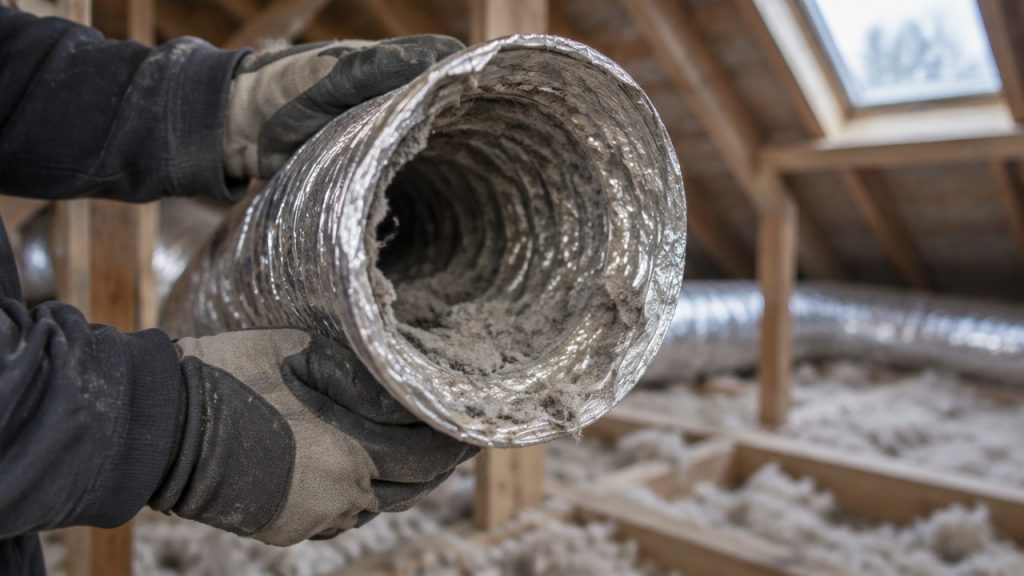
A professional air duct cleaning includes a camera inspection, a sealed negative-pressure setup, mechanical agitation of every duct run, and cleaning of the registers, plenums, blower, and coil access points. It ends with a post-cleaning verification. If a crew shows up with only a shop vac and a 90-minute window, you are buying a dusting, not a cleaning. Here is what a real job looks like in an Austin home in 2026, so you can spot the difference before anyone touches your vents.
Quick Answer: Six Services That Separate a Real Duct Cleaning From a Vent Dusting
When you schedule what does professional air duct cleaning actually include, you should expect a comprehensive service that follows the NADCA ACR standard the benchmark for a truly “complete” cleaning rather than a superficial sweep. A legitimate crew addresses the entire HVAC system, not just the visible vents, ensuring the contaminants are removed rather than simply redistributed. We have seen too many homeowners pay for a service that stops at the register, leaving the real debris trapped deep in the trunk lines. For a deeper dive into the methodology, check out this essential guide to professional air duct cleaning.
- Complete camera inspection before and after service.
- HEPA-filtered negative-pressure vacuum collection system.
- Mechanical agitation of all supply and return duct runs.
- Cleaning of all supply trunks, return plenums, and branch runs.
- Detail cleaning of registers, grilles, and diffusers.
- Access point cleaning including blower housing and evaporator coil.
Inside the Ductwork: The Components a Thorough Crew Actually Cleans
A proper air duct cleaning process goes far beyond what you can see from your living room floor. The goal is to reach every square inch of the ductwork where dust, dander, and debris love to hide. This means the crew needs to access the supply trunks the main arteries sending conditioned air to your rooms and the branch runs that feed individual vents. They also tackle the return plenums, which are often the dirtiest sections because they pull air (and all the dust in it) back to your HVAC unit.
The technicians should also remove and clean the registers, grilles, and diffusers. These are the vent covers you see every day, and they often hold a surprising amount of built-up grime on their louvers. If a company leaves these in place or just vacuums around them, they are skipping a critical step in the HVAC duct cleaning steps.
Perhaps most importantly, a thorough job includes the blower housing and evaporator coil. Your blower wheel can get caked with dust, reducing airflow efficiency by a significant margin. A dirty coil restricts airflow and can even freeze up, causing expensive damage. Cleaning these components is essential for full HVAC system decontamination. To see exactly what years of neglect can look like, take a look at what professional cleaners can uncover inside your ducts.
| Component | What Gets Done | Why It Matters |
|---|---|---|
| Supply Trunks | Agitated with air whips or brushes; vacuumed under negative pressure. | Removes deep-seated debris that would otherwise blow into living spaces. |
| Return Plenums | Brushed and vacuumed to remove heavy dust buildup. | Returns are the ” lungs” of the system; they collect the most contaminants. |
| Registers & Grilles | Removed, washed, and reinstalled securely. | Prevents dust from recycling every time the system turns on. |
| Blower Housing | Cleaned of accumulated dust on the fan blades and motor housing. | Restores proper airflow and improves energy efficiency. |
| Evaporator Coil | Cleaned to allow proper heat transfer and drainage. | Prevents mold growth and ensures the system cools effectively. |
How a Proper Duct Cleaning Visit Unfolds, Hour by Hour
If you have never hired a residential duct cleaning service, the process might seem mysterious. We like to pull back the curtain. A real job takes time typically three to five hours for a standard home because we do not cut corners. The team arrives with a truck-mounted vacuum system capable of creating serious negative pressure, plus an arsenal of agitation tools. For a closer look at the equipment and effort involved, follow along with behind the scenes of professional duct cleaning.
- System Inspection: Technicians use cameras to assess the duct condition and identify any damage or excessive buildup before starting.
- Home Protection: Crews lay drop cloths and corner guards to protect your floors and walls while moving equipment through the house.
- Negative Pressure Setup: They connect a powerful vacuum to the ductwork, creating negative pressure that prevents dust from escaping into your home.
- Agitation Process: Using air whips, skipper balls, or brushes, technicians mechanically dislodge debris from the duct walls, pushing it toward the vacuum.
- Component Cleaning: They clean the blower housing, evaporator coil, and drain pan to ensure the entire air path is clear.
- Safety Sanitizing: An optional but recommended step involves applying an EPA-registered sanitizer to inhibit future mold or bacterial growth.
- Final Walkthrough: The team performs a post-cleaning camera inspection to verify the job is complete and reviews the results with the homeowner.
What Is Not Included, and the Red Flags That Should Make You Hang Up
We have all seen the coupons: “$99 Whole-House Duct Cleaning!” Here is the truth those prices are loss leaders designed to get a foot in your door. Once inside, the bait-and-switch begins. A legitimate negative pressure duct cleaning requires expensive equipment and trained labor. If someone offers to do it for the price of dinner, they are not cleaning your ducts; they are blowing dust around and looking for opportunities to upsell you on services you might not need. This is the shady side of the industry that gives honest professionals a bad name.
Be particularly wary of companies that promise mold removal without a proper remediation plan. According to EPA guidance, if you have visible mold growth inside your ducts or on other HVAC components, you need more than a simple cleaning and sanitizing spray. You might need professional remediation. A real pro will show you the mold on camera and explain the difference. For a safer, more thorough approach, read about deep cleaning your air ducts for a healthier living space.
- A price that seems too good to be true usually under $300 for a full home.
- A guarantee of “whole house” service completed in under two hours.
- No camera inspection offered before or after the service.
- Use of portable shop vacuums instead of truck-mounted collection equipment.
- Lack of negative pressure containment during the cleaning process.
- Refusal to clean the blower wheel or evaporator coil.
- Add-ons worth paying for: UV light installation for ongoing disinfection.
- Add-ons worth paying for: Duct sealing to fix leaks and improve efficiency.
- Add-ons worth paying for: Sanitizer application for homes with pets or allergy sufferers.
Why Austin Homes Ask More of Their Ducts: Cedar Pollen, Attic Heat, and Humidity
Living in Central Texas means your HVAC system works harder than most. We have our own unique set of challenges here in the Austin metro area that make duct cleaning checklist compliance even more critical. For one, there is the legendary “cedar fever” season. Mountain cedar pollen counts can skyrocket in the winter, and those microscopic particles infiltrate every crack and crevice of your home including your ductwork. If you find yourself reaching for the tissues every January, your dirty ducts might be part of the problem.
Then there is the heat. Our attics can reach staggering temperatures, and most of our homes have flex duct running through that space. Over time, the intense heat degrades the outer lining of flex duct, and condensation from our humid summers can foster mold growth on the inner lining. This combination of thermal stress and moisture makes regular inspection and cleaning vital for local homeowners. We understand the specific needs of Austin families, which is why we emphasize how expert duct cleaning improves your home’s air quality.
- Cedar Pollen: High levels of allergenic pollen infiltrating ductwork during winter months.
- Attic Heat Stress: Temperatures exceeding 140°F degrading flex duct materials in unconditioned spaces.
- High Humidity: Summer moisture leading to condensation and potential mold growth in the system.
- Year-Round Usage: Constant HVAC cycling in 2026 means filters and ducts нагрузка up faster than in milder climates.
The DIY Shortcut Versus a Truck-Mounted Setup: Where Your Time Really Goes
We get it Austin homeowners are handy. You might be looking at a shop vac and thinking, “How hard can this be?” The answer depends on your expectations. A consumer-grade vacuum and a brush kit from a hardware store can clean the first foot or two of your register boot. That might make the vent look nicer, but it is not air vent and register cleaning at a professional level. The debris deep in your trunk lines? It is not going anywhere without serious suction power. If you want to weigh the pros and cons yourself, check out our breakdown on DIY vs professional duct cleaning.
The real risk of DIY is unintended damage. Many Austin homes use flex duct, which is durable but fragile if jabbed with a rigid brush. One wrong move and you can tear the inner lining, creating a leak that pumps dust into your attic instead of your living room. Professional equipment is designed to agitate debris without damaging the duct walls. Plus, without a negative pressure system, you risk blowing the dust you dislodge right back into your bedrooms.
| Factor | DIY Approach | Professional Truck-Mounted Setup |
|---|---|---|
| Equipment | Shop vac, handheld brushes, limited reach. | HEPA-filtered vacuum, air whips, camera inspection tools. |
| Airflow | Standard household vacuum suction. | Powerful negative pressure capturing 99.7% of debris. |
| Risk | High risk of damaging flex duct or redistributing dust. | Protected process with visual verification of results. |
| Result | Surface cleaning; debris in trunk lines remains. | Full system decontamination per NADCA standards. |
Key Takeaways: Your Pre-Booking Checklist for Duct Cleaning
Now that you know what does professional air duct cleaning actually include, you are ready to book with confidence. Do not settle for a crew that rushes in and out. A proper cleaning is an investment in your home’s air quality and your HVAC system’s longevity. We take pride in being a local, family-owned business that treats every home like our own. For more information on why this service matters, review the advantages of proper duct cleaning.
- Expect a camera inspection before and after the work is performed.
- Confirm the crew uses truck-mounted negative pressure vacuum equipment.
- Verify that agitation tools like air whips or brushes are used on every run.
- Ensure the blower housing and evaporator coil are included in the service.
- Reject any “whole house” offer under $300 or completed in under two hours.
- Ask about sanitizing options if you have pets, allergies, or a baby at home.
FAQ: Straight Answers on Duct Cleaning Scope, Time, and Frequency
How long does a professional duct cleaning take?
No, it is not a quick job. A thorough cleaning of a standard-sized home typically takes between three to five hours. Technicians need time to set up containment, clean each register individually, and verify their work with a camera inspection afterward.
How often should I have my air ducts cleaned?
Most homes need cleaning every three to five years. However, households with pets, smokers, or family members with allergies might benefit from more frequent service. You should also schedule a cleaning after any major home renovation project.
Is dryer vent cleaning included in duct cleaning?
No, it is typically a separate service. While the equipment is similar, the dryer vent duct requires specific tools to remove lint buildup, which poses a fire hazard. We often recommend bundling both services for total home safety and efficiency.
Can duct cleaning remove mold from my HVAC system?
No, cleaning alone is not a remediation solution. If you have visible mold, the source of the moisture must be identified and fixed. After remediation, cleaning and sanitizing the ducts prevents future regrowth and improves air quality.
Is duct cleaning safe for homes with babies?
Yes, it is highly recommended. Newborns and infants have developing respiratory systems that are sensitive to airborne contaminants. A professional cleaning removes allergens and irritants, creating a healthier environment for your little one.
For a broader look at maintaining your home’s air systems, browse our comprehensive guide to air duct cleaning. We are here to help Austin homeowners breathe easier.