
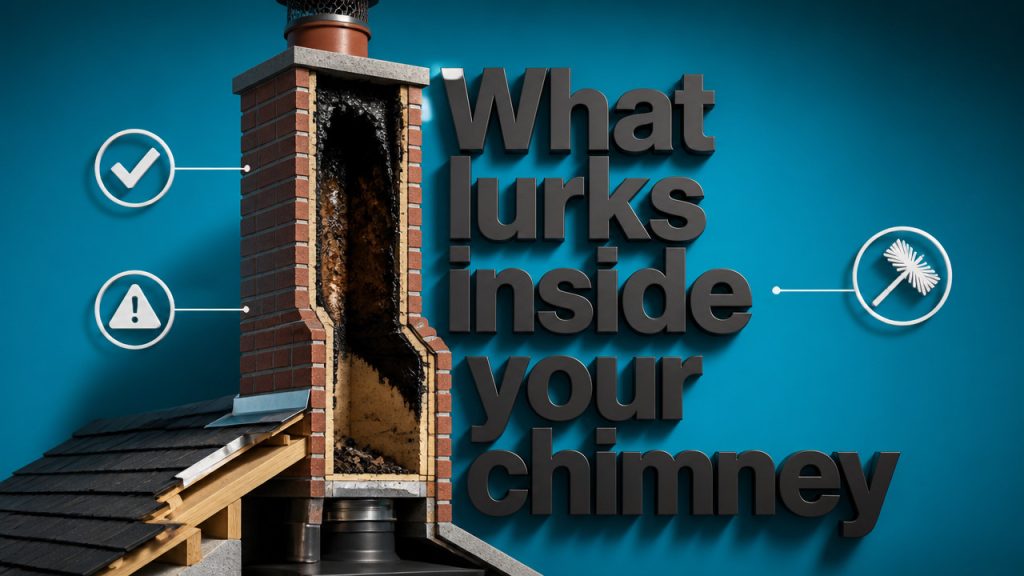
Up on the roof chimney sweep services represent the most critical maintenance checkpoint for preventing house fires and carbon monoxide poisoning in Austin homes. Professional sweeps access your rooftop to inspect, clean, and repair chimney systems that accumulate dangerous creosote deposits responsible for 25,000+ residential fires annually [NFPA 2026 Data]. This comprehensive guide reveals exactly what happens during a roof-level chimney service, why Austin’s climate demands specific maintenance protocols, and how certified sweeps protect your family’s safety through technical expertise that DIY methods simply cannot replicate.
Quick Answer: What Roof Access Reveals During Professional Chimney Sweeps
When technicians perform an up on the roof chimney sweep, they gain access to critical inspection points that remain invisible from ground level or fireplace openings. This vantage point allows for comprehensive evaluation of the entire chimney system, from the flue liner to the chimney cap. Homeowners often assume their fireplace is safe because it “works,” but rooftop inspections frequently uncover hidden deterioration that could lead to catastrophic failures.
Noble Air’s inspection process begins at the roofline because this approach identifies problems before they migrate downward into living spaces. The rooftop perspective reveals structural integrity issues, water intrusion pathways, and venting obstructions that fireplace-level inspections miss entirely. Understanding the vital role of a chimney sweep means recognizing that modern chimney maintenance requires complete system access, not just cleaning the firebox.
- Chimney cap integrity and animal exclusion screening condition
- Crown deterioration and waterproofing failures causing water damage
- Flue liner cracks or gaps allowing heat transfer to combustibles
- Mortar joint erosion and brick spalling from moisture exposure
- Flashing separation creating roof leak entry points
Professional sweeps document their findings with photographs and detailed reports, giving homeowners actionable intelligence about their chimney’s condition. This documentation proves invaluable for insurance claims, real estate transactions, and prioritizing maintenance investments.
Why Austin Chimneys Require Rooftop Access [Central Texas Climate Study]
Austin’s unique climate creates specific chimney maintenance challenges that differ significantly from other regions. The Hill Country’s intense summer heat, combined with occasional hard freezes and sudden downpours, accelerates chimney deterioration in patterns that require specialized local knowledge to identify and address. National averages simply don’t capture the stress that Central Texas weather places on masonry and metal components.
During 2026, homeowners across the metro area have reported increased awareness of how temperature swings affect their venting systems. A rooftop chimney inspection becomes essential when you consider that thermal cycling creates stress fractures invisible from the ground. Chimney sweep services in Austin account for these regional factors, applying protocols specifically designed for Texas weather patterns.
| Issue Type | Central Texas Frequency | National Average | Primary Austin Cause |
|---|---|---|---|
| Spalling brick | High (35% of inspections) | Low (12% of inspections) | Thermal cycling damage |
| Crown cracking | Very High (48% of inspections) | Moderate (22% of inspections) | UV exposure + rain |
| Flashing failures | Moderate (28% of inspections) | High (31% of inspections) | Storm damage |
| Creosote buildup | Moderate (40% of inspections) | High (55% of inspections) | Seasonal burning habits |
| Animal intrusion | High (32% of inspections) | Low (15% of inspections) | Raccoon/squirrel activity |
Local expertise matters because Austin homeowners face challenges that national guides often overlook. The combination of oak pollen, cedar smoke, and limestone dust creates unique combustion byproducts that accumulate differently than standard creosote models predict.
The Technical Reality: Creosote Accumulation Analysis in Texas Homes
Creosote buildup represents the primary safety concern driving professional chimney maintenance. This combustible residue forms when wood smoke condenses inside cooler chimney sections, creating a fire hazard that intensifies with each subsequent fire. Understanding the three distinct stages of creosote helps homeowners recognize why professional chimney sweep services become necessary regardless of how carefully they operate their fireplaces.
Stage One: Light, Fluffy Accumulation
First-stage creosote appears as a light, dusty coating that brushes away easily. This material contains primarily soot and ash with minimal condensed tar content. Regular fireplace safety inspection protocols can address stage one buildup through standard chimney flue cleaning methods. However, even this seemingly innocuous accumulation reduces chimney draft efficiency by restricting airflow, which paradoxically accelerates further creosote formation.
Stage Two: Crunchy, Glazed Deposits
Second-stage creosote hardens into brittle, crunchy deposits that adhere strongly to flue walls. This material contains condensed tars that ignite at lower temperatures than stage one deposits. Removing stage two creosote requires mechanical tools and specialized techniques that go beyond basic brush cleaning. Smoke vent cleaning professionals encounter stage two buildup most frequently in chimneys serving fireplaces operated with restricted airflow or burning unseasoned wood.
Stage Three: Shiny, Tarry Glazing
Third-stage creosote presents the most dangerous scenario. This shiny, tar-like coating bonds chemically with flue liner materials and cannot be removed through conventional sweeping. Stage three creosote ignites at temperatures as low as 451 degrees Fahrenheit, creating chimney fires that burn intensely even when homeowners believe they’ve extinguished their fires. Heat from stage three creosote fires can crack flue liners, allowing flames to contact combustible building materials.
According to the Chimney Safety Institute of America, stage three creosote fires can reach temperatures exceeding 2,100 degrees Fahrenheit hot enough to compromise structural masonry and ignite nearby framing within minutes.
How Certified Sweeps Navigate Rooftop Safety Protocols
Professional chimney maintenance demands rigorous safety protocols that protect both technicians and homeowners. Certified sweeps undergo extensive training in specific regulations in Austin for chimney sweeps, including OSHA compliance requirements for working at heights. This specialized knowledge separates legitimate professionals from handymen who underestimate the hazards inherent in rooftop chimney work.
Insurance carriers recognize this distinction, often requiring proof of certification before covering chimney-related claims. Noble Air technicians maintain comprehensive liability insurance and workers’ compensation coverage specifically rated for chimney stack service operations. Homeowners who hire uninsured workers face potential liability for injuries sustained on their property.
- Personal fall arrest systems with roof anchors rated for chimney access
- Ladder stabilizers and stand-offs protecting gutters and roofing materials
- Hard hats, safety glasses, and respiratory protection for creosote exposure
- High-visibility vests and work zone barriers protecting ground-level areas
- Extension poles allowing safe distances from chimney openings during cleaning
- Fire suppression equipment and emergency communication devices
Beyond personal safety equipment, professional sweeps utilize containment systems that prevent soot and debris from entering living spaces. These systems include vacuum units rated for fine particle capture and plastic barriers sealing fireplace openings during the cleaning process.
Step-by-Step: The Complete Rooftop Chimney Sweep Process
Understanding the chimney sweep process helps homeowners prepare for their service appointment and recognize thorough work when they see it. Noble Air’s methodology follows a systematic approach that addresses every component from roof to firebox, ensuring no element goes uninspected or uncleaned.
- Arrival and Assessment: Technicians conduct a preliminary interview about fireplace usage, any problems noticed, and service history. They inspect the exterior from ground level before accessing the roof.
- Roof Access and Safety Setup: Certified sweeps establish fall protection systems and position ladders according to OSHA guidelines. They photograph the chimney from multiple angles before beginning work.
- Chimney Cap Removal: The team carefully removes chimney caps, documenting their condition and any debris blocking animal screens or spark arrestors.
- Flue Inspection: Specialized cameras illuminate and photograph the entire flue length, identifying cracks, gaps, and creosote accumulation stages throughout the chimney system.
- Creosote Removal: Using brushes and rods sized for the specific flue dimensions, technicians sweep from the roof downward while vacuum systems capture dislodged material at the fireplace opening.
- Smoke Chamber Cleaning: The shelf and damper areas receive detailed attention, as these transition zones often accumulate significant creosote deposits that basic sweeping misses.
- Firebox Inspection: Technicians examine firebrick condition, looking for cracks and deteriorated mortar that could compromise fireplace safety during operation.
- Reassembly and Report: After reinserting chimney caps and securing all components, sweeps provide homeowners with detailed inspection reports including photographs and prioritized recommendations.
The entire process typically requires 90 to 120 minutes for standard residential chimneys. Homes with multiple fireplaces, severe creosote accumulation, or complex chimney masonry repair needs may require additional time.
Chimney Cap and Crown Inspection: The Overlooked Roof Components
Chimney caps and crowns represent the first line of defense against water intrusion, yet these components often receive minimal attention during basic chimney services. Central Austin chimney sweep experts emphasize that water causes more chimney damage than fire, making these protective elements critical to long-term system integrity. A properly functioning chimney cap prevents rain from entering the flue while blocking sparks from escaping onto roofing materials.
Crown deterioration creates pathways for water to penetrate masonry, causing interior damage that homeowners often don’t discover until extensive repairs become necessary. The freeze-thaw cycles that occasionally affect Central Texas expand moisture within porous materials, creating spalling and structural weakening that accelerates with each weather event.
| Chimney Cap Type | Austin Weathering Resistance | Typical Lifespan | Common 2026 Issues |
|---|---|---|---|
| Galvanized Steel | Poor (rusted within 3-5 years) | 5-7 years | Corrosion from humidity |
| Stainless Steel | Excellent (15-20 year expected life) | 20+ years | Screen clogging from cedar pollen |
| Copper | Superior (patina protects surface) | Lifetime | Theft risk, aesthetic matching |
| Masonry Crowns | Moderate (requires sealing) | 15-25 years with maintenance | Cracking from thermal stress |
Animal intrusion represents another critical function of chimney cap maintenance. Austin’s raccoon and squirrel populations actively seek chimney environments for nesting, particularly during spring and fall breeding seasons. These animals bring nesting materials that create fire hazards and can obstruct carbon monoxide venting, creating life-threatening situations for residents.
When Austin Homeowners Should Schedule Rooftop Chimney Service [2026 Guidelines]
Timing chimney maintenance strategically maximizes safety benefits while minimizing inconvenience. South Austin chimney services report that homeowners who schedule before peak burning season receive more flexible scheduling and thorough inspections. The 2026 burning season has seen increased fireplace usage across Central Texas, making proactive scheduling particularly important.
- Anytime you notice strong odors coming from the fireplace opening
- Before your first fire of the fall/winter burning season
- Immediately following chimney fire incidents or suspected fires
- After severe weather events that may have dislodged caps or damaged crowns
- When purchasing a previously owned home with existing chimney systems
- If visual inspection reveals animal activity or nesting materials
- At minimum annual intervals, regardless of fireplace usage frequency
Homeowners with allergies or respiratory sensitivities should consider scheduling chimney cleaning coincidentally with air duct maintenance, as Noble Air technicians can address both systems during a single appointment. This approach ensures comprehensive air quality management throughout the home.
The National Fire Protection Association recommends annual chimney inspections regardless of fireplace usage frequency, noting that deterioration from weather exposure occurs independent of burning activity.
Key Takeaways: Protecting Your Austin Home Through Professional Roof Access
Professional up on the roof chimney sweep services deliver safety outcomes that no DIY approach can match. North Austin chimney sweep services protect families through technical expertise, specialized equipment, and systematic protocols designed for regional conditions. The investment in professional maintenance prevents catastrophic losses while ensuring optimal fireplace performance throughout the burning season.
- Rooftop access reveals critical safety issues invisible from ground or fireplace level
- Austin’s climate creates specific deterioration patterns requiring local expertise
- Creosote accumulation progresses through dangerous stages requiring professional intervention
- Certified sweeps maintain safety protocols and insurance protecting homeowners from liability
- Annual inspections prevent fires and carbon monoxide hazards regardless of usage frequency
Homeowners throughout Central Texas recognize that professional chimney maintenance represents essential home care comparable to HVAC servicing or roof inspections. Noble Air remains committed to protecting Austin families through comprehensive chimney services backed by certification, insurance, and local expertise.
FAQ: Up on the Roof Chimney Sweep Services
How often should Austin homeowners schedule rooftop chimney sweeping?
Annually at minimum. The National Fire Protection Association recommends yearly inspections regardless of how often you use your fireplace. Austin’s climate causes weather-related deterioration independent of burning activity, making regular inspections essential for identifying cracks, water damage, and animal intrusion before they create hazardous conditions.
Can I clean my chimney myself without rooftop access?
No, not safely. DIY chimney cleaning lacks the specialized equipment, safety training, and inspection expertise that professional sweeps provide. Without rooftop access and camera equipment, you cannot evaluate the upper flue, chimney cap, and crown condition. Additionally, improper cleaning can damage flue liners or miss dangerous stage three creosote deposits that professionals identify and address.
What does rooftop chimney service cost in Austin for 2026?
Typically $200-$400 for standard residential service. Costs vary based on chimney height, creosote severity, and accessibility factors. Homes requiring extensive creosote removal, chimney cap replacement, or masonry repairs will incur additional charges. Professional inspections identify these needs before work begins, eliminating surprise charges and allowing homeowners to prioritize repairs strategically.
Why can’t sweeps clean chimneys entirely from the fireplace opening?
They cannot inspect upper components from below. The chimney cap, crown, and upper flue sections remain invisible from the fireplace opening. Attempting to clean from below misses creosote accumulations in upper sections and fails to identify crown cracks, animal intrusion points, and structural deterioration. Comprehensive service requires complete system access from both ends.
Is creosote removal included in standard chimney sweep pricing?
Stage one and two removal is included. Standard sweeping addresses light and moderate creosote accumulation through mechanical brushing. Stage three creosote requires specialized chemical treatment or mechanical removal techniques beyond standard service. Technicians identify stage three deposits during inspection and provide separate pricing for the additional work required.
Do I need to be home during rooftop chimney service?
Yes, for access and documentation review. Technicians need interior access to set up containment systems and complete firebox inspections. Additionally, homeowners benefit from receiving immediate verbal reports and reviewing photographic documentation while technicians remain on-site. This direct communication ensures you understand all findings and can ask questions about recommended services.
What happens if my chimney cap is damaged during service?
Reputable companies carry insurance covering damage. Certified sweeps maintain liability insurance protecting homeowners from technician-caused damage. However, pre-existing damage discovered during service not caused by the technicians becomes the homeowner’s responsibility. Professional sweeps document conditions before beginning work, preventing disputes about when damage occurred.