
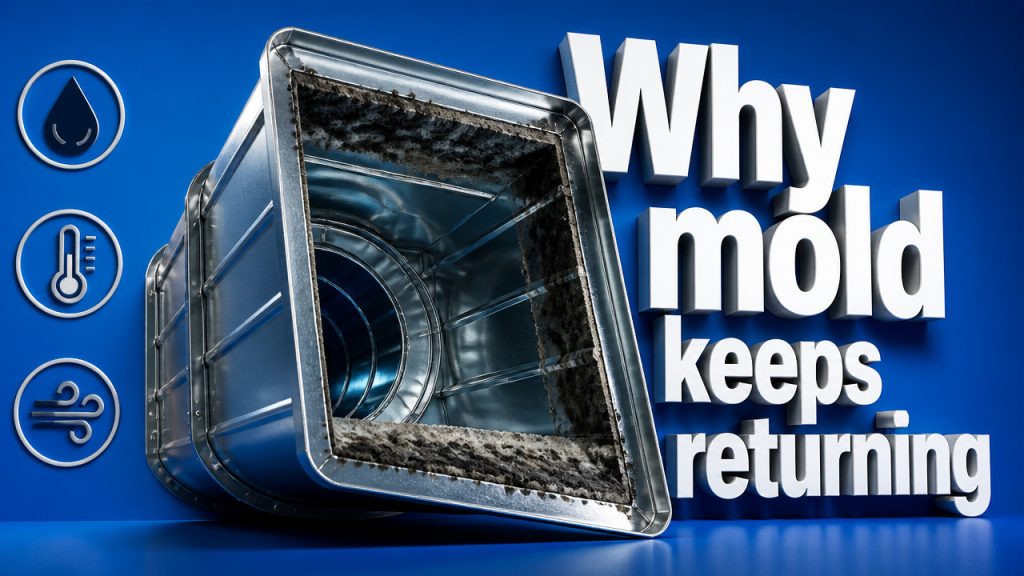
Mold in air ducts threatens your family’s respiratory health and circulates toxic spores throughout your Austin home with every HVAC cycle. This comprehensive guide reveals professional-grade methods to eliminate mold growth permanently, including UV-C disinfection technology, EPA-approved antimicrobial treatments, and Central Texas humidity control strategies that address the root environmental causes specific to our region’s climate patterns.
Quick Answer: Three-Step Method to Kill Air Duct Mold
When you discover mold growth in your HVAC system, the path forward involves three critical phases. Homeowners searching for effective ways to kill mold in air ducts need a systematic approach that addresses both the visible contamination and the hidden spore colonies deep within the ventilation network.
- Step 1: Source Identification and Containment
Locate the moisture source feeding the mold growth. This often means examining evaporator coils, drain pans, or ductwork insulation for water damage. Seal off affected areas to prevent spore migration during the cleaning process. - Step 2: Mechanical Removal and Deep Cleaning
Professional-grade agitation devices and HEPA-filtered vacuum systems physically remove mold colonies from duct surfaces. This phase eliminates the bulk of biological contamination before antimicrobial agents are applied. - Step 3: Antimicrobial Treatment and UV-C Installation
Apply EPA-registered antimicrobial solutions to kill residual mold spores and prevent regrowth. Install UV-C light systems for ongoing air disinfection. Schedule duct mold cleaning services for comprehensive results.
Why Mold Thrives in Austin Air Ducts [2026 Climate Data]
Central Texas homeowners face a unique battle against mold that homeowners in arid regions simply don’t understand. The Austin metro area experiences average humidity levels exceeding 65% during peak months, creating ideal conditions for fungal growth inside HVAC systems.
Your air conditioning unit works overtime to remove moisture from indoor air. This process creates condensation on evaporator coils and within the drain pan. When drainage systems become clogged or insulation degrades, that moisture accumulates in dark, undisturbed areas of your ductwork. Mold requires only three elements to flourish: organic material for food, darkness, and consistent moisture. Your duct system accidentally provides all three.
| Texas Region | Average Humidity (%) | Mold Growth Risk Level | Peak Mold Season |
|---|---|---|---|
| Central Texas (Austin Metro) | 65-72% | High | April – October |
| East Texas (Houston Area) | 75-82% | Very High | March – November |
| North Texas (Dallas-Fort Worth) | 58-65% | Moderate-High | May – September |
| West Texas (El Paso) | 25-35% | Low | July – August |
| South Texas (Corpus Christi) | 70-78% | Very High | Year-Round |
The temperature differential between your cool duct surfaces and the hot Austin air creates consistent condensation cycles. This moisture, combined with dust and organic debris that naturally accumulates in ductwork, forms a perfect substrate for mold colonization.
According to the Environmental Protection Agency, indoor humidity should be maintained between 30% and 50% to effectively control mold growth. Central Texas homes regularly exceed these thresholds during summer months without proper dehumidification systems.
Modern HVAC systems in 2026 often include enhanced humidity sensing technology, but even advanced equipment struggles against Austin’s subtropical climate patterns. Understanding indoor air quality concerns specific to our region helps homeowners recognize why proactive maintenance matters.
The Seven Visible Warning Signs of Duct Mold Contamination
Mold doesn’t always announce itself with obvious growth patterns you can see from across the room. The signs often start subtly, building gradually until your family begins experiencing health symptoms. Recognizing these early indicators allows you to address contamination before it becomes a significant health hazard.
- Musty Odor Near Supply Vents
A distinct earthy, damp smell emanating from your vents when the system runs indicates active mold colonies releasing microbial volatile organic compounds into your airstream. - Visible Black, Green, or White Growth
Discoloration around vent registers, on filter surfaces, or near the evaporator coil housing signals established mold colonies requiring immediate professional attention. - Increased Allergy Symptoms at Home
Family members experience sneezing, congestion, or itchy eyes that improve when away from the house. Children and elderly residents often show symptoms first. - Unexplained Respiratory Issues
Coughing, wheezing, or shortness of breath that correlates with HVAC system operation suggests airborne mold spore circulation throughout living spaces. - Recent Water Damage History
Homes that experienced roof leaks, flooding, or pipe bursts within the past year face elevated mold risk as moisture can linger in hidden ductwork for extended periods. - Dust Buildup Around Vent Registers
Excessive dark dust or debris particles accumulating on vent grilles and surrounding ceiling areas indicate your duct system is pushing contaminated material into living spaces. - Wet Insulation or Water Stains
Visible moisture on ductwork exterior, wet insulation wrapping, or water stains near the HVAC unit suggests condensation problems causing interior mold growth.
Parents of infants and young children should remain especially vigilant. Developing respiratory systems are more susceptible to mold exposure effects. If you notice these signs your air ducts need attention, scheduling a professional inspection protects your family’s long-term health.
The American College of Occupational and Environmental Medicine reports that mold exposure can trigger allergic reactions in approximately 10% of the population, with infants, elderly individuals, and those with compromised immune systems facing heightened sensitivity.
Professional Mold Eradication: NADCA-Certified Process Breakdown
Professional duct mold remediation follows strict protocols established by the National Air Duct Cleaners Association. Certifed technicians employ specialized equipment designed specifically for the complex challenges of complete air duct cleaning service and mold removal operations.
- Comprehensive System Inspection
Technicians use borescope cameras and thermal imaging equipment to map contamination throughout the entire duct network, identifying hidden growth areas behind walls and in inaccessible runs. - Containment Establishment
Negative air pressure machines create vacuum conditions within the ductwork, preventing mold spores from escaping into living areas during the cleaning process. - Source Removal via Mechanical Agitation
High-velocity air whips, rotating brushes, and compressed air nozzles physically dislodge mold colonies and debris from duct surfaces without damaging the underlying metal. - HEPA-Filtered Vacuum Collection
Industrial vacuum systems with HEPA filtration capture 99.97% of particles 0.3 microns or larger, including mold spores, ensuring removed contamination doesn’t recirculate. - Antimicrobial Application
EPA-registered antimicrobial solutions are fogged or sprayed throughout the cleaned ductwork to kill remaining spores and create a residual protective barrier against future growth. - Post-Remediation Verification
Follow-up inspections confirm mold removal success, with surface sampling and air quality testing documenting the effectiveness of the remediation work.
This systematic approach distinguishes professional remediation from amateur attempts. Homeowners attempting DIY mold removal often spread contamination further by disturbing colonies without proper containment measures.
UV-C Light Technology: The 2026 Gold Standard for Mold Prevention
Ultraviolet germicidal irradiation has emerged as the most effective long-term solution for preventing mold recurrence in residential HVAC systems. UV-C light operates at a specific wavelength of 254 nanometers, which penetrates microorganism cell walls and disrupts DNA replication.
Unlike chemical treatments that require repeated application, UV-C systems provide continuous protection with minimal maintenance. A single UV-C lamp installation in the evaporator coil area can prevent mold growth for 12-18 months before lamp replacement becomes necessary.
| Treatment Method | Initial Effectiveness | Long-Term Protection | Residue Risk | Maintenance Interval |
|---|---|---|---|---|
| UV-C Light Installation | 99%+ Mold Elimination | Continuous (12-18 months) | None | Annual Lamp Change |
| Chemical Antimicrobials | 95%+ Mold Elimination | 3-6 Months | Low to Moderate | Quarterly Application |
| Steam Cleaning | 90% Mold Elimination | 1-3 Months | Moisture Residue | Seasonal Re-treatment |
| Ozone Treatment | 80% Mold Elimination | Immediate Only | High (Toxic Gas) | Single Use |
The latest 2026 UV-C systems incorporate smart sensors that monitor lamp output intensity and automatically alert homeowners when performance degrades. These systems integrate directly with smart home platforms, allowing real-time monitoring of your air disinfection system.
Professional deep cleaning techniques combined with UV-C installation create a comprehensive defense against mold colonization. The initial cleaning removes existing growth, while the UV system prevents spore germination on clean surfaces.
EPA-Approved Antimicrobial Solutions That Actually Work [Study]
Not all mold treatments are created equal. The Environmental Protection Agency maintains a registry of antimicrobial products approved specifically for HVAC system application. Homeowners should verify that any treatment proposed for their ductwork carries proper EPA registration.
- Hypochlorous Acid Solutions
EPA Registration: Various by manufacturer. This naturally occurring compound forms when chlorine dissolves in water at specific concentrations. Safe for use around children and pets when properly diluted. - Hydrogen Peroxide-Based Cleaners
EPA Registration: Varies. Professional-grade formulations break down into water and oxygen, leaving no harmful residues behind. Effective against mold, bacteria, and viral contaminants. - Quaternary Ammonium Compounds
EPA Registration: Product-specific. These synthetic compounds act as residual antimicrobial agents, continuing to kill organisms that contact treated surfaces for weeks after application. - Thymol-Based Natural Disinfectants
EPA Registration: Multiple products available. Derived from thyme oil, these offer plant-based antimicrobial action suitable for homeowners preferring botanical solutions. - Silver-Ion Antimicrobial Coatings
EPA Registration: Product-specific. Emerging technology using silver particles embedded in coating materials to create long-lasting antimicrobial surfaces inside ductwork.
Safety profiles matter significantly for homes with babies, elderly residents, or immunocompromised family members. Professional technicians select antimicrobial products that balance efficacy with minimal indoor air quality impact. Certified providers offering residential duct cleaning techniques understand which solutions work best for specific contamination scenarios.
How to Prevent Mold Recurrence in Central Texas Humidity
Killing existing mold solves the immediate problem, but preventing recurrence requires addressing the environmental conditions that allowed growth in the first place. Austin homeowners must implement multiple strategies working together.
- Install Whole-Home Dehumidification
Integrated dehumidifiers work alongside your HVAC system to maintain indoor humidity below 50%, eliminating the moisture mold requires for growth. - Upgrade Attic Insulation
Proper insulation reduces temperature differentials that cause condensation. Noble Air specializes in attic insulation installation that addresses this root cause. - Seal Ductwork Leaks
Gaps and separations in duct joints allow moist air infiltration. Professional duct sealing prevents humid outside air from entering your ventilation system. - Improve Drainage System Function
Regular maintenance of condensate drain lines and drain pans prevents standing water accumulation that feeds mold growth. - Schedule Quarterly HVAC Maintenance
Professional inspections catch early moisture problems before they develop into significant mold contamination events. - Consider UV-C Light Installation
Continuous UV disinfection prevents spore germination on evaporator coils and within air handler housings, addressing mold at its source.
Understanding the importance of regular duct maintenance transforms mold prevention from a reactive scramble into a systematic protection plan
Key Takeaways: Protecting Your Austin Home from Duct Mold
Controlling mold in your HVAC system requires understanding the relationship between moisture, temperature, and fungal biology. Central Texas homeowners face elevated risks due to regional climate patterns.
- Climate Matters: Austin’s 65%+ average humidity creates conditions where mold flourishes in HVAC systems if moisture control measures aren’t implemented.
- Early Detection Saves Money: Recognizing musty odors and visible growth signs allows intervention before contamination spreads throughout the entire duct network.
- Professional Remediation Works: NADCA-certified processes using HEPA filtration and mechanical agitation remove contamination without spreading spores into living areas.
- UV-C Technology Provides Lasting Protection: Germicidal UV light systems offer continuous mold prevention without chemical residues or repeated treatment requirements.
- Prevention Beats Reaction: Addressing humidity control, drainage function, and attic insulation prevents mold establishment rather than fighting established colonies.
Families can breathe easier knowing proper protocols protect indoor air quality. Professional services like expert duct cleaning benefits provide the foundation for healthy home environments.
Frequently Asked Questions About Killing Mold in Air Ducts
Can I clean mold out of air ducts myself?
No. DIY mold removal in ductwork risks spreading spores throughout your home. Professional containment and HEPA vacuum equipment prevents contamination dispersal during the cleaning process.
How much does professional duct mold removal cost in Austin?
Costs vary based on contamination extent. Typical residential mold remediation ranges from $500 to $2,500 for complete system treatment. Severe contamination in multi-story homes may increase total project investment.
Will mold in my air ducts make my family sick?
Possibly. Mold exposure triggers allergic reactions and respiratory symptoms in sensitive individuals. Children, elderly residents, and those with asthma or allergies face heightened risks from airborne mold spore exposure.
How often should Austin homeowners have their air ducts cleaned?
Every 3 to 5 years minimum. Homes with allergy sufferers, pets, or recent renovations benefit from more frequent cleaning. Annual inspections identify developing problems before they escalate.
Does UV light in HVAC systems really kill mold?
Yes. UV-C light at 254 nanometers destroys mold DNA and prevents reproduction. Studies demonstrate 99%+ effectiveness against mold spores with continuous exposure at appropriate intensity levels.
How soon can my family return home after mold remediation?
Usually within 4 to 24 hours. Antimicrobial treatments require drying time. Your technician will specify safe re-entry timing based on products used and ventilation rates in your specific home.
What’s the difference between mold removal and mold remediation?
Remediation addresses root causes. Simple removal cleans visible growth without fixing underlying moisture problems. Professional remediation eliminates contamination sources and implements prevention strategies for lasting results.