
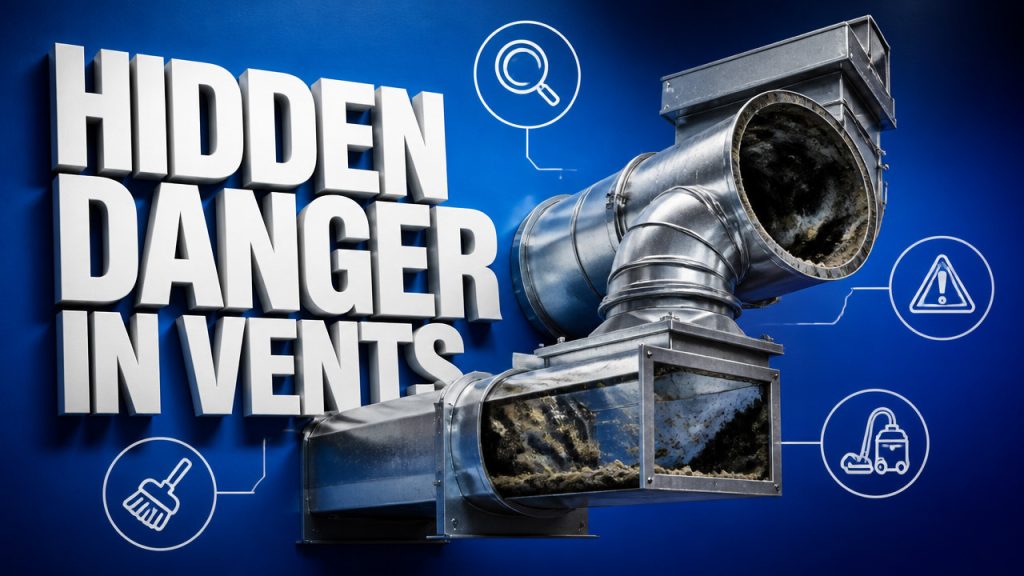
Removing mold from air vents requires immediate action combining safety equipment, targeted EPA-registered biocides, and source moisture elimination. Central Texas humidity [2026 Data] creates ideal conditions for mold colonization in HVAC systems, where spores spread through recirculated air affecting respiratory health within 48-72 hours of exposure. This protocol delivers professional-grade removal techniques adapted for Austin’s subtropical climate zone, ensuring your family breathes clean, pathogen-free air while preventing costly ductwork replacement.
Quick Answer: Three-Phase Mold Vent Removal (Safety First)
Successful vent mold removal hinges on a systematic three-phase approach: containment, elimination, and prevention. Rushing this process spreads spores throughout your Central Texas home, turning a localized issue into a whole-house contamination event.
Before touching any visible growth, understand that DIY methods work only for surface contamination on accessible register covers. Deep system infestations require professional duct mold cleaning with industrial-grade vacuum equipment and encapsulation agents that homeowners simply cannot access.
The safety protocol below represents the minimum barrier between you and serious respiratory exposure. Mold spores become airborne the moment you disturb the colony, infiltrating your lungs within seconds of inhalation.
- N95 Respirator (minimum) NIOSH-approved particulate filter; upgrade to P100 for Stachybotrys exposure
- Nitrile Gloves Chemical-resistant, disposable; double-glove for suspect toxicity
- Sealed Eye Protection Wraparound goggles; spores irritate mucous membranes instantly
- Disposable Coveralls Tyvek suit with hood and booties; remove before exiting containment zone
- HEPA Vacuum Shop vac with HEPA attachment; standard vacuums redistribute spores
Austin’s Humidity Index: Why Central Texas Vents Harbor Aspergillus and Stachybotrys
Central Texas sits in a subtropical humidity zone where summer dew points regularly exceed 70°F, creating sustained moisture conditions that ASTM standards classify as “high risk” for fungal amplification. Your HVAC system becomes a de facto dehumidifier, pulling moisture from the air and depositing it directly onto cooled surfaces inside your ductwork.
This constant condensation cycle creates microenvironments where Aspergillus and Cladosporium species thrive. When humidity spikes during Austin’s late summer monsoon season, these colonies can double in size every 24-48 hours under optimal conditions. Stachybotrys chartarum (black mold) requires sustained water damage but frequently colonizes AC drain pans and interior duct insulation in older Austin homes.
Recognizing the signs you need air duct cleaning helps Austin homeowners intercept mold growth before it penetrates interior ductwork. The problem lies in humidity thresholds: mold germination begins at 60% relative humidity, and Austin’s average morning humidity during peak AC season sits exactly in that danger zone.
| Season | Avg. Humidity Range | Mold Risk Level | Typical Colony Types |
|---|---|---|---|
| Spring (Mar-May) | 55-75% | Moderate | Cladosporium, Penicillium |
| Summer (Jun-Aug) | 65-90% | High | Aspergillus, Stachybotrys |
| Fall (Sep-Nov) | 60-80% | Moderate-High | Alternaria, Aspergillus |
| Winter (Dec-Feb) | 45-65% | Low-Moderate | Penicillium, Cladosporium |
According to building science research, mold growth rates accelerate by 200% when relative humidity exceeds 70% combined with temperatures between 77-86°F conditions present in Austin homes for roughly 4 months annually.
Pre-Cleaning Assessment: Identifying Mold Species vs. Dust Discoloration
Not every dark spot on your air register signals mold. Homeowners frequently mistake HVAC dust accumulation particularly the gray-black buildup around supply diffusers for active fungal growth. Misidentification leads to unnecessary chemical treatments or, worse, ignoring actual colonies that require immediate remediation.
Cotton-swab testing offers a simple diagnostic. Wipe the discolored area with a damp white cloth: dust releases in particles, while mold smears with a distinctive musty odor. Texture analysis provides additional confirmation. Dust feels powdery and loose; mold presents as fuzzy, slimy, or embedded in the substrate.
Knowing the top signs your air ducts need attention helps differentiate between normal accumulation and dangerous infestation. When in doubt, call a certified mycologist for professional spore analysis before attempting removal.
- Color Distribution Mold shows irregular, spreading patterns; dust accumulates in uniform layers
- Texture Response Dust brushes off easily; mold adheres and smears when touched
- Odor Profile Dust is odorless; mold emits earthy, musty, or mildew-like smell
- Location Patterns Mold targets cold surfaces with condensation; dust collects at airflow edges
- Moisture Presence Active mold indicates ongoing water source; dust exists in dry conditions
Step-by-Step Surface Vent Removal: The Noble Air Tested Method
Surface mold on accessible vent registers responds well to DIY treatment using EPA-registered antimicrobial agents. This protocol addresses exterior mold on ceiling, wall, and floor registers NOT interior ductwork, which requires professional equipment and negative air containment.
Before beginning, ensure your HVAC system is completely powered down. Running fans during cleaning distributes liberated spores throughout your Central Texas home, converting a contained problem into a widespread contamination event. This method works for deep cleaning your air ducts access points but cannot address hidden colonies beyond line-of-sight.
- Isolate the Work Area Seal doorways with plastic sheeting; close all windows; place HEPA air scrubber in adjacent hallway
- Remove Register Covers Unscrew vent grates carefully; place in sealed bag for transport to cleaning area
- HEPA Vacuum Surfaces Remove loose spores before wet cleaning; never spray directly on active mold growth
- Apply EPA-Registered Biocide Use diluted antimicrobial solution per manufacturer instructions; saturate affected areas
- Scub with Stiff Bristle Brush Work in circular motions; agitate embedded growth without damaging finish
- Wipe with Clean Microfiber Remove residue completely; repeat application if discoloration persists
- Allow Complete Drying Wait minimum 24 hours before reinstallation; mold requires moisture to germinate
- Apply Mold-Resistant Sealant Optional encapsulation for return grills in high-humidity Austin bathrooms and kitchens
Beyond the Register: When Mold Colonizes Interior Ductwork (Professional Territory)
Visible surface growth represents a fraction of total contamination in most Austin HVAC systems. Flexible ductwork, lined with fiberglass insulation, provides ideal habitat for colonies hidden 15-20 feet from visible access points. Snake cameras reveal extensive black mold formation in supply plenums and evaporator coil housings that no homeowner can safely reach.
DIY cleaning has clear limitations. Standard household vacuums cannot generate sufficient suction to remove mold rooted in porous duct insulation. Liquid cleaning agents introduced into interior ductwork create new moisture problems, feeding remaining colonies rather than eliminating them. Bleach treatments, in particular, often worsen conditions by leaving moisture behind.
Professional comprehensive air duct cleaning services deploy truck-mounted vacuum systems pulling 10,000+ CFM negative air pressure. This creates continuous containment that prevents cross-contamination during cleaning. Technicians use rotating brushes and compressed air whips that travel the full length of duct runs, dislodging embedded growth that surface treatment cannot touch.
EPA research indicates that mold growing inside ductwork can release spores continuously throughout the home’s living areas, with spore counts reaching 100-1,000 times higher than outdoor levels during HVAC operation cycles.
Biocide Application Protocol: Concentration Ratios and Contact Time Requirements
Effective HVAC mold elimination requires understanding the chemistry behind antimicrobial agents. Simply spraying “mold killer” without proper concentration and contact time fails to achieve complete eradication, allowing colonies to rebound within weeks. The biocide protocol below reflects current 2026 EPA standards for HVAC system decontamination.
Dwell time matters more than application volume. Most antimicrobial agents require 10-15 minutes of wet contact to penetrate mold cell walls and disrupt reproduction cycles. Rinsing too early leaves viable spores; leaving product too long can damage sensitive duct materials, particularly flexible insulation and foam seals.
This technical application guide supports the broader comprehensive air duct cleaning guide for Austin homeowners tackling surface contamination. interior duct applications should only be performed by certified technicians with proper containment equipment.
| Biocide Type | Dilution Ratio | Contact Time | Surface Application |
|---|---|---|---|
| Quaternary Ammonium | 1:64 (2 oz/gal) | 10 minutes | Non-porous metal registers |
| Hydrogen Peroxide 7% | Ready-to-use | 15 minutes | Porous/flexible ducts |
| Sodium Hypochlorite | 1:10 (for hard surfaces) | 5-10 minutes | Sheet metal only |
| Tea Tree Oil Solution | 1:4 (natural alternative) | 20+ minutes | Light surface growth |
| Encapsulation Coating | Ready-to-use | Apply after cleaning | Post-remediation barrier |
Moisture Source Elimination: Fixing the Root Cause in Austin HVAC Systems
Killing mold without addressing moisture guarantees recurrence. Austin’s climate produces two distinct humidity challenges: summer subtropical moisture and winter temperature differentials that create interior condensation. Your HVAC system, sized for peak cooling loads, may run inefficiently during milder temperatures, creating cold surfaces where moisture condenses and mold germinates.
Return air imbalances represent an often-overlooked moisture source. When bedroom doors remain closed, positive pressure pushes humid air into wall cavities and ceiling voids where AC register boxes typically sit. This creates undetected moisture pockets ideal for hidden mold colonization invisible colonies that release spores through the nearest air register.
Identifying and correcting these underlying issues is essential when evaluating signs your ducts need professional cleaning. Without moisture elimination, even professional-grade cleaning provides temporary relief at best.
- Condensation on Cold Surfaces Supply plenums and refrigerant lines create dew point conditions
- AC Drain Pan Overflow Clogged drain lines deposit water directly into return ducts
- Improper Duct Insulation Uninsulated metal ductwork in attics sweats during temperature transitions
- Oversized AC Units Short-cycling fails to remove humidity; creates cold surfaces without dehumidification
- Drainage System Clogs Condensate lines blocked by algae discharge water beneath air handlers
- Return Air Imbalances Pressurization issues force humid air into wall cavities around registers
Key Takeaways: Protecting Your Family from Recurrent Mold Colonization
Effective mold control in Austin homes requires ongoing vigilance, not just reactive cleaning. The subtropical climate that makes Central Texas desirable for residents also creates perfect fungal habitat. Homeowners who implement prevention protocols discover significantly reduced recurrence rates and improved indoor air quality within weeks.
Whole-house dehumidification systems integrated with your HVAC installation provide the most reliable long-term prevention, maintaining interior humidity below 50% even during August thunderstorms. UV-C light installations within air handlers offer additional protection, neutralizing spores that bypass filtration and preventing biological growth on evaporator coils.
Families in newer developments like Avery Ranch face particular challenges, where construction moisture compounds ambient humidity. air duct cleaning services in Avery Ranch professionals understand these localized patterns and can recommend specific prevention strategies for your home’s age and construction type.
- Monitor Indoor Humidity Maintain below 50% year-round; install hygrometers in each zone
- Schedule Annual Inspections Professional camera inspection catches interior growth before spore release
- Install UV-C Disinfection In-duct ultraviolet treatment neutralizes spores passing through system
- Replace Filters Monthly High-MERV filters capture smaller spores; clogged filters reduce effectiveness
- Address Water Intrusion Immediately Any leak, flood, or moisture event requires 24-48 hour drying protocol
FAQ: Mold Removal from Air Vents in Central Texas Homes
Can I safely clean mold from air vents myself?
Yes, for surface growth only. DIY removal works on accessible register covers when proper protective equipment is used. Interior ductwork requires professional containment and negative air pressure systems to prevent cross-contamination throughout your Austin home.
How quickly does mold grow back after cleaning?
Depends on moisture control. Without addressing humidity sources, visible regrowth appears within 2-3 weeks during Austin’s peak humidity seasons. Proper moisture elimination extends intervention intervals to 6-12 months or longer.
Does homeowners insurance cover mold removal from ductwork?
Varies by policy and cause. Sudden water damage events typically qualify for coverage, while gradual humidity-related growth from deferred maintenance is generally excluded. Austin homeowners should document any water intrusion events immediately.
How much does professional duct mold remediation cost?
Typical range $1,500-$3,500 for average homes. Pricing depends on contaminant extent, system accessibility, and whether duct replacement is required. Sophisticated infestations involving Stachybotrys in flexible ductwork often necessitate full replacement.
Will cleaning my air vents improve my family’s allergy symptoms?
Likely, for mold-sensitive individuals. Research shows that mold spore exposure triggers allergic rhinitis in susceptible individuals. Eliminating HVAC mold sources often produces noticeable symptom improvement within days of successful remediation.
How do I know if mold is inside my ductwork vs. just on registers?
Professional camera inspection is definitive. Musty odors when AC activates, multiple register contamination, and persistent symptoms despite surface cleaning all indicate interior colonization requiring professional video inspection.
Is black mold on vents the dangerous kind (Stachybotrys)?
Not necessarily. Many mold species appear black or dark green. Aspergillus and Cladosporium cause most residential mold issues in Austin and present similar visual profiles. Laboratory analysis confirms species identification.
Can mold in my air vents make my baby sick?
Yes, infants are particularly vulnerable. Developing respiratory systems in babies and toddlers show heightened sensitivity to mold spores. Medical studies demonstrate increased wheezing and respiratory infection rates in homes with elevated spore counts.