
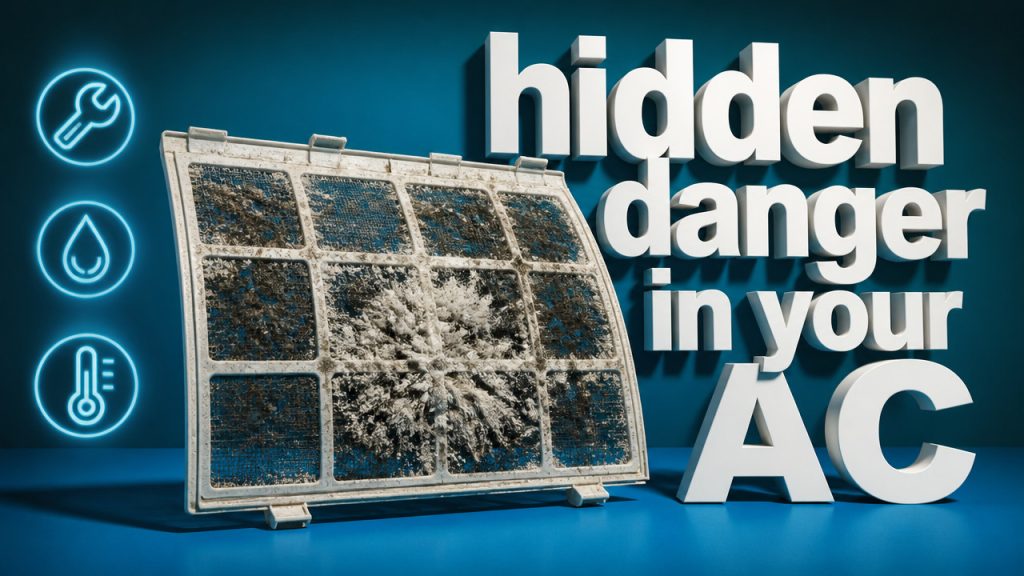
Mold in your air conditioner isn’t just unsightly it’s actively pumping spores throughout your home every time your system runs. In Austin’s humid climate [2026 Data], where summer humidity averages 68%, AC units become breeding grounds for black mold, Aspergillus, and Cladosporium. The good news? With proper techniques and safety precautions, you can eliminate mold from your AC system and restore clean, healthy air to your Central Texas home. This guide walks you through professional-grade removal methods, prevention strategies, and when to call in specialists.
Quick Answer: Three Steps to Safely Remove AC Mold
If you’ve spotted mold in your air conditioner, you’re probably wondering how to remove mold from air conditioner units safely and effectively. The process requires careful attention to safety protocols, especially here in Austin where our humidity keeps mold actively growing year-round. Here’s the straightforward approach.
- Shut down and protect: Turn off your AC unit completely at the thermostat and breaker. Put on proper personal protective equipment including an N95 mask, safety goggles, and gloves before touching any contaminated surfaces.
- Deep clean affected components: Remove and dispose of contaminated filters. Clean evaporator coils, drain pans, and visible surfaces with an EPA-registered antimicrobial solution following manufacturer dilution ratios precisely.
- Sanitize and verify: Apply mold-inhibiting treatment to cleaned surfaces. Replace filters with high-quality alternatives. Run the system briefly to check airflow, then schedule a follow-up inspection to confirm complete remediation.
For extensive contamination spreading into your ductwork, professional duct mold cleaning becomes essential to prevent recontamination and protect your family’s respiratory health.
Why Austin AC Units Develop Mold Faster Than Other Regions
Central Texas homeowners face a unique challenge that most of the country doesn’t understand. Our combination of intense heat, high humidity, and long cooling seasons creates what scientists call a perfect incubation environment. Your air conditioner works overtime for months, pulling moisture from the air and creating constant condensation inside the unit.
That condensation is supposed to drain away cleanly. But when humidity stays elevated for extended periods which happens frequently during our Austin summers the drain system can become overwhelmed. Standing water accumulates in the drain pan. Dust and organic debris collect there too. Within 24 to 48 hours, mold colonies begin establishing themselves on the wet surfaces inside your air handler.
The problem compounds because AC units provide exactly what mold needs: moisture, darkness, and a steady food source from airborne particles. Your how duct contamination affects indoor air quality explains the full cycle, but the short version is this: once mold establishes in your evaporator coil area, every cooling cycle distributes microscopic spores throughout your living space.
Austin’s weather patterns make this worse. We experience sudden temperature drops when cold fronts move through, causing condensation to form even faster. Our afternoon thunderstorms dump moisture that your AC pulls from the air. Even our “mild” winter days often require cooling, meaning your system never gets that extended dormant period that helps break mold cycles in northern climates.
| Factor | Austin, TX | National Average | Mold Risk Impact |
|---|---|---|---|
| Average Summer Humidity | 68% | 55% | 23% higher growth rate |
| Annual Cooling Days | 180+ days | 120 days | Extended exposure period |
| Average Dew Point (Summer) | 68°F | 58°F | Consistent condensation |
| Mold Spore Season | Year-round | 6-8 months | No natural die-off period |
Identifying Mold in Your Air Conditioning System: Visual and Odor Indicators
Most homeowners discover mold problems through smell before they see visible growth. That distinctive musty, earthy odor coming from your supply vents signals mold byproducts called microbial volatile organic compounds, or MVOCs. Your nose detects these compounds at extremely low concentrations often before visible colonies have spread significantly.
Visual inspection requires knowing where to look. Mold typically appears as black, brown, greenish, or grayish patches on moist surfaces. Early growth might look like thin dust or discoloration rather than the fuzzy patches people expect. If you suspect mold is affecting your household, common signs you need air duct cleaning provides additional indicators beyond your AC unit itself.
- Air handler cabinet interior: Check the inside walls of your indoor unit where condensation forms and drips. Look for dark streaks, speckled patterns, or fuzzy growth along seams and edges.
- Evaporator coil fins: Shine a flashlight through the access panel to inspect the coil surface. Mold grows between fins where dust accumulates and moisture collects during cooling cycles.
- Condensate drain pan: Remove the panel beneath your evaporator coil to inspect the drain pan. Standing water with slimy residue or visible growth indicates active contamination.
- Air filter surface: Examine used filters before disposal. Dark patches or musty smells from the filter media suggest mold growth in upstream components.
- Supply plenum and connections: Check the metal box where ducts connect to your air handler. Dark streaks around seams or damp insulation indicate moisture problems that support mold.
- Flexible duct interior: Use a flashlight to peer into accessible duct runs. Mold on interior surfaces means contamination has spread beyond the AC unit itself.
DIY Mold Removal: Step-by-Step Process for Minor Contamination
Small, localized mold patches on accessible surfaces can sometimes be addressed by homeowners safely. The key word here is “minor” anything beyond surface contamination on the evaporator coil, drain pan, or cabinet interior requires professional intervention. If you’re uncertain about the extent, professional duct cleaning techniques explains what comprehensive remediation involves.
Before starting any mold removal, gather your safety equipment. You need an N95 or higher respirator mask not a standard dust mask plus safety goggles, rubber gloves, and disposable clothing or a Tyvek suit. Open windows in the work area if possible, and seal off supply and return vents in adjacent rooms to prevent spore spread.
- Isolate the system: Turn off your AC at the thermostat, then shut off power at the breaker panel. This prevents accidental startup during cleaning and protects you from electrical hazards when working near wet components.
- Seal the work area: Close doors to adjacent rooms. Cover nearby furniture with plastic sheeting. Tape plastic over supply and return grilles in rooms connected to the system being cleaned.
- Remove contaminated filters: Carefully bag used filters in heavy-duty plastic before removing them from the housing. Seal the bag immediately to contain spores. Dispose of these filters in outdoor trash do not attempt to clean them.
- Apply cleaning solution: Mix an EPA-registered antimicrobial cleaner according to label instructions. Apply to visible mold growth using a spray bottle, allowing dwell time as specified by the product directions before wiping.
- Clean the evaporator coil: Use a soft-bristle brush to gently clean between coil fins. Work in the direction of the fins to avoid bending them. Apply coil cleaner if available, then rinse with distilled water using a spray bottle never a pressure washer.
- Clear the drain pan and line: Remove standing water from the drain pan with a wet vacuum. Scrub pan surfaces with your antimicrobial solution. Pour a mixture of distilled water and antimicrobial solution through the drain line to clear buildup.
- Sanitize all surfaces: After physically removing visible mold, apply mold-inhibiting treatment designed for HVAC systems. This creates a protective coating that discourages regrowth on cleaned surfaces.
- Reassemble and test: Install fresh filters rated for your system. Remove all plastic sheeting and tape. Restore power, then run the system for 10-15 minutes while monitoring for unusual odors or sounds before inspecting once more.
Professional Mold Remediation: When DIY Methods Fall Short
Not every mold problem belongs on a homeowner’s weekend to-do list. Professional HVAC mold remediation becomes necessary when contamination extends beyond visible, accessible surfaces. That includes growth inside ductwork, contamination in the air handler cabinet’s interior walls, or any situation where mold covers more than 10 square feet by EPA guidelines.
Professional remediation follows NADCA standards the National Air Duct Cleaners Association protocols that ensure thorough removal without cross-contamination. Certified technicians use negative air containment, HEPA-filtered vacuum equipment, and specialized agitation tools that access areas homeowners cannot safely reach. They also apply industrial-grade antimicrobial treatments that bond to surfaces for extended protection.
One technology that’s changed the game for Austin homeowners is UV light HVAC disinfection. Germicidal UV-C lights installed inside your air handler continuously destroy mold spores, bacteria, and viruses that pass through the system. This technology doesn’t replace cleaning, but it dramatically reduces regrowth rates between service appointments.
| Aspect | DIY Approach | Professional Service |
|---|---|---|
| Scope of Treatment | Visible surfaces only | Complete system including ductwork |
| Equipment Used | Household cleaners, brushes | HEPA vacuums, agitation tools, UV tech |
| Containment | Basic plastic sheeting | Negative air pressure setup |
| Typical Cost Range | $50-$150 in supplies | $500-$2,000 depending on scope |
| Warranty/Guarantee | None | Typically 1-2 year service guarantee |
| Health Risk | Moderate exposure risk | Contained and protected process |
Preventing Future Mold Growth in Central Texas Climate Conditions
Getting rid of mold once is satisfying. Keeping it gone requires understanding what made your AC unit hospitable to mold in the first place. Austin’s climate means moisture control becomes your primary defense. comprehensive air duct maintenance creates a foundation, but specific prevention strategies target the conditions mold needs to thrive.
Your AC unit’s condensate drainage system determines whether moisture accumulates or exits cleanly. In Central Texas, drain lines clog faster because we’re pulling more water from the air. Algae growth inside drain lines creates blockages that back up water into the drain pan. Regular treatment with biocide tablets or monthly flushing with a vinegar solution helps keep drainage flowing freely.
- Monthly filter changes during peak season: June through September in Austin means maximum runtime. Replace filters every 30 days during these months to reduce the organic debris that feeds mold growth.
- Quarterly condensate line treatment: Pour one cup of distilled white vinegar down your condensate drain line every three months. This kills early algae growth before it creates blockages.
- Annual HVAC inspection: Have your system professionally serviced before peak cooling season. Technicians check drain lines, clean coils, and identify moisture problems before they become mold problems.
- UV light installation: Consider installing germicidal UV-C lights inside your air handler. Continuous operation destroys airborne and surface mold spores before colonies establish.
- Indoor humidity monitoring: Keep interior humidity below 55% using hygrometers available at any hardware store. If humidity rises despite AC operation, your system may need servicing.
- Supply vent inspections: Check supply vents throughout your home twice yearly for musty odors or visible dark streaks. Early detection prevents spreading through the entire duct system.
- Attic and crawlspace ventilation: Ensure spaces where ductwork runs have adequate ventilation. Trapped humidity in these areas promotes external mold growth that eventually penetrates duct insulation.
Key Takeaways: Protecting Your Austin Home from AC Mold
Mold in your air conditioning system affects more than comfort it impacts your family’s health and your home’s indoor air quality. Central Texas homeowners face elevated risks due to our climate, making vigilance and proactive maintenance essential investments rather than optional expenses. what to watch for in your HVAC system covers additional warning signs beyond mold specifically.
- Climate reality: Austin’s 68% average summer humidity creates mold-friendly conditions inside AC units 60% faster than drier climates. Accept this reality and plan accordingly.
- Early detection matters: Musty odors often precede visible mold growth by weeks. Trust your nose and investigate immediately rather than waiting for visual confirmation.
- DIY has limits: Surface cleaning works for minor, accessible contamination. Contamination in ductwork, extensive coverage, or any situation involving health symptoms requires professional remediation.
- Prevention is cost-effective: Quarterly inspections and monthly filter changes during cooling season cost pennies compared to professional mold removal and potential health impacts.
- Technology helps: UV-C germicidal lights and proper humidity monitoring provide ongoing protection between professional service appointments.
FAQ: Common Air Conditioner Mold Questions
Is black mold in my AC unit dangerous to my family’s health?
Yes. Black mold species like Stachybotrys produce mycotoxins that can cause respiratory issues, allergic reactions, and neurological symptoms in sensitive individuals. Air conditioning systems distribute these spores throughout your home with every cooling cycle, creating exposure levels that exceed outdoor concentrations significantly. Families with infants, elderly members, or anyone with respiratory conditions face elevated risks and should address AC mold immediately.
How much does professional AC mold removal cost in Austin?
Typically $500-$2,000. Costs vary based on contamination extent, system size, and whether ductwork requires treatment alongside the AC unit itself. Basic evaporator coil and drain pan cleaning falls at the lower end, while full-system remediation including duct cleaning and UV light installation reaches the higher range. Investment in professional service includes guaranteed results and prevents recurrence that would cost more to address later.
Can I clean mold from my air conditioner myself?
Yes, for minor surface contamination. Homeowners can safely clean small patches on accessible components like drain pans, evaporator coil surfaces, and cabinet interiors using proper protective equipment and EPA-registered antimicrobial products. Contamination exceeding 10 square feet, growth inside ductwork, or any situation causing health symptoms requires professional intervention with proper containment and specialized equipment.
How quickly does mold grow back after cleaning?
Within 7-14 days if conditions remain unchanged. Mold returns rapidly when the moisture source hasn’t been addressed. Effective remediation must eliminate standing water, repair drain line blockages, and reduce humidity levels to prevent regrowth. Professional services that include mold-inhibiting treatments and UV light installation extend the time between necessary cleanings significantly compared to DIY surface cleaning alone.
Will running my AC spread mold spores throughout my house?
Yes. Any active mold growth inside your air handler or ductwork gets distributed through your supply vents with every cooling cycle. The blower fan creates positive pressure that forces air through the evaporator coil and into your living spaces, carrying microscopic spores along with it. This is why addressing visible mold without cleaning the full air pathway often results in ongoing contamination and health symptoms.
Is mold in my AC unit covered by homeowners insurance?
Sometimes. Coverage depends on your specific policy and whether the mold resulted from a covered peril like sudden equipment failure versus gradual deterioration or maintenance neglect. Most policies exclude mold remediation unless it connects to a covered water damage claim. Review your policy details and contact your insurance provider before assuming coverage or proceeding with expensive professional services.
Should I be concerned about mold in my AC if I have a newborn?
Yes. Infants have developing respiratory systems that are particularly susceptible to mold exposure. Studies show early exposure to indoor mold increases the risk of asthma development and respiratory infections in children. HVAC disinfection services in Austin provide additional protection for nurseries and children’s rooms that goes beyond standard cleaning. Families with newborns should schedule professional inspection and remediation at the first sign of mold growth.
How often should Austin homeowners inspect their AC units for mold?
Quarterly minimum. Austin’s year-round cooling needs and elevated humidity mean visual inspections every three months catch problems before they spread. Additionally, check your system after any major weather event involving heavy rain or flooding, which can overwhelm drain systems and introduce moisture unexpectedly. Professional inspection annually ideally in spring before peak cooling season provides thorough evaluation beyond what homeowners can assess visually.