
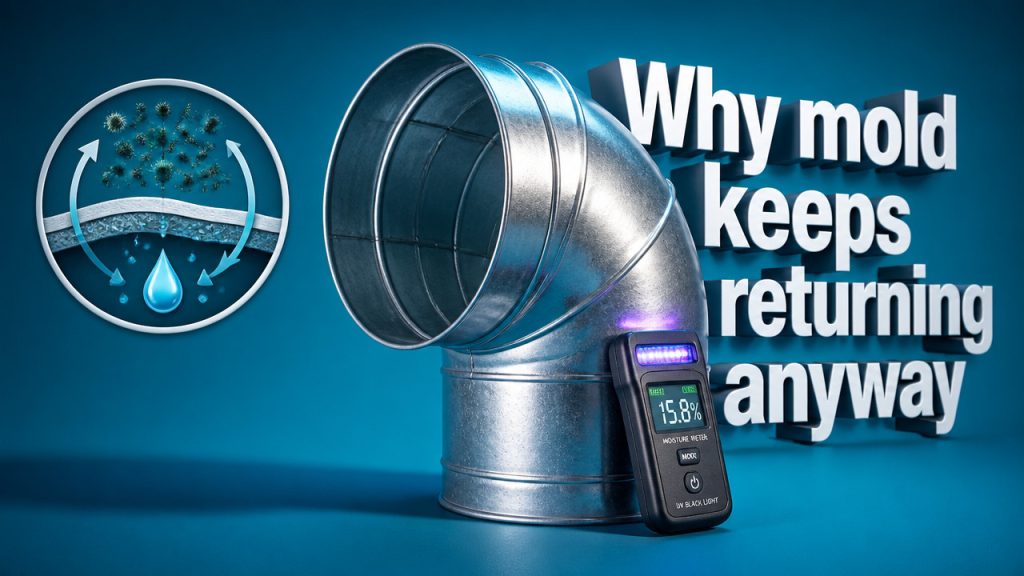
Mold in air ducts is a serious indoor air quality issue that affects thousands of Austin-area homeowners each year. The removal process requires specialized equipment, EPA-approved antimicrobials, and systematic cleaning protocols that address both visible colonies and airborne spores. Central Texas’s humid climate creates ideal conditions for Aspergillus, Penicillium, and Cladosporium growth inside ductwork, making professional remediation essential for protecting your family’s respiratory health and preventing HVAC system damage.
Quick Answer: The Four-Stage Mold Removal Protocol
When homeowners discover mold in their ventilation systems, the urgency is understandable. Knowing how to get mold out of air ducts starts with understanding that this isn’t a simple weekend DIY project. Professional remediation follows a strict four-stage protocol designed by the Environmental Protection Agency (EPA) and the National Air Duct Cleaners Association (NADCA) to ensure complete removal without contaminating the rest of the home.
- Stage 1: Comprehensive Inspection
- Technicians use moisture meters and borescope cameras.
- Air sampling determines spore concentration levels.
- Stage 2: Source Containment
- Isolation of affected ductwork prevents cross-contamination.
- Negative air machines lock down spores during removal.
- Stage 3: Mechanical Removal
- HEPA-filtered vacuums extract visible colonies and debris.
- Rotary brushes dislodge stubborn growth from duct walls.
- Stage 4: Antimicrobial Application
- EPA-registered biocides neutralize remaining spores.
- Sealants prevent future microbial colonization.
This structured approach ensures that ductwork mold removal addresses the root cause, not just the visible symptoms. For Austin homeowners, consulting duct mold cleaning specialists is the safest way to ensure these protocols are followed correctly.
Why Austin’s Climate Makes Your Ducts a Mold Magnet
Living in Central Texas means enjoying plenty of sunshine, but it also means battling relentless humidity. In 2026, average relative humidity levels in the Austin metro area hover between 65% and 85% for much of the year. This moisture-laden air acts as fuel for microbial growth in ducts, turning your HVAC system into an unintentional incubator.
Here’s how it happens: when warm, humid air hits the cooled surfaces of your air conditioner’s evaporator coil or ductwork, condensation forms. If that moisture doesn’t drain away properly or if your ducts lack proper insulation it creates a damp environment where mold spores settle and multiply. Our team frequently sees this in homes across Round Rock, Cedar Park, and South Austin, where older HVAC systems struggle to manage the moisture load during the sweltering summer months.
Addressing indoor air quality concerns begins with understanding how these seasonal patterns impact your ventilation system.
| Season | Humidity Level | Mold Risk Factor | Primary Concern |
|---|---|---|---|
| Spring (Mar-May) | 70-80% | High | Rain infiltration + allergy season |
| Summer (Jun-Aug) | 65-75% | Severe | AC condensation + constant HVAC run time |
| Fall (Sep-Nov) | 60-75% | Moderate | Leaf debris + fluctuating temps |
Professional Inspection: What NADCA-Certified Technicians Look For
Before any cleaning begins, a thorough assessment is critical. You wouldn’t perform surgery without an X-ray, and you shouldn’t attempt HVAC mold remediation without knowing exactly what’s growing inside your ductwork. Certified technicians follow a rigorous checklist to map the contamination and identify the moisture source.
Visual inspections often scratch the surface, but air duct fungus elimination requires looking deeper. We use non-invasive tools to detect hidden colonies that could be circulating spores throughout your home every time the AC kicks on.
- Visual Inspection: Checking registers, grilles, and return boxes for visible discoloration.
- Borescope Imaging: Feeding flexible cameras into ductwork to spot growth behind walls.
- Moisture Mapping: Using digital meters to pinpoint high-humidity zones in the system.
- Thermal Imaging: Detecting temperature differences that indicate leaks or missing insulation.
- Air Sampling: Lab-testing air samples to identify specific mold species present.
Recognizing warning signs your ducts need attention early can save you thousands in remediation costs and protect your family from prolonged exposure.
The Complete Mold Remediation Process for Residential Ductwork
Once inspection confirms the presence of mold, the actual cleanup begins. This isn’t just about wiping down surfaces; professional ventilation system mold treatment is a comprehensive restoration process. The goal is two-fold: remove the existing contamination and prevent it from coming back.
The process starts with containment. Technicians seal off the supply and return vents in the affected areas. They then install negative air machines, which create a vacuum effect inside the ductwork. This ensures that when mold is disturbed during cleaning, the spores are sucked into a HEPA filter rather than blown out into your living room.
“Proper containment is the most critical step in mold remediation. Without negative air pressure, you risk contaminating the entire home during the cleaning process.” NADCA Assessment Guidelines
With containment secured, mechanical agitation begins. High-powered brushes and compressed air tools loosen the mold from the duct walls. Simultaneously, high-capacity vacuum collection devices pull the debris out. This combination of agitation and extraction is the industry standard for thorough duct cleaning techniques.
- System Shutdown: Turn off the HVAC unit to prevent fan dispersion.
- Containment Setup: Seal registers and negative air machine activation.
- Mechanical Agitation: Use whips and brushes to dislodge growth.
- HEPA Extraction: Vacuum debris from the duct system.
- Coil Cleaning: Clean the evaporator coil and drain pan.
- Antimicrobial Application: Fog or spray EPA-registered solutions.
- Post-Cleaning Verification: Re-scan ducts and perform visual/air tests.
EPA-Approved Antimicrobials vs. DIY Solutions: What Actually Works
A quick search online will suggest dozens of DIY remedies for air duct disinfection, ranging from vinegar sprays to bleach solutions. While these might work on bathroom tile, they fall short inside an HVAC system. In fact, using the wrong solution can damage your equipment or leave behind moisture that exacerbates the problem.
Bleach, in particular, is problematic for ductwork. It lacks the ability to penetrate porous insulation lining the ducts, meaning it kills surface mold but leaves the roots intact. Furthermore, bleach requires dilution with water adding moisture to an environment already struggling with dampness. Professional-grade antimicrobials, conversely, are formulated to kill mold at the cellular level without introducing excess moisture.
| Treatment Method | Effectiveness | Safety Profile | Longevity |
|---|---|---|---|
| Professional Biocide | High (kills roots) | EPA-registered, low toxicity | 1-2 years with maintenance |
| Household Bleach | Low (surface only) | Corrosive to metal, harmful fumes | Days to weeks |
| Vinegar Solutions | Low (limited spectrum) | Safe, but ineffective on heavy growth | Temporary |
| Hydrogen Peroxide | Moderate | Safe, but risks bleaching materials | Short-term |
True deep cleaning protocols rely on chemistry designed specifically for HVAC environments, ensuring that mold spore removal is permanent rather than temporary.
UV Light HVAC Disinfection: Your Long-Term Prevention Strategy
Cleaning mold is one thing; keeping it out is another. Once your ducts are clean, the most effective preventive measure a homeowner can take is installing UV-C germicidal lights. These systems, installed inside the air handler, emit ultraviolet light that neutralizes mold spores, bacteria, and viruses as they pass through the system.
Think of it as a 24/7 sterilization system. Unlike chemical treatments that work once and fade, UV lights continuously disrupt the DNA of microorganisms, preventing them from reproducing. This technology has been used in hospitals for decades, and it is now accessible for residential comprehensive air duct maintenance.
“Germicidal UV-C lights have been shown to reduce microbial population on irradiated surfaces by over 99% in continuous exposure scenarios.” ASHRAE Technical Resources
- UV-C Light Installation: Kills mold and bacteria at the source (coil).
- High-Efficiency Filters: Upgrade to MERV 11-13 rated filters.
- Dehumidification Systems: Add whole-home dehumidifiers to keep humidity under 50%.
- Duct Sealing: Aeroseal technology seals leaks to reduce dust entry.
- Regular Maintenance: Schedule annual professional inspections.
- Condensate Drain Care: Ensure drain pans stay clear of standing water.
Key Takeaways: Protecting Your Family from Ductwork Mold
For families with babies, elderly members, or allergy sufferers, the air quality inside the home is non-negotiable. Mold spores circulating through ductwork can trigger asthma attacks, cause allergic rhinitis, and lead to long-term respiratory issues. The investment in professional cleaning is an investment in your family’s health.
- Health Risk: Mold exposure aggravates allergies and can cause respiratory infections.
- Vulnerable Groups: Infants and elderly residents are most at risk.
- Professional Need: DIY methods often spread spores rather than remove them.
- Climate Factor: Austin’s humidity requires proactive prevention strategies.
- Prevention Power: UV lights and proper filtration keep ducts clean year-round.
Understanding the health benefits of clean air ducts provides the motivation needed to address this hidden hazard before it affects your household.
Frequently Asked Questions About Air Duct Mold Removal
Can I clean mold out of my air ducts myself?
No. Attempting DIY mold removal risks spreading spores throughout your entire home through the HVAC system. Professional remediation uses containment and negative air pressure to ensure safety. Without specialized HEPA filtration equipment, you could actually worsen the indoor air quality in your Austin home.
How much does professional air duct mold removal cost?
Costs vary. Typically, duct sanitization and mold remediation in the Austin area range based on system size, extent of contamination, and accessibility. While it is an investment, the cost is significantly lower than potential medical bills or HVAC system replacement caused by unchecked microbial growth.
How long does the mold removal process take?
Usually one day. A typical residential ventilation system mold treatment can be completed in 3-5 hours, depending on the number of vents and severity of the mold. Larger homes or severe contamination cases may require a second day to ensure every square inch of ductwork is properly treated.
Will mold in my ducts make my family sick?
It is possible. Exposure to mold spores can cause symptoms like coughing, sneezing, throat irritation, and eye irritation. For those with asthma or compromised immune systems, the health risks are higher. If you notice a musty smell when the AC runs, you should schedule an inspection immediately.
How can I tell if there is mold in my air ducts?
Look for signs. Visible black dust around vents, a persistent musty odor, or unexplained allergy symptoms when the HVAC runs are common signs your ducts need professional cleaning. A professional inspection with lab testing provides definitive confirmation.
Does homeowners insurance cover mold removal from ducts?
Sometimes. Coverage often depends on the root cause of the mold. If the mold resulted from a sudden, covered event like a pipe burst, insurance may cover HVAC mold remediation. However, mold caused by neglect or gradual humidity issues is typically excluded. Always check your policy details.