
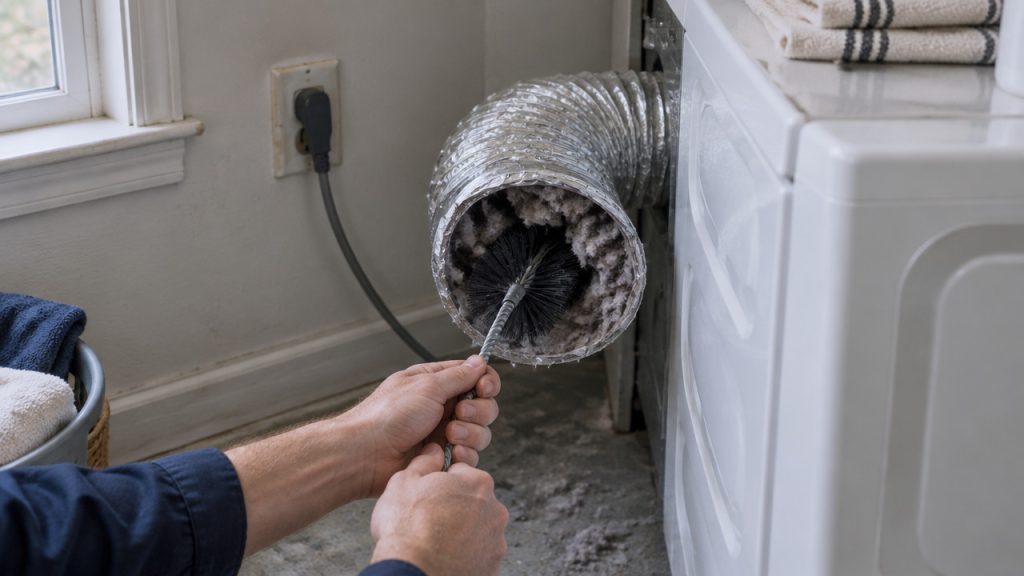
Cleaning dryer vents and air ducts calls for two different approaches: dryer vents are a manageable DIY job, while air ducts usually need professional equipment. Dryer vent cleaning takes a dryer vent brush kit, a vacuum and some patience, and it clears the lint buildup that turns a dryer into a fire hazard. Ductwork is harder to deal with because it runs through attics and walls, and the dust and debris inside need powerful suction to remove, which matters most in homes with allergy sufferers or babies. The decision you face is which chore you tackle this weekend and which one you hand to someone with the right tools.
How Do You Clean Dryer Vents and Air Ducts? The Short Answer
Learning how to clean dryer vents & air ducts starts with recognizing that these two systems need completely different approaches and equipment levels.
- Dryer vents are a manageable DIY project with basic tools like a vacuum and brush kit.
- Air ducts require professional-grade suction and agitation equipment you likely do not own.
- Lint is highly flammable, making dryer vent cleaning a matter of home safety.
- Clogged vents lengthen drying times, raise energy bills, and put wear on your appliance.
- Duct cleaning matters most for indoor air quality in homes with allergy sufferers or babies.
The logic is simple enough. Your dryer vent is a single, accessible tube that you can usually reach from the back of your appliance. It collects lint, which you can see and remove yourself. Air ducts, on the other hand, branch through your entire home behind walls and above ceilings. A standard shop vac cannot generate the airflow needed to pull dust from those depths. For homeowners in Austin looking to understand the full scope of this safety task, essential homeowner’s guide to dryer vent cleaning offers a deeper look at why this matters.
Is Your Dryer Vent Overdue? Warning Signs and Cleaning Frequency
Your dryer will usually tell you when something is wrong, but the signs creep up slowly. You might not notice an extra ten minutes on a drying cycle until you realize your clothes have been damp for an hour longer than usual. A dryer that runs hot to the touch or shuts off mid-cycle is screaming for attention. These symptoms mean the hot, moist air cannot escape the drum fast enough.
Cleaning at least once a year is the general guideline for most households. If you have a large family doing daily laundry, or if you have pets that shed, you might need to check it sooner. The lint filter catches most of the fuzz, but a surprising amount gets past that screen and settles in the ductwork. Over time, that buildup restricts airflow and creates a genuine dryer fire hazard.
- Clothes take longer to dry than they used to, often needing multiple cycles.
- The dryer exterior feels unusually hot during or right after a cycle.
- A burning smell emanates from the dryer area when the machine runs.
- The laundry room feels excessively humid or steamed up.
- You see visible lint accumulation around the dryer vent hood outside your home.
Ignoring these signs does not just waste electricity.Lint buildup restricts airflow, which can cause the dryer to overheat and potentially ignite. Checking how often you should clean your dryer vent depends on your laundry habits, but waiting for warning signs is gambling with more than just your utility bill.
How to Clean Your Dryer Vent Step by Step
Tackling dryer vent cleaning yourself is a solid Saturday morning project. You do not need fancy equipment, just a bit of elbow grease and the right tools. A dryer vent brush kit is the main investment here. These kits have flexible rods that screw together, letting you push a bristle brush through the ductwork from either end. You will also want a vacuum with a long hose attachment and a screwdriver.
Before you start, safety is the priority. Always unplug the dryer (electric) or shut off the gas valve (gas models) before moving it. Gas dryers require extra care with the flexible gas line; you do not want to crack or loosen that connection.
- Pull the dryer away from the wall and unplug it from the power outlet.
- Loosen the clamp holding the vent hose to the dryer and wall exhaust port.
- Use your vacuum to clear lint from the hose and the dryer exhaust port.
- Feed the vent brush kit into the ductwork to break up stubborn lint buildup.
- Reconnect the vent hose and tighten the clamps securely.
- Plug the dryer back in and run it on air-only for ten minutes to clear debris.
When you clean, pay attention to the exterior vent hood. Birds and rodents love nesting in warm ducts, and a blocked exterior flap causes the same issues as lint. If you run into a wall or run longer than you can reach, stop. Forcing a brush through too many bends can puncture the duct or disconnect joints hidden in the wall. This is where knowing what the dryer vent cleaning process involves helps you recognize the limits of a DIY approach.
Cleaning Your Home’s Air Ducts: What’s DIY and What’s Not
Here is where the line between DIY and professional work gets drawn clearly. Air duct cleaning is fundamentally different from dryer vent cleaning. Your dryer vent is a straight shot, maybe 10 to 20 feet of metal or flexible tubing. Your air ducts are a branching network of trunk lines, supply registers, and return drops that travel through closets, attics, and wall cavities. You cannot just shove a vacuum hose in and call it done.
Professional duct cleaning uses high-powered, truck-mounted vacuum systems that create massive negative pressure in your ductwork. Technicians also use agitation tools whips, brushes, and air snakes to knock dust loose from the duct walls while the vacuum pulls it out. A homeowner with a shop vac might clean the first few inches of a register, but the debris settled deep in the trunk line stays put.
This matters more for homes where air quality is a health factor. Dust, pet dander, and construction debris settle in ducts over the years. Every time your HVAC system kicks on, that material circulates through your living space. For families with indoor air quality concerns, professional cleaning is less about maintenance and more about health.
| Feature | Dryer Vent Cleaning | Air Duct Cleaning |
|---|---|---|
| Primary Location | Behind dryer to exterior wall | Throughout walls, attics, and floors |
| DIY Feasibility | High with basic tools | Low; requires professional equipment |
| Main Benefit | Fire prevention and faster drying | Indoor air quality and HVAC efficiency |
| Required Equipment | Brush kit and vacuum | Truck-mounted vacuum and agitation tools |
| Recommended Frequency | Annually or as needed | Every 3 to 5 years |
Ductwork also poses access challenges. A lot of it is wrapped in insulation and tucked into tight crawl spaces. You might not even know where all your ducts run. Professionals have the inspection cameras and maps to find problem areas without cutting into your walls. When you consider professional air duct cleaning, you are paying for equipment that would cost thousands to rent and expertise that takes years to develop.
When to Call a Pro in Austin, and How to Keep Vents Clean Longer
Even confident DIYers hit walls sometimes literally. If your dryer vent runs through the roof, or if the duct travels more than 15 feet with multiple 90-degree turns, a brush kit might not reach. You also might encounter a crushed or disconnected duct behind the wall, which a DIY cleaning cannot fix. In those cases, trying to force a solution often creates bigger problems. Homeowners in Central Texas facing these issues often find that dryer vent cleaning in Austin professionals save time and prevent costly mistakes.
Recurring symptoms also signal that you need help. If you clean the vent and a week later your clothes are still damp, you likely have a deeper blockage or a mechanical issue with the dryer itself. Professional services have inspection cameras that can see exactly what is stuck in the line, whether it is a bird nest, a squirrel, or a lint clog the brush missed.
Between professional cleanings, simple habits extend the life of your vents and keep your home safer. HVAC maintenance is often about consistency rather than one big effort.
- Clean the lint trap screen before every single load.
- Wash the lint screen with soap and water once a month to remove fabric softener buildup.
- Check the outdoor vent hood monthly for nests or debris buildup.
- Use metal ductwork instead of flexible plastic or foil wherever possible.
- Keep the area behind the dryer free of lint and clutter for better airflow.
Metal ducts are smoother, fire-resistant, and less likely to sag and trap lint than plastic or foil flexible ducts. If you still have flexible ducting, upgrading to rigid metal is a smart investment. These small steps reduce the amount of lint that reaches the duct in the first place, stretching the time between necessary deep cleanings.
Frequently Asked Questions About Cleaning Dryer Vents and Air Ducts
Can I clean a dryer vent that runs through the roof or a long wall run myself?
No. Roof vents and runs over 15 feet typically require professional equipment. Most DIY brush kits cannot navigate the distance or the angles involved. Professionals have specialized rods and blow-out tools that clean from the outside inward, preventing damage to the ducting.
Is it safe to run the dryer while waiting for a professional cleaning?
Not recommended. If you know you have a clog, running the dryer risks overheating. It is better to air-dry clothes or use a laundromat until the vent is clear. The risk of fire increases with every cycle run through a blocked vent.
Does a clean dryer vent help lower energy bills?
Yes. A clogged vent forces the dryer to run longer and work harder. Cleaning the vent restores proper airflow, shortening drying times. Lower energy consumption and less wear on the appliance are direct benefits.
Should I clean dryer vents and air ducts at the same visit?
Yes. Scheduling both services at once is efficient if the company offers both. A professional dryer vent cleaning service often handles both systems, saving you the hassle of coordinating multiple appointments and ensuring your home’s air systems are fully maintained.
What tools do I need if I want to do dryer vent cleaning on my own?
A dryer vent brush kit and a vacuum with a hose. You might also need a screwdriver to loosen clamps. The brush kit helps you reach deep into the duct, while the vacuum clears the lint you dislodge. This basic kit is enough for most standard, straight dryer vent setups.