
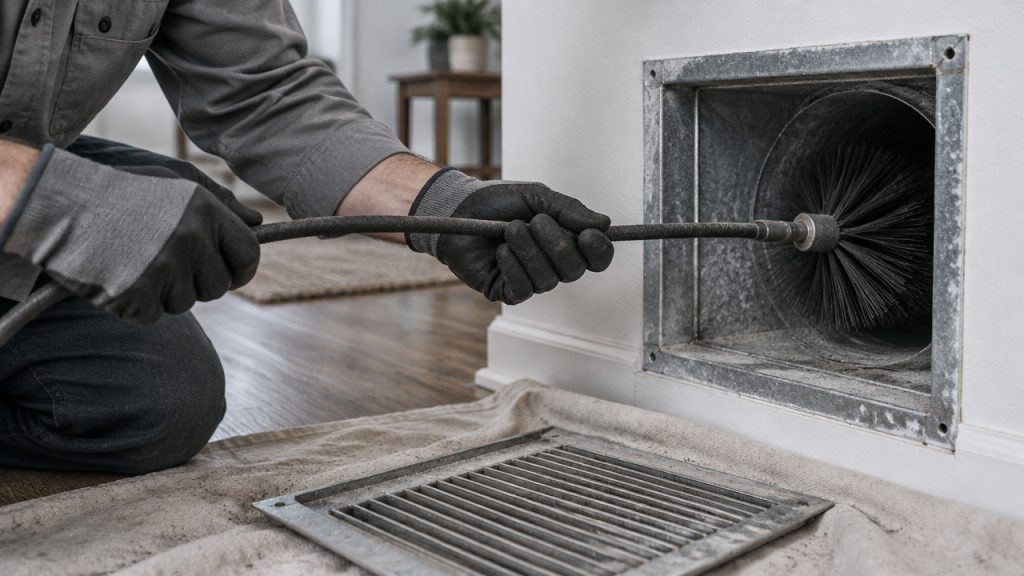
To clean air ducts properly, you have to pull debris out of the entire HVAC system using vacuum suction and agitation, because wiping down vents and registers only tidies the part you can see. Pros typically hold the system under a negative air pressure vacuum while brushes and air tools knock dust loose, so it leaves the house instead of blowing back through it. A household vacuum can handle the surface, but the real question is whether you can reach and extract what sits deep in the trunk lines and branches. If allergies or a new baby are on your mind, the decision comes down to whether a surface wipe-down is enough or the whole system needs a thorough cleaning.
How to Clean Air Ducts: The Short Answer
Effective duct cleaning means extracting built-up debris from the entire HVAC system using professional-grade vacuum suction combined with agitation tools that loosen dust and contaminants from duct walls. The process goes far beyond what you can see from your floor registers and requires a comprehensive guide to air duct cleaning to truly understand the full scope of work involved.
- Whole-system cleaning removes debris from supply and return ducts, not just vent covers.
- High-powered vacuums create negative air pressure to pull loosened contaminants out.
- Agitation tools like brushes and air whips knock debris loose from duct walls.
- Professional inspection cameras verify the condition of ducts before and after cleaning.
- Optional sanitizing treatments can inhibit mold and bacterial growth after debris removal.
Understanding how to clean air ducts starts with recognizing that the visible grilles are just the entry points to a branching network of ductwork running through your walls, attic, or crawlspace. That network collects years of dust, pet dander, construction debris, and in some cases, mold spores that a simple wipe-down will never touch. The real work happens deep inside the trunk lines and branch runs where standard household tools cannot reach.
Before You Start: Signs Your Ducts Need Attention
Cleaning your air ducts makes the most sense when specific triggering events or conditions appear, rather than following a rigid calendar schedule. Not every home needs duct cleaning on a regular rotation, and knowing what to look for helps you decide when the investment makes sense. Some homes go years between cleanings, while others benefit from more frequent attention based on their specific circumstances.
Recognizing the top signs your air ducts need cleaning can save you money and ensure you address actual problems rather than imagined ones. The most reliable indicators tend to be visible and tangible rather than theoretical concerns about what might be lurking in your ductwork. Trust your eyes and nose when evaluating whether your system needs professional attention.
- Recent home renovation or construction projects that generated significant dust and debris.
- Family members experiencing worsening allergies or respiratory symptoms at home.
- Visible mold growth on or around vent covers, grilles, or inside accessible duct sections.
- Moving into a previously owned home with no record of previous duct cleaning service.
- Persistent musty or stale odors coming from your HVAC system when it runs.
Renovation projects are one of the most common triggers because construction dust is fine, pervasive, and easily pulled into your HVAC system. Even careful contractors working with plastic sheeting cannot contain all the drywall dust, sawdust, and debris that gets stirred up during remodeling work. That material ends up settling in your ductwork and circulating through your home every time your system runs. Homeowners with severe allergies often notice that symptoms spike when the heat or air conditioning kicks on, which suggests the system may be stirring up trapped allergens.
Visible mold requires immediate attention because mold spores can spread through your entire home via the duct system. If you see mold around your vents or suspect mold growth inside darker sections of ductwork, professional cleaning combined with proper sanitizing becomes essential rather than optional. New homeowners face a different challenge: you inherit whatever previous owners left behind, including decades of accumulated debris in some cases.
Step-by-Step: How Air Ducts Get Cleaned
A thorough air duct cleaning process follows a clear, logical sequence from initial inspection to final verification. Professional technicians do not simply hook up a vacuum and call it done. Instead, they work through a systematic approach that addresses each component of your HVAC system to ensure comprehensive debris removal. Understanding this process helps you evaluate whether a service provider is doing the job correctly.
When deep cleaning your air ducts, professionals use a combination of inspection technology, vacuum equipment, and specialized agitation tools to reach every corner of your ductwork. The goal is not just to remove what is easy to access but to clean the entire system so debris cannot break loose later and recirculate through your living space.
- System inspection: Technicians use a duct inspection camera to examine interior duct conditions and identify problem areas before cleaning begins.
- Drop cloth preparation: Floors and furniture around access points receive protective coverings to keep loosened debris contained during the cleaning process.
- Vacuum setup: A negative air pressure vacuum connects to the duct system to capture debris as it gets knocked loose from interior surfaces.
- Agitation and cleaning: Brushes, air whips, and compressed air tools loosen debris from duct walls, registers, grilles, and internal components.
- Component cleaning: Technicians clean supply and return ducts, fans, motors, and accessible parts of the air handler to remove accumulated dust.
- Optional sanitizing: If mold or bacterial contamination is present, professionals apply sanitizing treatments to inhibit future growth and improve indoor air quality.
The inspection step sets the foundation for everything that follows. A duct inspection camera reveals the actual condition inside your ductwork, showing where dust, debris, or mold has accumulated. This visual evidence helps technicians target specific areas and gives you proof of what was present before cleaning began. Without inspection, cleaning becomes a guessing game rather than a targeted solution.
Connecting a negative air pressure vacuum to your duct system creates the suction needed to pull debris out rather than just pushing it around. Professional vacuums are significantly more powerful than anything available to homeowners, and they include filtration systems that capture the smallest particles. Once the vacuum is running and creating negative pressure, technicians use agitation tools to knock dust and debris loose from duct walls so the vacuum can capture it.
Cleaning should address the entire HVAC system, including supply ducts, return ducts, registers, grilles, and accessible components like fans and motors. Skipping any component leaves contamination behind that will eventually make its way back into your air. The optional sanitizing step makes sense when mold or bacterial growth has been identified, providing an additional layer of protection against future contamination.
DIY Duct Cleaning vs. Hiring a Pro: What’s Realistic?
Homeowners can handle certain surface-level cleaning tasks themselves, but the reality is that full-system cleaning requires professional-grade equipment and expertise. Understanding the difference between what you can do yourself and what requires professional service helps set realistic expectations and prevents wasted effort on incomplete DIY attempts.
The homeowner’s guide to effective duct cleaning acknowledges that DIY has limits while still offering value for basic maintenance tasks. Removing vent covers and vacuuming what you can reach from the floor is genuinely useful for reducing visible dust around your registers. However, the vast majority of your ductwork remains completely inaccessible to household tools and residential vacuum cleaners.
| Task Aspect | DIY Approach | Professional Service |
|---|---|---|
| Reach | Limited to vent openings and a few feet of accessible ductwork | Entire system including trunk lines, branches, and air handler components |
| Equipment | Household vacuum, basic brushes, damp cloths | Commercial negative air machines, powered brushes, air whips, inspection cameras |
| Inspection | Visual check of visible areas only | Full camera inspection of internal ductwork before and after cleaning |
| Debris Removal | Surface dust at accessible points | Deep extraction from entire duct system with verification |
| Sanitizing | Not available to homeowners safely | EPA-registered treatments applied per manufacturer guidelines |
| Time Required | Several hours for partial results | Typical full-service completion in one appointment |
The reach difference is where DIY falls shortest. Your household vacuum might handle the dust visible at your floor registers, but it cannot access the main trunk lines that carry air through your home. Those trunk lines often hold the majority of accumulated debris, and without proper extraction, that material continues circulating through your living space every time your system runs.
Professional equipment creates a level of suction that household vacuums simply cannot match. Commercial negative air machines are designed specifically for duct cleaning, with filtration systems that capture particles down to very small sizes. Combined with powered brushes and air whips that agitate debris loose, professional equipment achieves a level of cleaning that DIY tools were never designed to accomplish.
Verification represents another significant advantage of professional service. After cleaning, technicians can run their inspection camera through your ductwork to show you the results. This visual confirmation matters because you can see exactly what was removed and verify that the job is complete. DIY cleaning offers no such verification, leaving you to guess whether your efforts made any meaningful difference deeper in the system.
Choosing a Duct Cleaner in Austin and Central Texas
Finding a trustworthy air duct cleaning provider in the Austin area means looking beyond cheap pricing and flashy marketing claims. The quality of service varies dramatically across the industry, and homeowners who choose based on price alone often end up with incomplete work or aggressive upselling tactics. A reputable provider stands behind their process and welcomes questions about their methods and standards.
Learning how to find the best air duct cleaning companies in your area starts with understanding what separates professional service from bait-and-switch operators. The companies worth hiring maintain certifications, use proper equipment, and operate transparently throughout the cleaning process. Asking the right questions before you hire helps ensure you get actual value for your investment.
- Are your technicians certified and trained in NADCA standards for proper duct cleaning procedures?
- What inspection methods do you use to assess duct conditions before and after cleaning?
- Does your process include cleaning fans, motors, and air handler components, not just ductwork?
- Do you offer sanitizing treatments, and under what circumstances do you recommend them?
- Can you provide a written scope of work and clear pricing before service begins?
NADCA, the National Air Duct Cleaners Association, sets the industry standard for proper cleaning procedures and technician training. Asking about NADCA standards gives you a baseline for evaluating whether a company takes their work seriously. Certified technicians understand the importance of cleaning the entire system rather than just the easiest accessible sections.
Inspection methods tell you a lot about a company’s professionalism. Providers who skip the inspection step are essentially guessing at the scope of work needed. A thorough company uses camera inspection to identify problem areas, plan their approach, and verify their results after cleaning. This process creates accountability and ensures you receive comprehensive service rather than a rushed job.
Transparency about pricing and scope of work protects you from the bait-and-switch tactics that plague this industry. Reputable companies provide written estimates that clearly describe what they will clean and what the service includes. If a company quotes an unusually low price over the phone without inspecting your system, that should raise questions about what the final bill will actually look like.
Noble Air serves homeowners throughout Austin and the surrounding Central Texas communities with thorough, honest duct cleaning service. Their team understands the local conditions that affect indoor air quality, from the dust storms that sweep through the region to the humidity that can encourage mold growth in ductwork. Local expertise matters because regional factors influence what contaminants end up in your HVAC system and how best to address them.
Air Duct Cleaning FAQ
Can I clean air ducts myself with a household vacuum?
No. A household vacuum cannot reach beyond a few feet into your ductwork, leaving the majority of debris untouched in trunk lines and branch runs. Professional equipment provides the suction power and reach needed for whole-system cleaning, while consumer vacuums only address surface dust at visible access points.
Is duct cleaning worthwhile if someone in my home has allergies?
Yes, potentially. Allergy sufferers may benefit from removing accumulated pollen, pet dander, and dust from ductwork that otherwise circulates through the home during HVAC operation. The EPA notes that duct cleaning’s effectiveness varies by situation, but reducing overall particle load in your system can help sensitive individuals breathe easier when combined with other air quality improvements. Consider reading about the potential health benefits of having your ducts cleaned to understand how it might help your specific situation.
What should I do if I find mold in my ducts?
Contact a professional immediately. Visible mold in your ductwork indicates a moisture problem that requires addressing the source, not just cleaning the contamination. Professionals can remove mold growth safely and apply inhibiting treatments, but lasting solutions require fixing whatever moisture issue allowed mold to develop in the first place.
Should I clean ducts before bringing a baby home?
Often yes. Newborns have developing respiratory systems that may benefit from reduced airborne irritants in the home environment. If the home has never had duct cleaning, removing years of accumulated debris creates a cleaner starting point for your growing family, especially in older homes with unknown maintenance histories.
Will cleaning ducts make my home less dusty right away?
Not necessarily immediately. Some homeowners notice reduced dust settling after cleaning, but results depend on other factors like household activities, pet ownership, and outdoor conditions. Duct cleaning removes one source of recirculating particles, but dust also comes from daily living, tracked-in soil, and other sources unrelated to your HVAC system.
Does duct cleaning help with the effects of a renovation?
Yes. Construction dust is extremely fine and penetrates deeply into duct systems, where household cleaning cannot reach. Professional duct cleaning removes this buildup and prevents it from circulating throughout your home for months or years after the renovation work ends, protecting your indoor air quality from lingering construction debris.