
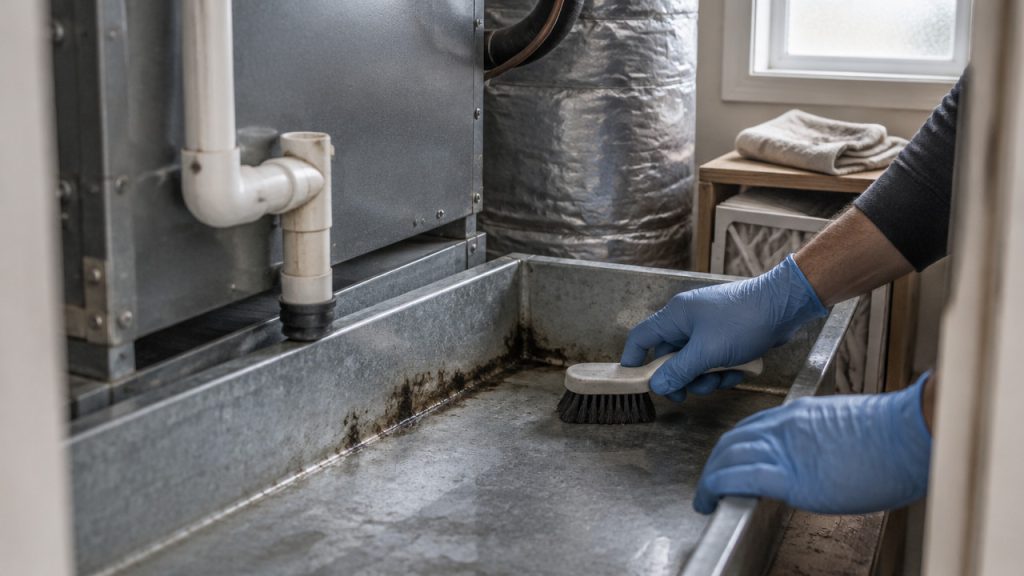
AC mold cleaning removes mold from the evaporator coil, condensate drain pan, ducts and vents, and it calls for a professional once growth is widespread or keeps returning. Mold only grows where moisture lingers, so wiping away what you can see buys a little time but never touches the damp spot that fed it. A small patch on a vent cover is a fair DIY job, while a musty smell, spots that reappear or mold deeper in the ductwork is not. The decision comes down to whether you’re dealing with one reachable patch or a moisture problem that keeps feeding it, which matters even more with allergies or a baby in the house.
AC Mold Cleaning: What It Is and When You Need It
AC mold cleaning targets the evaporator coil, condensate drain pan, supply plenum, ductwork and vent registers where mold spores settle and multiply. Mold in air ducts is a symptom of a moisture control problem, not just a surface cleaning issue. Professional duct mold cleaning in Austin becomes necessary when growth extends beyond a single visible spot or returns after you’ve already wiped it away.
- Surface mold on vent covers is manageable with standard household cleaners and gloves.
- Evaporator coil mold requires access panels and specific foaming agents.
- Widespread growth inside ductwork signals a need for professional equipment.
- Recurring spots indicate an underlying moisture or drainage issue.
- Musty odors thatpersist when the system runs often point to hidden colonies.
Why Mold Grows Inside Your Air Conditioner
Your air conditioner basically hits the trifecta for fungal growth: moisture, an organic food source, and darkness. The evaporator coil creates condensation as it pulls heat from your home. That water drips into a pan and flows out through a drain line, but dust and debris often collect in that same pan. The resulting sludge is a perfect breeding ground. For homeowners in Central Texas, the high outdoor humidity and heavy AC usage through most of the year amplify this challenge significantly. Professional professional air duct cleaning helps remove the organic material that feeds mold inside the system.
Mold spores exist almost everywhere, floating through the air until they find a suitable spot to land and reproduce. The porous surface of an evaporator coil or the interior of a lined duct gives spores something to grip. Once established, mold colonies can spread rapidly. The constant airflow across these zones sends spores throughout a home, affecting anyone breathing that air.
- Evaporator coil surface with dust accumulation and condensation.
- Condensate drain pan where standing water often collects.
- Drain lines that clog and cause water backup.
- Interior duct walls lined with dust or insulation fibers.
- Supply plenum where cool air enters the duct system.
Signs of Mold in Your AC System (Before It Gets Personal)
Spotting mold early saves you from bigger headaches later, but the signs are not always obvious black spots. A dirty sock smell when you first turn on the cooling is a classic indicator. This odor comes from bacterial and fungal growth on the evaporator coil. Your nose is often the best detection tool you have. Trust it. Recognizing the signs you need air duct cleaning can help homeowners address problems before they become health hazards.
Visible signs tend to appear later. You might see dark streaks or speckles around vent registers. Sometimes these are just dust, but they merit closer inspection. Homes with infants, elderly residents or anyone with respiratory sensitivities should take these warnings seriously. The American College of Allergy, Asthma & Immunology notes that indoor allergens can trigger significant respiratory issues, especially in sensitive individuals.
- Persistent musty or dirty sock odor when the AC runs.
- Visible dark spots or streaks on vent covers and surrounding walls.
- Increased allergy symptoms like sneezing, coughing or itchy eyes indoors.
- Respiratory irritation that improves when you leave the house.
- Water stains or moisture near the indoor air handler unit.
- Recurring headaches or fatigue among household members.
DIY vs. Professional AC Mold Cleaning: What Actually Works
Cleaning visible mold off a vent cover is a reasonable do-it-yourself task. The surface is accessible, and wiping it down with a mold-killing agent removes that immediate reservoir of spores. It gives you a sense of accomplishment and clears the visible blemish. But wiping the outside of a vent does absolutely nothing for mold growing on the evaporator coil deep inside the air handler, and it does nothing for colonies in the ductwork behind the walls. That is where the line gets drawn between homeowner maintenance and professional intervention.
Professional mold remediation in HVAC systems goes beyond surface cleaning. Technicians use high-powered vacuum collection systems to prevent spores from spreading during the cleaning process. They apply EPA-registered biocides to affected components. Some providers also offer UV light HVAC disinfection systems that continuously kill mold and bacteria on the coil, which can significantly reduce the chance of regrowth.
| Factor | DIY Cleaning | Professional Cleaning |
|---|---|---|
| Scope | Visible surfaces, vent covers, accessible exteriors | Entire system including coils, drain pans, plenum, and ductwork |
| Depth | Surface-level removal of visible spots | Deep cleaning plus source identification and treatment |
| Equipment | Household cleaners, brushes, gloves | HEPA vacuums, commercial-grade chemicals, coil sprayers, agitation tools |
| Risk | Spreading spores if not careful; incomplete removal; potential exposure | Contained process; proper safety gear; comprehensive removal |
| Outcome | Temporary visual improvement | Lasting resolution with prevention options |
How to Keep Mold from Coming Back
Killing mold is one thing. Keeping it away is another. The Environmental Protection Agency stresses that controlling moisture is the single most important factor in mold prevention. If the conditions that allowed mold to grow in the first place remain unchanged, it will return. It might take a few weeks or a few months, but it will come back. Prevention requires a shift in mindset from reactive cleaning to proactive system care. Following a comprehensive guide to air duct cleaning as part of your home maintenance routine helps establish a baseline of system cleanliness.
The core idea is to deny mold the three things it needs: moisture, food, and a surface to grow on. Routine maintenance removes the food source (dust and debris). Humidity control addresses the moisture. UV disinfection addresses the remaining organic material that passes through the system year-round.
- Replace your HVAC air filter every 60 to 90 days, or monthly if you have pets or allergy sufferers in the home.
- Schedule professional duct and coil cleaning every three to five years to remove deep buildup.
- Inspect the condensate drain line quarterly and clear any clogs to prevent standing water.
- Use a dehumidifier in especially humid months to keep indoor relative humidity below 60 percent.
- Consider installing a UV light system near the evaporator coil for continuous disinfection.
AC Mold Cleaning FAQ
Can mold in my AC make my baby or allergy-prone family member sick?
Yes. The American Academy of Allergy, Asthma & Immunology notes that airborne mold spores are a common trigger for allergic rhinitis and asthma attacks in sensitive individuals. Mold spores circulated by an infected AC system are inhaled deeply into the lungs, which can cause respiratory distress, coughing, and eye irritation. For infants with developing respiratory systems or family members with compromised immune systems, the risk is higher than for healthy adults. Professional removal and a thorough cleaning of the air handling components are the safest course of action when family health is on the line.
Is black stuff on my vents always mold?
No. Black residue on vent covers can also be accumulated dust, soot from candles or cooking, or even particles from outdoor air pollution. A simple test is to wipe the area with a damp cloth. Soot and dust wipe away easily. Mold tends to smear and leave a stain. If the substance feels slimy or produces a musty odor, it is likely biological growth. If you are unsure, a professional inspection can identify the substance and recommend the appropriate cleaning method, since cleaning soot and cleaning mold require different approaches.
Will bleach or vinegar spray in the vents solve the problem?
No. Spraying bleach or vinegar into your vents may kill surface mold on contact, but it does not reach the source of the growth deeper in the system. It can also damage certain duct materials and introduce corrosive chemicals into your airflow. Bleach fumes can be harmful when circulated through the home. Proper mold removal requires physical cleaning of the affected components and application of appropriate antimicrobial treatments designed specifically for HVAC use. Spraying into vents is a band-aid that masks a deeper, systemic issue.
Can mold spread from the AC to other rooms in my home?
Yes. The primary function of a central air system is to circulate air throughout the home. If mold is present in the air handler or ducts, the blower fan actively distributes spores into every room connected to that system. This is why a localized mold problem in one part of the AC can lead to widespread contamination. Containment during the cleaning process is critical. Professional remediation uses negative pressure and HEPA filtration to prevent spores from spreading to unaffected areas during the removal process.
How often should I have my AC and ducts checked for mold in Central Texas?
Every 1-2 years. The high humidity and extended cooling season in Central Texas create conditions where mold can establish itself more quickly than in drier climates. The National Air Duct Cleaners Association recommends inspection on a regular schedule based on your home’s specific conditions. Homes with pets, smokers, or residents with allergies may need more frequent checks. A professional inspection can identify early moisture problems before they turn into visible mold growth, saving you time and expense in the long run. Noble Air is proud to be serving Austin, TX homeowners with these critical inspections.
Does a musty smell only when the AC starts mean I have mold?
Likely. A musty or earthy smell that appears when the air conditioner first turns on is a strong indicator of biological growth on the evaporator coil or in the drain pan. As the fan engages, it pushes the odor through the ducts and into your living space. This smell is often more pronounced at startup because the system has been still, allowing volatile organic compounds from the mold to build up. While not a guarantee of mold, it warrants an inspection of the indoor coil and drain pan.