
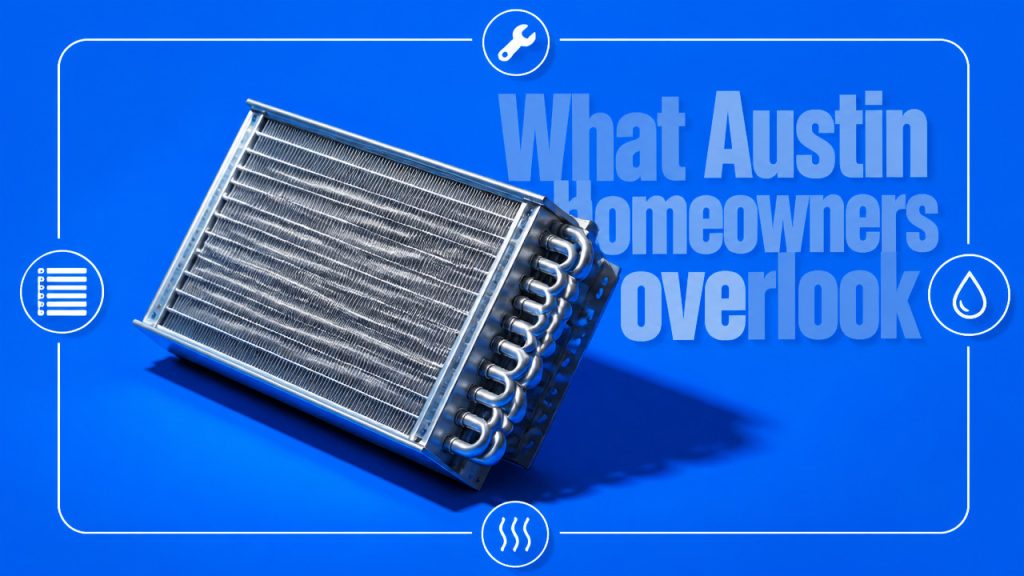
Your air conditioner works overtime in Central Texas heat, pulling in Cedar Fever pollen, construction dust, and humidity that breeds mold inside your system. Proper AC cleaning involves more than changing filters it requires systematic maintenance of indoor evaporator coils, outdoor condenser units, drain lines, and blower components to maintain efficiency and indoor air quality. This guide breaks down professional techniques Austin homeowners can use to keep their cooling systems running cleaner, longer, and more efficiently through brutal Texas summers.
Quick Answer: The Three-Part AC Cleaning System
Learning how to clean air conditioner systems effectively starts with understanding three critical zones that collect the majority of contaminants. Your indoor evaporator coil pulls heat from your home’s air while trapping particles in its wet surfaces. The outdoor condenser unit draws in fresh air but also pulls in whatever is floating outside from cottonwood seeds to construction site dust. Meanwhile, your condensate drain line provides the perfect breeding ground for algae in Austin’s humidity.
- Indoor Evaporator Coil Cleaning: Removes built-up debris from the cooling coil using no-rinse foaming cleaners that dissolve grime without damaging components.
- Outdoor Condenser Deep Clean: Clears fins, removes vegetation debris, and washes the heat exchanger to restore proper heat transfer.
- Condensate Drain Line Clearing: Eliminates algae blockages that cause water backup and potential property damage.
tackling all three areas keeps your system running at peak performance through Austin’s long cooling season. For homes with significant dust accumulation in the distribution system, professional air duct cleaning complements these AC cleaning efforts by removing the source material that would otherwise coat your freshly cleaned components.
Why Austin’s Climate Destroys Air Conditioners Faster
Central Texas doesn’t just challenge air conditioners it actively works against them. The combination of extended run times, heavy particulate loads, and moisture creates a perfect storm of contamination that homeowners in milder climates simply don’t experience. Your AC runs more hours per day, more months per year, pulling in more outdoor air and all the particles riding on it.
Cedar Fever season dumps massive pollen loads across the Austin area from December through February exactly when many systems sit idle, allowing that yellow dust to settle inside components. When you fire up your AC in spring, that pollen mixture with spring oak allergens coats your indoor coil. By summer, construction dust from Austin’s constant development adds fine particulates that slip past standard filters.
The real killer is humidity. Austin’s average relative humidity creates condensation on your evaporator coil that never fully dries between cooling cycles. That moisture combined with organic debris forms a biological film that restricts airflow and reduces heat transfer efficiency significantly.
| Contaminant Type | Austin Level | National Average | Primary Impact |
|---|---|---|---|
| Cedar Pollen (Dec-Feb) | Very High | Low-Moderate | Filter clogging, coil coating |
| Oak Pollen (Mar-Apr) | High | Moderate | Allergen distribution |
| Construction Dust | Elevated (metro growth) | Variable | Fine particulate infiltration |
| Average Humidity | 60-75% (cooling season) | 45-55% national average | Algae growth, coil moisture |
| Cooling Season Length | 8-10 months | 4-6 months | Extended component wear |
This environmental assault means Austin AC units need cleaning more frequently than manufacturers’ standard recommendations suggest. Watch for signs your system needs immediate attention reduced airflow, musty odors, or higher electric bills often indicate contamination has reached critical levels.
How to Clean Your Indoor Evaporator Coils Safely
The indoor evaporator coil is where the magic happens and where the mess accumulates. Located inside your air handler or furnace cabinet, this coil extracts heat from your home’s air. When coated with debris, it can’t transfer heat efficiently, forcing your compressor to work harder and run longer. Cleaning this coil requires care because you’re working near electrical components and delicate aluminum fins.
Start by shutting off power to your system at the thermostat and the breaker panel. This isn’t optional your air handler contains exposed electrical connections that stay live even when the thermostat is off. Wait five minutes for capacitors to discharge before touching anything.
- Locate and access your evaporator coil: Remove the access panel on your air handler or furnace cabinet. The coil sits above or beside the blower compartment.
- Protect surrounding components: Place absorbent towels or plastic sheeting below the coil to catch dripping cleaner and debris.
- Inspect the coil condition: Use a flashlight to check for bent fins, ice damage, or heavy biological growth that might require professional attention.
- Apply no-rinse foaming coil cleaner: Spray the cleaner evenly across the coil face, working from top to bottom. The foam expands to penetrate between fins.
- Allow proper dwell time: Let the foam work for 10-15 minutes. It breaks down organic material and lifts debris from the coil surfaces.
- Let condensation rinse the coil: No-rinse cleaners are designed to be flushed by normal condensation when your system runs. Don’t spray water inside your air handler.
- Reassemble and restore power: Replace access panels securely before turning power back on. Run your system to verify proper operation.
For coils heavily coated with biological growth or compressed fins, DIY cleaning may cause more harm than good. when to call Austin professionals instead typically involves situations where specialized tools and experience prevent expensive damage to delicate coil fins.
The Outdoor Condenser Unit: Deep-Cleaning Your Heat Exchanger
Your outdoor condenser unit sits in the elements year-round, pulling air through its coils to reject heat from your home. In Austin, that means ingesting grass clippings, cottonwood fluff, oak leaves, and the ever-present fine dust that settles on every surface. A clogged condenser can’t reject heat efficiently, causing high head pressure that strains your compressor the most expensive component in your system.
Start with a visual inspection. Look for bent fins, vegetation growing against the unit, and debris trapped in the coil face. Austin’s cottonwood trees release their seeds in late spring, creating fluffy accumulations that block airflow completely if left untouched.
- Fin comb or coil straightener: Carefully straightens bent aluminum fins to restore airflow paths. Plastic combs work safer than metal versions.
- Garden hose with spray nozzle: Provides the water pressure needed to flush debris from inside-out. Avoid pressure washers they destroy fins.
- Shop vacuum with brush attachment: Removes dry debris from the coil face before wetting, preventing mud formation inside the fins.
- Coil cleaner concentrate: Alkaline-based cleaners break down organic buildup without damaging copper or aluminum components.
- Screwdriver or nut driver: Removes the fan guard and top grille for access to the coil’s interior surfaces.
Remove large debris by hand first leaves, twigs, and cottonwood accumulations. Vacuum the exterior coil face to remove dry dust and grass. Then wash the coil from inside out by removing the top of the unit and spraying outward through the coils. This direction pushes debris out rather than packing it deeper into the coil. For comprehensive system cleaning that addresses airflow from ductwork inward, a comprehensive duct cleaning process ensures your newly cleaned condenser receives unrestricted airflow from the entire distribution system.
Clearing Condensate Drain Lines Before They Flood Your Home
Austin’s humidity means your air conditioner removes gallons of water from your home’s air every day during peak cooling season. That water flows through your condensate drain line to a floor drain, sink, or the exterior of your home. When algae grows inside that line and it will the resulting blockage can overflow your drain pan, damaging ceilings, walls, and flooring.
The science is simple: warm, humid air meets cold evaporator coil surfaces, creating constant condensation. That water carries organic particles into the drain line where darkness and moisture create ideal conditions for algae and slime mold growth. Left unchecked, this biological buildup narrows the drain line until water backs up.
Clearing a clogged drain line requires a wet/dry vacuum. Locate where your drain line exits your home or connects to a drain. If you have an access point near the air handler, you can vacuum from there. Otherwise, find the exterior termination point. Place the vacuum hose against the drain opening and seal it with a towel or tape. Run the vacuum for two to three minutes to pull the clog through.
Prevention is simpler. Pour one cup of white vinegar down your condensate drain line every three months during cooling season. The mild acidity kills algae before it can form blockages. Some homeowners prefer commercial drain line tablets, but vinegar works effectively at a fraction of the cost. Understanding the recommended maintenance frequency for Austin homes helps you stay ahead of problems that escalate in our climate conditions.
Filter Changes and Blower Compartment Maintenance
Your filter is the first line of defense against coil contamination. In Austin’s challenging environment, standard fiberglass filters simply can’t capture the fine particles that matter most for indoor air quality and system longevity. Selecting the right filter rating matters more here than in cleaner air environments.
MERV (Minimum Efficiency Reporting Value) ratings indicate filter effectiveness. Standard 1-inch fiberglass filters rate MERV 1-4, capturing less than 20% of large particles. Pleated filters in the MERV 8-11 range capture 30-50% of particles down to 3 microns better, but still missing most allergens. MERV 13 filters capture over 90% of particles down to 0.3 microns, including pollen, mold spores, and fine dust.
| Filter Type | MERV Rating | Austin Contaminants Captured | Recommended For |
|---|---|---|---|
| Fiberglass Panel | 1-4 | Large dust only | Rarely recommended for Austin |
| Standard Pleated | 6-8 | Dust, some pollen | Basic protection |
| Allergen Pleated | 11-13 | Pollen, mold spores, dust mites | Allergy sufferers, families |
| HEPA Media | 14-16 | Fine particles, bacteria carriers | Severe allergies, medical needs |
High-MERV filters create more airflow resistance, so check that your system can accommodate them. Some older blowers struggle to pull air through dense media, actually reducing efficiency despite better filtration. Consider deeper cleaning solutions for healthier air when filter changes alone can’t address accumulated contamination in your air handler and distribution system.
When DIY Cleaning Becomes a Professional Job
Not every AC cleaning task belongs on a homeowner’s weekend to-do list. Some situations require specialized equipment, training, and safety protocols that justify calling professionals. Knowing the difference saves you from causing expensive damage or missing serious problems.
- Visible mold growth inside air handler: Requires proper containment, antimicrobial treatment, and disposal protocols to avoid spreading spores.
- Clogged refrigerant lines or low refrigerant: Indicates a leak requiring EPA-certified handling and recovery equipment.
- Compressor or capacitor issues: Electrical components storing dangerous charge even with power disconnected.
- Severely bent or damaged coil fins: Requires professional fin straightening tools and experience to restore without tearing fins.
- Ice buildup on coils: May indicate airflow problems or refrigerant issues requiring diagnostic equipment.
- Water damage around air handler: Suggests ongoing drain issues that may have compromised surrounding materials.
Professional HVAC technicians bring specialized cameras for inspecting coils, coil cleaning equipment that won’t damage components, and the experience to spot problems you might miss. critical warning signs in your ductwork often accompany AC contamination, creating a situation where cleaning only one part of your system leaves problems ready to spread back into cleaned areas.
Key Takeaways: Your Austin AC Cleaning Schedule
Austin’s climate demands a different maintenance rhythm than manufacturers publish for national audiences. Those recommendations assume milder conditions and shorter cooling seasons. Central Texas homeowners need more frequent attention to maintain efficiency and air quality.
| Timeframe | Maintenance Task | Austin-Specific Notes |
|---|---|---|
| Monthly | Check/replace filter | Cedar season (Dec-Feb) may require changes |
| Quarterly | Vinegar drain line treatment | Critical during humid months (Apr-Oct) |
| Spring | Outdoor condenser cleaning | After oak pollen and cottonwood seasons end |
| Summer | Monitor performance | Watch for reduced cooling, higher bills |
| Fall | Indoor coil inspection | Before winter Cedar season begins |
| Annually | Professional inspection | Verify refrigerant levels, electrical connections |
This maintenance schedule keeps your system ahead of Austin’s contamination cycle. Focus on cleaning before each major allergen season rather than waiting for problems to develop. And don’t overlook connected systems don’t forget your dryer vent maintenance because restricted dryer vents can impact overall air quality and represent a safety hazard that compounds with other maintenance neglect.
FAQ: Air Conditioner Cleaning Questions
Can I clean my AC unit myself, or do I need a professional?
Yes, homeowners can handle basic cleaning tasks including outdoor condenser washing with a garden hose and vinegar drain line treatments. These routine maintenance activities require minimal tools and pose low risk when directions are followed. However, indoor coil cleaning involving chemical application and electrical component proximity often warrants professional attention. The break-even point typically occurs when you’re comfortable working near electrical components and can identify problems requiring specialized intervention.
How often should I clean my air conditioner in Austin’s climate?
Monthly filter checks and quarterly drain treatments form the foundation of Austin AC maintenance. The extended cooling season means contaminant accumulation happens faster than in milder climates. Outdoor condenser cleaning twice yearly after spring pollen season and before heavy summer use addresses the heavy particulate loads Central Texas experiences. Indoor coil cleaning every two to three years works for most systems, though allergy sufferers may benefit from annual professional cleaning.
Will cleaning my AC lower my electric bill?
Yes, a clean AC system runs more efficiently than a contaminated one, typically reducing energy consumption measurably. Dirty coils restrict heat transfer, forcing your compressor to run longer cycles to achieve the same cooling effect. A clogged condenser can increase energy usage significantly while reducing cooling capacity. The savings from proper maintenance compound over a cooling season that runs eight months or longer in Central Texas.
Is it safe to spray water on my outdoor AC unit?
Yes, using a garden hose to clean outdoor condensers is safe when done correctly. Always disconnect power before removing access panels or working inside the unit. Spray from inside the coil outward to push debris away rather than packing it deeper into the fins. Never use pressure washers the high pressure bends aluminum fins and can rupture refrigerant lines. Standard municipal water pressure through a spray nozzle provides adequate cleaning force without damage risk.
What does it mean if my AC smells musty when it runs?
A musty odor indicates biological growth inside your system typically on the evaporator coil, in the drain pan, or within the ductwork. Austin’s humidity creates ideal conditions for mold and bacteria growth on the wet surfaces of your indoor coil. This situation requires attention because the smell means contaminated air is circulating through your home. Professional coil cleaning and drain line clearing usually resolve the issue, though persistent odors may indicate ductwork contamination requiring further investigation.
Can a dirty air conditioner make my family sick?
Yes, contaminated AC systems can distribute allergens and irritants throughout your home every time the system runs. For families with allergy sufferers, young children, or elderly members, this ongoing exposure compounds health issues. Cedar Fever sufferers face particular challenges when pollen-coated coils recirculate allergens. recognize these warning signs early to address contamination before health impacts escalate. The combination of biological growth on coils and particulate accumulation in ductwork creates indoor air quality problems that proper cleaning resolves.