
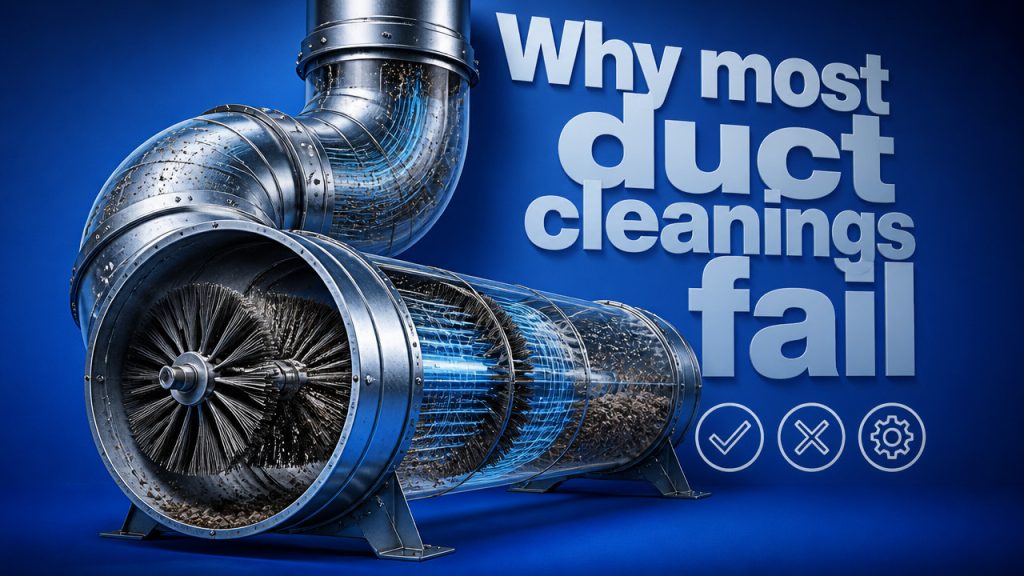
Professional duct cleaning involves three critical phases: high-powered negative pressure vacuuming (3,000+ CFM), mechanical agitation with rotating brushes, and EPA-approved antimicrobial treatment. The difference between legitimate NADCA-certified services and surface-level cleaning comes down to equipment power, inspection technology, and whether they actually seal and clean your entire HVAC system or just the visible parts. Here’s what separates comprehensive cleaning from cosmetic dusting in 2026.
Quick Answer: The 3-Phase Professional Duct Cleaning Method
When homeowners ask how does duct cleaning work, the answer lies in a systematic three-phase approach that ensures complete contaminant removal. Legitimate professionals don’t just suck dust out of registers they create a controlled environment that captures debris before it can recirculate through your home.
The process starts with creating negative pressure throughout the entire ductwork system. This containment phase ensures that dislodged dust and debris travel directly into collection equipment rather thanescaping into your living spaces. Once containment is established, technicians use mechanical agitation tools to break loose decades of accumulated buildup from duct walls. Finally, antimicrobial treatment addresses biological growth and leaves the system sanitized.
| Metric | Comprehensive NADCA-Standard Cleaning | Basic/Cosmetic Cleaning |
|---|---|---|
| Equipment Power | 3,000+ CFM truck-mounted vacuum | 1,200 CFM portable shop-vac |
| Inspection Method | HD camera documentation before/after | Flashlight visual inspection only |
| Containment | Full negative pressure sealing | Limited or no containment |
| Cleaning Scope | Entire system including coils and blower | Visible registers only |
| Sanitization | EPA-registered antimicrobial treatment | Generic deodorizer spray |
Understanding the full residential duct cleaning process helps homeowners distinguish between technicians who invest in proper equipment and those cutting corners. The difference impacts both your air quality and your wallet.
Industrial Vacuum Systems: 3,000 CFM vs. Shop-Vac Approaches
The heart of any legitimate HVAC duct cleaning process is the vacuum collection system. This isn’t your standard shop vacuum from the garage. Professional-grade equipment generates the sustained negative air pressure needed to pull debris from deep within your ductwork.
Truck-mounted vacuum systems represent the gold standard in the industry. These units generate 3,000+ cubic feet per minute of suction power enough to maintain consistent negative pressure throughout an entire home’s duct system simultaneously. Portable electric units, while more convenient for certain applications, typically max out around 1,200 CFM.
The CFM differential matters because duct cleaning isn’t simply about suction strength. The goal is creating a pressure differential that ensures all dislodged debris travels in one direction: into the collection unit. Underpowered systems can actually make air quality worse by stirring up contaminants without fully capturing them.
Getting an insider’s look at professional equipment reveals why reputable companies invest heavily in their vacuum fleet. The equipment specifications directly impact cleaning effectiveness.
- CFM Rating: Minimum 3,000 CFM for whole-house negative pressure containment
- HEPA Filtration Grade: 99.97% efficiency at 0.3 microns for捕捉ing fine particulates
- Hose Diameter: 8-12 inch diameter hoses for adequate airflow volume
- Collection Capacity: Large capacity bins to handle entire system debris without interruption
- Power Source: Gas-powered truck mount or high-amperage electric for sustained operation
Camera Inspection Technology: Before, During, and After Documentation
Modern air duct inspection techniques have evolved well beyond the flashlight-and-mirror approach of decades past. Today’s legitimate professionals use high-definition camera systems to document conditions throughout your ductwork and they should be willing to show you exactly what they find.
HD push cameras allow technicians to navigate deep into branch runs that would otherwise be invisible. These systems reveal buildup patterns, moisture intrusion points, and even pest activity that homeowners would never discover on their own. The visual evidence creates accountability for both the homeowner and the service provider.
Before any work begins, a thorough inspection establishes baseline conditions. Technicians can identify problem areas that need extra attention and document any pre-existing damage. Mid-process inspections verify that agitation tools are reaching their targets. Final documentation proves that the work was completed properly.
According to the Environmental Protection Agency, duct cleaning can be beneficial when performed properly, but inadequate cleaning practices can actually increase contamination by relesasing more dust into your home or allowing it to re-settle in ductwork.
Learning about effective inspection techniques empowers homeowners to verify the service they’re paying for. Any company unwilling to provide visual documentation of their work should raise immediate questions about their methods.
The Mechanical Agitation Phase: Rotary Brushes vs. Air Whips
Vacuum suction alone cannot remove debris bonded to duct walls over years of accumulation. The mechanical agitation phase of the professional duct cleaning steps uses physical contact to dislodge contaminants so the vacuum system can capture them.
Rotary brush systems feature motorized brushes that spin against duct walls, scrubbing away accumulated dust, pet dander, and construction debris. The brush size and bristle stiffness vary based on duct dimensions and contamination severity. Soft nylon brushes work for standard residential ductwork, while stiffer bristles address heavy buildup.
Air whip systems take a different approach, using compressed air to propel flexible whips that strike duct walls at high velocity. These tools excel at reaching irregular surfaces and navigating around bends where brushes might miss spots. Many professional technicians use both methods in combination for maximum effectiveness.
The choice between agitation tools depends on contamination type and duct configuration. Understanding a comprehensive cleaning guide helps homeowners recognize when technicians are using appropriate methods versus one-size-fits-all shortcuts.
- Fiberglass-lined ductwork: Soft brushes only to prevent damage to internal insulation
- Metal ductwork: Standard rotary brushes or air whips as needed
- Flexible ductwork: Air whips preferred to prevent tearing
- Heavy debris load: Combination approach with initial air whip followed by brush cleaning
- Mold contamination: Brush cleaning followed by antimicrobial application
Access Point Strategy: Complete System Cleaning vs. Register-Only Service
Here’s where many duct cleaning services cut corners: access. Legitimate technicians create proper entry points throughout your system to ensure complete coverage. Companies offering suspiciously low prices often skip this step entirely.
The math is simple. Cleaning only through floor and ceiling registers reaches perhaps 30% of your total duct surface area. Main trunk lines, the largest ducts carrying the majority of your airflow, remain essentially untouched. Return air pathways, where some of the heaviest contamination accumulates, get ignored completely.
Proper access involves cutting inspection holes in strategic locations, typically near the air handler and at major branch connections. These openings allow agitation tools direct access to duct interiors. After cleaning, technicians install proper access panels with airtight seals not duct tape that will fail within months.
- Supply ducts: Main delivery pathways for conditioned air into living spaces
- Return ducts: Pathways pulling air back to the HVAC unit, often most contaminated
- Supply and return plenums: Large distribution boxes connecting ductwork to the air handler
- Evaporator coils: Cooling components where moisture and debris accumulate
- Blower assembly: Fan components that move air throughout the system
- Grilles and registers: Visible vent covers that should be cleaned, not just vacuumed
NADCA standards estimate that proper ventilation system cleaning addresses 80-90% of system surfaces. Compare that to register-only cleaning at perhaps 30% coverage. The essential guide to professional cleaning details why access point strategy matters for legitimate results.
Sanitization and Sealing: EPA-Registered Products vs. Generic Sprays
After physical debris removal, duct sanitization methods address biological contaminants that brushes and vacuums cannot eliminate. Mold spores, bacteria, and allergens require antimicrobial treatment to prevent regrowth and protect indoor air quality.
Not all sanitizing products are created equal. EPA-registered antimicrobials undergo testing to verify effectiveness and safety when applied in HVAC systems. Generic sprays and deodorizers lack this verification and may contain ingredients that become airborne when heated.
Proper application involves fogging or spraying the antimicrobial solution throughout the duct system while the blower circulates it to all surfaces. The product needs adequate contact time to work effectively technicians should explain dwell times and ventilation requirements before leaving your home.
Duct sealing often accompanies sanitization for homes with leaky ductwork. Aeroseal and similar polymer sealants can reduce duct leakage by significant margins, improving both air quality and HVAC efficiency. Understanding air quality improvement methods helps homeowners make informed decisions about these additional services.
Energy Efficiency Impact: Measured Results from Clean Systems
Beyond air quality improvements, clean ductwork delivers measurable energy benefits. When your HVAC system doesn’t fight through layers of debris to circulate air, it runs more efficiently and lasts longer.
The Department of Energy has documented significant efficiency losses in dirty HVAC systems. Restricted airflow forces systems to run longer cycles, consuming more energy while delivering less comfort. Dirty evaporator coils lose heat transfer capacity, further degrading performance.
| Performance Metric | Typical Improvement After Cleaning |
|---|---|
| Airflow Increase | 15-25% improvement in CFM delivery |
| Energy Consumption | Reduced runtime decreases utility costs |
| System Lifespan | Reduced strain extends component life |
| Filter Life | Lower contaminant load extends replacement intervals |
The U.S. Department of Energy reports that 25 to 40 percent of the energy used for heating or cooling a home is wasted, with contaminants in the heating and cooling system causing it to work harder and use more energy.
Exploring your energy bill reduction potential helps justify the investment in quality duct cleaning. The savings accumulate over time through reduced energy consumption and fewer HVAC repairs.
Key Takeaways: What Homeowners Should Demand from Duct Cleaners
The marketplace for residential duct cleaning service includes everything from highly trained professionals to bait-and-switch operators. Knowing what to demand helps you avoid wasting money on ineffective treatments or worse, services that contaminate your home.
NADCA certification represents a meaningful baseline standard. Certified technicians complete training on proper cleaning methods and agree to follow established protocols. While certification alone doesn’t guarantee quality, it indicates commitment to professional standards.
Visual documentation should be non-negotiable. You deserves to see what condition your ducts were in before service and confirm they’re clean after. Companies that refuse to show camera evidence may have something to hide.
Tips for finding the best local companies protect your investment and your indoor air quality.
- Are you NADCA certified? The National Air Duct Cleaners Association sets industry standards.
- What CFM rating is your vacuum equipment? Legitimate services use 3,000+ CFM systems.
- Will you create access panels in my main ducts? Register-only cleaning misses most contamination.
- Can I see camera inspection before and after? Documentation proves the work was done properly.
- What sanitization products do you use? EPA-registered antimicrobials are the standard.
- How long will the service take? Proper cleaning of an average home takes 3-5 hours minimum.
- What’s included in your price quote? Ensure the quote covers complete system cleaning with no hidden fees.
FAQ: Understanding the Professional Duct Cleaning Process
How long does professional duct cleaning take?
Expect 3-5 hours for a standard single-family home. Larger homes or heavily contaminated systems may require additional time for proper cleaning. Companies promising complete service in under an hour are almost certainly cutting corners on agitation, access points, or sanitization.
Will duct cleaning make a mess in my home?
No when performed properly with negative pressure containment. Legitimate professionals seal registers and maintain vacuum suction throughout the process to capture debris before it escapes. If a company mentions laying drop cloths or warns about dust settling, they may not be using adequate containment equipment.
How often should air ducts be professionally cleaned?
Every 3-5 years for most homes. Homes with pets, allergy sufferers, or recent renovations may benefit from more frequent cleaning. Visual inspection determines actual need rather than arbitrary timeframes. Some homes can go longer; others accumulate contamination rapidly.
Is duct cleaning safe for my HVAC system?
Yes, when performed by trained technicians using proper methods. In fact, removing debris reduces strain on your blower motor and prevents coil fouling. Improper technique with overly aggressive brushes can damage fiberglass-lined ductwork, which is why equipment selection matters.
What’s the difference between duct cleaning and duct sanitizing?
Cleaning removes physical debris; sanitizing treats biological growth. Both steps may be necessary depending on conditions. Homes with mold issues or immune-compromised residents benefit from antimicrobial treatment after physical cleaning removes the food source for microbial growth.
Can duct cleaning improve my allergies?
For many homeowners, yes but results vary by individual. Removing allergen reservoirs from ductwork reduces the total particle load circulating through your living spaces. Those results depend on proper cleaning reaching all system components and addressing the source of contamination, not just the symptoms.
Are there any risks to duct cleaning?
Improper cleaning can release more contaminants or damage ductwork. Aggressive brushing on fiberglass-lined ducts releases fibers. Underpowered vacuum systems stir up debris without capturing it. Learning about potential risks and drawbacks helps you choose qualified professionals who minimize these concerns.