
If you’ve been noticing a musty smell every time your AC kicks on, or someone in your household keeps dealing with unexplained allergy symptoms, there’s a real chance you’re dealing with mold in air ducts, a problem that’s far more common in Central Texas than most homeowners realize. Round Rock’s humidity, combined with homes that run their HVAC systems nearly year-round, creates exactly the kind of environment where fungal growth quietly takes hold inside your ductwork. The frustrating part? You can’t see it, and most people don’t think to look until the problem has already spread.
Why Round Rock Homes Are Especially Vulnerable
This isn’t a scare tactic, it’s geography. Central Texas sits in a climate zone where summer humidity regularly pushes past 70 percent, and that moisture doesn’t stay outside. It gets pulled into your HVAC system every time the unit cycles. When warm, humid air hits the cooler surfaces inside your ductwork, condensation forms. That moisture, combined with dust and organic debris that naturally accumulates in ducts, is essentially a welcome mat for fungal growth.
Homes built in Round Rock’s rapid-growth era of the late 1990s and 2000s often have ductwork that’s showing its age. Flexible ducts can develop small tears or sags where moisture pools. Older insulation around ducts can trap humidity. And if your system has ever had a refrigerant leak or drainage issue, the interior of your air handler and plenum, the central distribution box, may already have visible growth that’s been circulating through your home every time the fan runs.
For a deeper look at how this process unfolds, this breakdown of how mold develops in air ducts walks through the mechanics in plain language.
The Signs That Are Easy to Dismiss (But Shouldn’t Be)
Most people don’t call a professional the moment they suspect a problem. They open a window. They buy an air freshener. They assume it’s just “that old house smell.” That delay is exactly what allows a manageable situation to become a costly one.
Here’s what to pay attention to:
- A persistent musty or earthy odor that’s strongest when the HVAC system is running, this is one of the clearest indicators that something biological is growing inside the system.
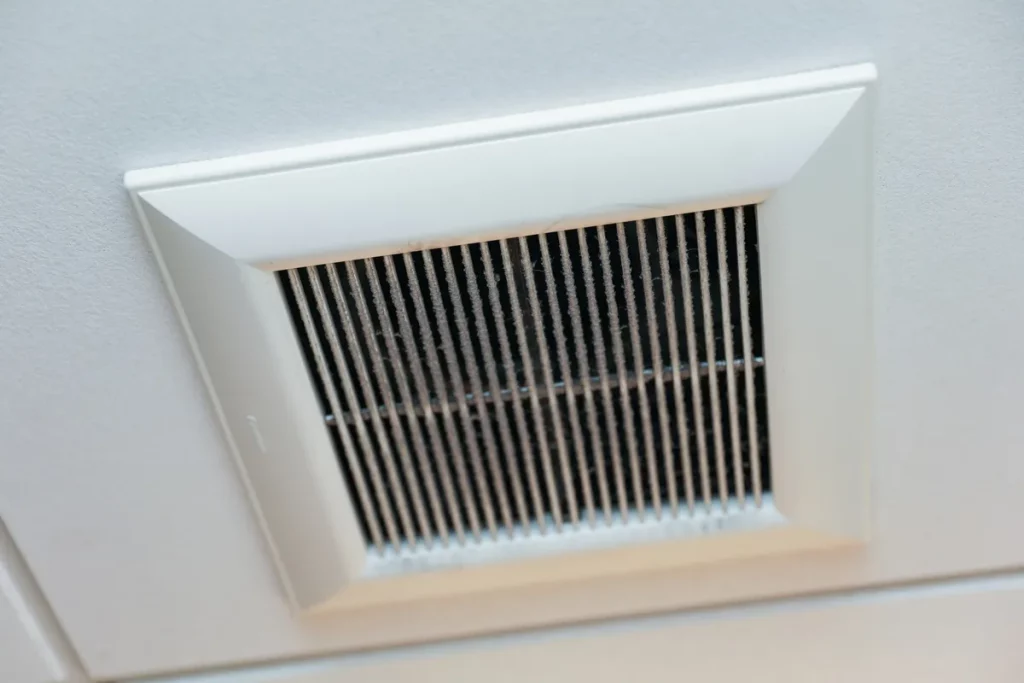
- Visible dark spots or discoloration around your vent covers or on the ceiling near registers. That’s not always dust, it can be spores being pushed out with the airflow.
- Worsening respiratory symptoms at home that improve when you leave. Runny nose, itchy eyes, coughing, and headaches that seem tied to being indoors are worth taking seriously.
- Increased dust accumulation on surfaces shortly after cleaning. When ductwork is compromised, it circulates debris far more aggressively than a clean system would.
If two or more of these sound familiar, don’t wait. The longer fungal colonies sit inside a duct system, the more surface area they colonize, and the more expensive the remediation becomes. You can also check out these warning signs that indicate you need air duct sanitizing for a more complete picture.

What Professional Remediation Actually Involves
There’s a lot of misinformation floating around about what it takes to actually deal with this problem. Spraying a disinfectant into a vent and calling it done is not remediation, it’s theater. Real treatment requires a few non-negotiable steps.
First, a technician needs to physically inspect the ductwork and air handler, ideally with a camera, to confirm the presence and extent of growth. Then the system needs to be mechanically cleaned, that means negative pressure equipment that pulls debris out rather than pushing it further into your home. After cleaning, an EPA-registered antimicrobial agent is applied to treated surfaces to address any remaining spores and discourage regrowth.
The plenum deserves special attention. This is the central chamber where conditioned air is distributed through the rest of the duct system. It’s also one of the most common places for serious fungal growth to go undetected. If the plenum is contaminated and only the branch ducts are cleaned, you haven’t solved the problem, you’ve just cleaned around it.
The team at Noble Air’s Round Rock air duct cleaning service handles this kind of work regularly and understands the specific conditions that Central Texas homes deal with. Customers who’ve gone through the process often describe the difference in air quality as immediate and noticeable, the kind of result that makes you wonder why you waited.
Keeping It From Coming Back
Remediation is only half the equation. If the conditions that caused the growth in the first place aren’t addressed, you’ll be back in the same situation within a year or two. A few practical steps make a real difference:
Control indoor humidity. Keep your home between 40 and 50 percent relative humidity. A whole-home dehumidifier or even portable units in problem areas can help significantly during Round Rock’s humid months.
Change your air filter on schedule. A clogged filter restricts airflow, which causes the evaporator coil to run colder and sweat more, feeding moisture directly into the air handler. A 1-inch filter should be changed every 30 to 60 days in Texas, not every three months.
Schedule regular duct inspections. You don’t need a full cleaning every year, but having a professional take a look every two to three years catches problems early, before they become expensive ones.
Check your condensate drain line. This small line carries moisture away from your air handler. When it clogs, and in Texas, it clogs often, water backs up into the system and creates exactly the wet environment that fungal growth needs. It’s a five-minute maintenance task that most homeowners never think about.
The air inside your home is only as clean as the system moving it around. In a climate like Round Rock’s, that system needs real attention, not just a filter swap and a prayer.
Frequently Asked Questions
How do I know if the musty smell in my Round Rock home is actually coming from my ductwork and not somewhere else?
The clearest indicator is timing, if the odor is strongest right when your HVAC system kicks on and fades when it’s off, the source is almost certainly inside the system itself rather than a wall or crawl space. You should also check around your vent covers and ceiling registers for dark discoloration, which can be spores being pushed out with the airflow rather than ordinary dust buildup. If the smell is consistent across multiple rooms whenever the fan runs, that points to something in the central system, like the plenum or air handler, rather than an isolated spot.
My home was built in Round Rock in the early 2000s, does that make my ductwork more at risk?
Yes, homes built during Round Rock’s rapid-growth era of the late 1990s and 2000s often have flexible ductwork that’s now showing its age, and that material can develop small tears or sags where moisture collects over time. The insulation surrounding older ducts can also trap humidity rather than repel it, which makes those areas especially prone to fungal growth. If your system has ever had a refrigerant leak or a drainage issue on top of that, the interior of your air handler may already have visible growth that’s been circulating through your home every time the fan runs.
What exactly is the plenum, and why does it matter so much when dealing with fungal growth in a duct system?
The plenum is the central distribution chamber that conditioned air passes through before it’s sent out through all the branch ducts in your home, which means anything growing inside it gets spread to every room every time the system runs. It’s also one of the most common places for serious growth to go undetected because most homeowners never see it and many cleaning jobs skip over it. If a technician cleans the branch ducts but leaves a contaminated plenum untouched, the problem will return, you’ve essentially cleaned around the source without addressing it.
Is spraying something into the vents enough to take care of a fungal growth problem in my ductwork?
No, spraying a disinfectant into a vent without doing anything else is not remediation, and it won’t solve the problem. Proper treatment requires a physical inspection with a camera to confirm the extent of the growth, followed by mechanical cleaning using negative pressure equipment that pulls debris out of the system rather than pushing it further into your home. Only after that mechanical cleaning is done does applying an EPA-registered antimicrobial agent to the treated surfaces make sense, because it’s working on a clean surface rather than on top of accumulated debris.
How often should I be checking my condensate drain line, and what happens if I ignore it in a Texas climate?
In Texas, the condensate drain line clogs frequently because the system runs so hard for so many months out of the year, so it’s worth checking it every season rather than waiting for a problem to appear. When the line clogs, water backs up directly into the air handler and creates the exact wet environment that encourages fungal growth inside the system. It’s described as a five-minute maintenance task, and catching a clog early is far less expensive than dealing with what grows inside a system that’s been sitting in pooled water.
Get Directions to Noble Air Duct Cleaning & Chimney Sweep
🎧 Listen to this as a podcast
Also on Apple Podcasts, Spotify, and Amazon Music.