
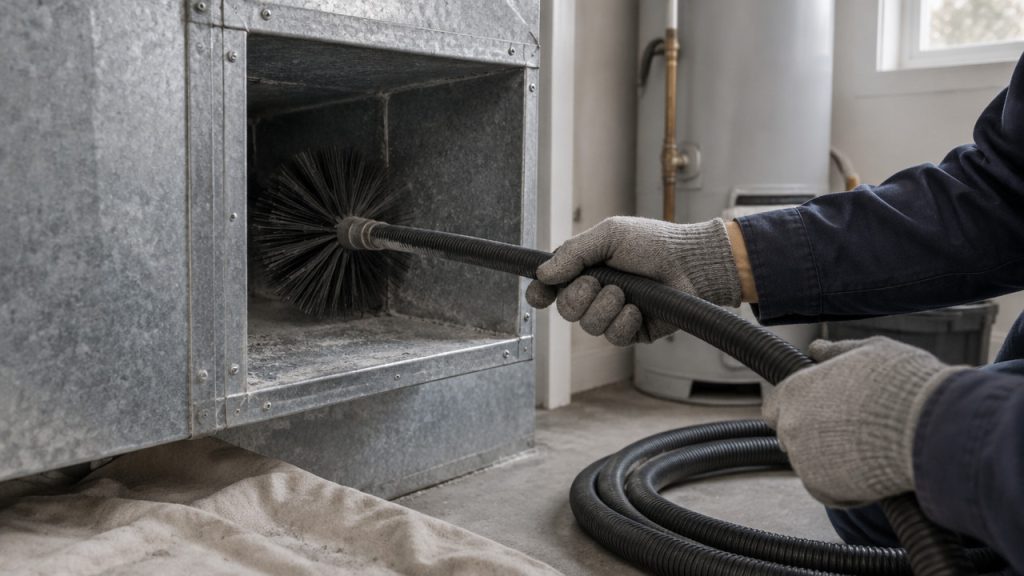
Air duct cleaning is a two-part job: brushes knock loose the dust clinging inside your ducts, and a negative pressure vacuum pulls it out of the house instead of into your living room. That is how air duct cleaning works, and a proper HVAC system cleaning covers the whole run, from the vents to the furnace or air handler. What changes the result is the quality of the equipment and the care of the crew, which counts for the most when allergies or a baby in the house make dust a bigger deal. Your decision comes down to whether your home shows the signs that make a cleaning worth booking now, and how to choose a pro who does it right.
How Does Air Duct Cleaning Work? The Short Version
Professional air duct cleaning uses truck-mounted or portable vacuums to create powerful suction while agitation devices loosen debris, ensuring contaminants exit your home rather than circulating back into living spaces.
- Technicians inspect ductwork with cameras to locate buildup and damage before cleaning begins.
- High-powered vacuums maintain negative pressure so loosened dust travels straight to the containment unit.
- Brushes and air whips dislodge debris stuck to duct walls without damaging the metal.
- Cleaning covers supply and return ducts, registers, grilles, and the air handler components.
- Sanitizing treatments may follow cleaning to inhibit bacterial growth and leave a fresher scent.
The result is a system that moves cleaner air with less resistance, which can ease the load on your HVAC equipment. When you understand how the residential duct cleaning process works, spotting the difference between a thorough job and a quick once-over gets a lot easier.
Step by Step: What Happens When the Crew Shows Up
A professional duct cleaning visit follows a predictable sequence from start to finish. The crew arrives with a truck or van full of equipment, but the process begins well before any machinery turns on. Technicians conduct a walk-through, checking access points and using a homeowner’s guide to effective duct cleaning mindset to document existing conditions.
The goal is to clean the entire system, not just the parts you can see. That means every supply run, return trunk, and the blower compartment get attention. Here is what you can expect when the technician gets to work.
- Inspect the system with a duct inspection camera to assess contamination levels and check for damage.
- Create access holes for the vacuum, then seal off vents to ensure negative pressure directs airflow correctly.
- Connect the negative pressure vacuum to the plenum, which acts as the central collection point for debris.
- Run agitation tools such as brushes and air whips through each duct run to loosen dust and push it toward the vacuum.
- Clean the registers, grilles, and diffusers by hand, removing caked-on dust and wiping surfaces clean.
- Clean the blower motor, heat exchanger, and evaporator coil if accessible to remove buildup that hampers airflow.
- Apply antimicrobial sanitizer to the duct interior if needed, then reseal all access holes.
Most visits take between two and four hours, depending on how many vents your home has and how long the duct runs stretch. The presence of pets, recent renovations, or visible mold growth can extend the time needed to do the job thoroughly.
Tools of the Trade: Vacuums, Brushes and Sanitizers Compared
Different tools handle different parts of the deep cleaning your air ducts require. The vacuum does the heavy lifting, but agitators are what knock debris loose in the first place. Sanitizers are a finishing touch, not a substitute for physical cleaning.
Understanding what each tool does helps you evaluate whether a technician is using the right approach for your situation. A crew that skips the brushes, for example, might leave a surprising amount of material behind.
| Tool | Purpose | When It Is Used |
|---|---|---|
| Negative pressure vacuum | Creates suction to capture loosened debris and prevent dust from escaping into living areas | Throughout the entire cleaning process |
| Rotor brushes | Agitates dust clinging to duct walls to break it free | During cleaning of rectangular and round metal ducts |
| Air whips | Uses compressed air to knock debris loose in flexible or fragile ductwork | When brushes might damage duct material |
| Duct inspection camera | Shows contamination levels and verifies cleaning results | At the beginning and end of the service |
| Sanitizing fogger | Applies antimicrobial treatment to inhibit mold and bacteria | After physical cleaning is complete, if requested |
The combination of agitation and containment is what separates legitimate duct cleaning from a quick vacuum job. Without brushes or air whips, dust that has adhered to duct walls stays put. Without negative pressure, that dust ends up floating through your home instead of landing in a filter bag.
What Cleaner Ducts Mean for Allergies, Babies and Austin Air
Austin homeowners deal with a unique mix of airborne irritants. Cedar fever hits hard in winter, oak pollen coats everything in spring, and mold counts rise after summer storms. Your HVAC system recirculates that air several times an hour, which means whatever settles in your ducts eventually heads back into the rooms where you breathe.
Cleaning your ducts does not cure allergies, but removing accumulated material reduces the load on your respiratory system. For households with infants, elderly family members, or anyone with asthma, that reduction can make daily living more comfortable. The impact of duct cleaning on indoor air quality and health is well-documented, though individual results depend on factors like home size, ventilation, and local conditions.
- Fireplace and candle soot can linger, leaving visible residue near vents and staining walls over time.
- Seasonal allergens that enter through open windows and doors recirculate through the HVAC system.
- Pet dander settles in ductwork and circulates long after shedding season has passed.
- Dust mites thrive in humid duct environments, contributing to indoor allergy triggers.
Austin’s cedar pollen counts regularly rank among the highest in the country, making indoor air quality a year-round concern for many Central Texas families.
Homes with babies deserve extra attention. Infants breathe faster than adults and their respiratory systems are still developing. Cleaner air pathways support that development, even if the difference is difficult to measure directly. Duct cleaning is one piece of a larger puzzle that includes regular filter changes, source control, and proper ventilation.
Is It Time? Signs Your Ducts Need Cleaning and How to Pick a Pro
No fixed schedule tells you exactly when to clean your ducts. Some experts suggest every three to five years, but your home might need service sooner depending on construction, pets, or health considerations. The Environmental Protection Agency recommends cleaning when there is substantial visible mold growth, ducts are infested with vermin, or excessive dust and debris clogs the system.
Knowing how to spot the signs helps you time the service correctly. Knowing how to pick a contractor ensures the service is worth the investment.
- Visible dust or dark streaks around vent covers, which signals debris blowing back into the room.
- Recent renovation work that created fine dust from drywall, wood, or flooring.
- Musty or burning smells when the furnace or air conditioning starts up for the season.
- Family members reporting worsening allergy symptoms or respiratory irritation at home.
- A new home purchase, since previous owners may have left behind years of accumulation.
- Pet hair accumulation near vents or noticeable fur smell when the system runs.
When you decide to book, look for a contractor who follows NADCA standards and can explain their process clearly. Ask what equipment they use, how long the service takes, and whether cleaning includes the air handler components. A trustworthy technician will answer directly without high-pressure sales tactics.
The National Air Duct Cleaners Association recommends inspecting your system regularly and cleaning it when contaminants are visible or suspected to be affecting indoor air quality.
Homeowners researching service providers should understand how to find the best air duct cleaning companies in your area. Certification matters, but so does experience with local conditions. Central Texas homes face different challenges than houses in drier climates, and a crew familiar with Austin’s humidity, allergens, and construction methods can tailor their approach accordingly.
Air Duct Cleaning FAQs
Even after understanding the basics, homeowners often have specific questions about logistics, related services, and edge cases. These answers clarify what to expect and how duct cleaning fits into your broader home maintenance plan. For a deeper dive, consult this comprehensive guide to air duct cleaning.
Can I stay home while my air ducts are being cleaned?
Yes, you can stay home. The equipment creates some noise, but technicians work in one area at a time, minimizing disruption to your daily routine. The negative pressure vacuum captures most debris before it escapes, so dust does not spread through your living space. If you have pets or small children, keeping them in a separate room during the service is a practical precaution.
Does air duct cleaning help if I find mold in my vents?
Yes, but it must be paired with remediation. Cleaning removes existing mold, but the underlying moisture issue needs to be resolved to prevent regrowth, often through mold remediation services. UV light disinfection can also help. Technicians inspect for moisture sources and address those conditions before applying sanitizer to inhibit future development.
Should I clean my ducts after a home renovation?
Yes, in most cases. Construction generates fine dust from drywall, wood, and flooring materials that penetrates deep into ductwork. This particulate matter is finer than ordinary household dust and can circulate for months. Scheduling a cleaning shortly after renovation work concludes prevents builder’s dust from settling into your daily air supply.
Is duct cleaning worth it for a home with a newborn?
Yes, for peace of mind. Infants breathe faster than adults and have developing respiratory systems that benefit from reduced airborne particles. While duct cleaning is not a substitute for source control, removing accumulated dust and allergens supports a cleaner environment. Families with newborns often combine duct cleaning with frequent filter changes and air purifier use.
Does UV light in the HVAC system replace duct cleaning?
No, it complements cleaning. UV light disinfection kills mold and bacteria on the coil and in the air handler, but it cannot remove accumulated dust and debris. Physical cleaning addresses the bulk of the contamination, while UV treatment provides ongoing microbial control. The two services work best together for comprehensive indoor air quality management.
What is the difference between duct cleaning and duct repair?
Cleaning removes debris while repair addresses physical damage. Duct cleaning focuses on removing dust, mold, and contaminants from the interior surfaces of your ductwork. Duct repair fixes leaks, disconnected joints, crushed sections, or damaged insulation that compromise system performance. A damaged duct system may need repair before cleaning can be effective, since leaks allow dust to re-enter and reduce the efficiency of the vacuum equipment.