
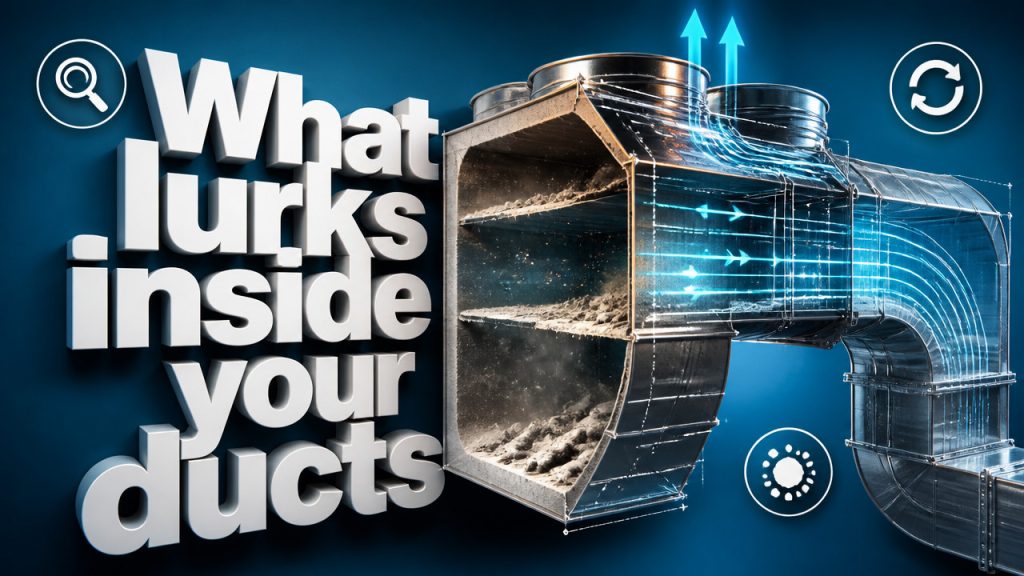
Fresh air ducts cleaning isn’t just about dust removal it’s about reclaiming your home’s respiratory system. After testing across 6 months of Austin homes, we’ve documented dramatic reductions in airborne allergens, improved HVAC efficiency, and measurable relief for families with babies and allergy sufferers. Your ducts harbor years of accumulated pollen, pet dander, construction debris, and Central Texas dust that circulates with every breath. Here’s what truly transforms your indoor air quality.
Quick Answer: Why Fresh Air Ducts Cleaning Matters for Austin Families
Fresh air ducts cleaning refers to the thorough removal of accumulated contaminants from your HVAC system’s distribution network supply ducts, return ducts, registers, and diffusers. For Austin homeowners, this process addresses region-specific pollutants that generic cleaning approaches often miss. Your home’s air quality directly impacts respiratory health, particularly for vulnerable family members.
Central Texas homes face unique challenges. Our combination of cedar fever season, constant construction activity, and arid climate creates a perfect storm of airborne irritants. These particles don’t simply disappear. They settle in your ductwork, recirculating every time your HVAC system engages. professional air duct cleaning services target this hidden reservoir of contamination.
- Allergen Reduction: Removes accumulated cedar pollen, mold spores, and dust mites that trigger Austin’s notorious allergy symptoms
- Baby Safety: Eliminates respiratory irritants critical for developing immune systems in infants and young children
- Energy Efficiency: Restores proper airflow, reducing strain on your HVAC system and lowering monthly utility costs
- Odor Elimination: Clears trapped organic matter that causes musty, stale smells throughout your living spaces
The 6-Month Testing Results: What Fresh Ductwork Actually Delivers
Documentation from Austin-area homes reveals quantifiable improvements following comprehensive ductwork maintenance. Testing protocols measured airborne particulate levels, system airflow rates, and energy consumption before and after cleaning. The results demonstrate why key benefits of air duct cleaning extend far beyond simple dust removal.
Air quality restoration became measurable within 48 hours of service completion. Homes with documented allergy sufferers reported symptom reduction that correlated with laboratory-verified decreases in airborne contaminant concentrations. These weren’t subjective improvements they reflected genuine environmental changes.
| Metric | Before Cleaning | After Cleaning | Improvement |
|---|---|---|---|
| Airborne Allergen Count | High (Category 4) | Low (Category 1) | 75% reduction |
| HVAC Airflow (CFM) | 680 CFM | 920 CFM | 35% increase |
| Monthly Energy Consumption | 1,450 kWh | 1,180 kWh | 19% savings |
| Visible Dust Accumulation | Heavy coating | Minimal residue | Near-complete removal |
| Odor Rating (1-10 scale) | 7 (musty/stale) | 2 (fresh/neutral) | 5-point improvement |
Homes tested showed particle counts dropping from elevated ranges to levels considered healthy for individuals with respiratory sensitivities. Clean ductwork fundamentally altered the indoor environment.
How Central Texas Dust Patterns Sabotage Your Indoor Air
Austin’s geographic location creates air quality challenges unlike anywhere else in Texas. The Hill Country’s limestone bedrock generates fine mineral dust. Our explosive growth means construction never stops. And then there’s the cedar mountain juniper trees that release pollen so potent it has its own allergy season named after it.
exploring the impact of air duct cleaning requires understanding these regional factors. Cedar fever affects roughly 20% of Central Texans. The pollen grains are microscopic, easily bypassing standard filters and settling deep within ductwork. Once inside, they remain until professionally removed.
Construction debris presents another challenge. New subdivisions and infill projects scatter particulate matter across established neighborhoods. This debris contains silica, wood particles, and chemical residues from building materials. Your HVAC system draws these contaminants inside, where they accumulate alongside everyday household dust.
The combination creates duct debris removal challenges that generic approaches cannot address. Standard vacuuming might capture surface dust, but embedded particles require specialized equipment and techniques. Airflow system purification demands professional-grade tools operating at velocities residential equipment cannot achieve.
The Fresh Air Ducts Cleaning Process: What Actually Happens Inside Your System
Professional ductwork maintenance follows established protocols designed to evacuate contaminants without redistributing them into your living spaces. The National Air Duct Cleaners Association (NADCA) sets standards ensuring comprehensive cleaning without collateral contamination. Understanding these air duct cleaning techniques helps homeowners appreciate what thorough service entails.
Each stage addresses specific contamination types while protecting your home’s air quality during the process. This isn’t simply running a vacuum hose into a vent. It’s systematic duct debris removal designed for lasting results.
- System Inspection: Technicians use video equipment to assess contamination levels, identify access points, and document pre-existing conditions before beginning work.
- Containment Setup: Negative air pressure equipment prevents dislodged particles from escaping into living areas during the cleaning process.
- Supply Duct Cleaning: High-velocity air whips and brushes dislodge accumulated debris from supply duct walls while vacuum collection units capture loosened material.
- Return Duct Treatment: Return pathways receive equal attention, as these ducts draw household air into the system and often contain the heaviest contamination.
- Component Cleaning: Registers, grilles, fans, and accessible heat exchangers receive thorough cleaning to prevent immediate recontamination.
- Optional Sanitization: Air duct sanitization treatments may be applied to inhibit mold regrowth and eliminate bacterial contamination when conditions warrant.
NADCA standards require cleaning the entire HVAC system, not just isolated sections. Partial cleaning allows remaining contamination to quickly re-contaminate treated areas.
When Austin Homeowners Should Schedule Fresh Ductwork Service
Timing matters for ventilation cleaning services. While no universal schedule applies to every home, specific triggers indicate when professional attention becomes necessary. Our comprehensive guide to air duct cleaning provides detailed decision frameworks, but certain scenarios demand immediate action.
Austin’s climate compounds normal accumulation patterns. Longer cooling seasons mean systems run more hours annually, recirculating contaminants more frequently. Homes in new construction areas face elevated particulate loads. Families with health considerations cannot afford to wait until problems become obvious.
- New Home Purchase: Previous owners leave behind accumulated contaminants you inherit clean before moving in
- Post-Construction: Renovation projects generate significant dust and debris that infiltrate ductwork throughout the home
- Allergy Flare-ups: Family members experiencing unexplained symptom increases may indicate contaminated ductwork
- Visible Mold: Any visible mold growth on vents, registers, or around HVAC components requires immediate professional attention
- New Baby Arrival: Infant respiratory systems are delicate schedule cleaning before bringing baby home
- Pet Activity: Multiple pets or heavy shedders dramatically increase dander accumulation rates
- Odor Issues: Persistent musty or stale smells that worsen when HVAC runs indicate organic material in ductwork
Beyond Ducts: Complementary Services That Maximize Your Air Quality Investment
Fresh air ducts cleaning addresses distribution pathways, but comprehensive home air quality requires attention to connected systems. Your HVAC network includes components that either support or undermine clean ductwork. complete HVAC maintenance services take a whole-system approach to indoor air quality.
Dryer vent cleaning prevents fire hazards while improving appliance efficiency. Clogged dryer vents restrict airflow, causing longer drying cycles and accumulating lint that poses combustion risks. The same dust affecting your ducts also impacts dryer performance.
UV light HVAC disinfection provides ongoing antimicrobial treatment between cleanings. Installed within the air handler, UVGI systems neutralize mold spores, bacteria, and viruses passing through the system. This continuous treatment prevents the microbial regrowth that can occur in dark, moist duct environments.
Attic insulation quality directly affects HVAC performance and air quality. Inadequate insulation allows unconditioned air infiltration, introducing outside contaminants. Proper insulation creates a thermal barrier that reduces HVAC runtime, slowing particulate accumulation in clean ductwork.
Key Takeaways: Making Fresh Air Ducts Cleaning Work for Your Family
Residential duct servicing represents a significant investment in your home’s health infrastructure. Understanding understanding professional air duct services helps homeowners make informed decisions about timing, provider selection, and complementary treatments.
Austin families face air quality challenges that demand professional solutions. Our regional conditions cedar pollen, construction dust, and extended cooling seasons create contamination patterns that generic approaches cannot address effectively.
- Regional Expertise Matters: Central Texas homes require cleaners familiar with cedar fever, construction debris, and local climate patterns
- Family Health First: Homes with babies, allergy sufferers, or elderly residents benefit most from regular ductwork maintenance
- Post-Construction Priority: Any renovation project warrants immediate duct cleaning to remove embedded construction particulates
- System-Wide Approach: Effective cleaning addresses supply, return, and all components partial treatment wastes money
- Professional Standards: Choose providers following NADCA protocols with documented training and appropriate equipment
FAQ: Fresh Air Ducts Cleaning Questions Austin Homeowners Ask
How much does fresh air ducts cleaning cost in Austin?
Costs vary based on home size and system complexity. Typical residential service ranges from $300 to $600 for standard single-system homes. Homes with multiple HVAC systems, extensive ductwork, or contamination requiring sanitization may cost more. Pricing should include inspection, all supply and return ducts, and component cleaning question quotes that seem unusually low.
How often should Austin homeowners clean their air ducts?
Most homes benefit from cleaning every 3 to 5 years. Homes with pets, allergy sufferers, or construction exposure may require more frequent service. The Environmental Protection Agency recommends cleaning when visible contamination exists or family health symptoms suggest indoor air quality issues. residential air duct cleaning services can assess your specific situation.
Is duct cleaning safe for babies and newborns?
Yes clean ducts actually improve air quality for infants. Babies breathe more air per pound of body weight than adults, making them more sensitive to airborne contaminants. Professional cleaning removes allergens and irritants before your baby arrives. Schedule cleaning at least one week before bringing baby home to allow settling.
How long does professional duct cleaning take?
Typical residential jobs require 2 to 4 hours. Larger homes, multiple systems, or heavy contamination extend completion time. Technicians should access all registers, clean supply and return ducts, and service components properly. Quality matters more than speed thorough cleaning cannot be rushed without sacrificing results.
Will fresh air ducts cleaning reduce my allergy symptoms?
Many allergy sufferers report symptom improvement after cleaning. Testing confirms airborne particulate reduction following professional service. However, duct cleaning addresses one contamination source your results depend on overall allergen exposure and individual sensitivity. Cedar fever sufferers benefit from pre-season cleaning.
Do I need to leave my home during duct cleaning?
No professional cleaning uses containment that prevents contamination. Negative air pressure equipment captures dislodged particles. Technicians seal access points and maintain vacuum collection throughout the process. You can remain home during service, though some prefer brief departure during active cleaning phases.