
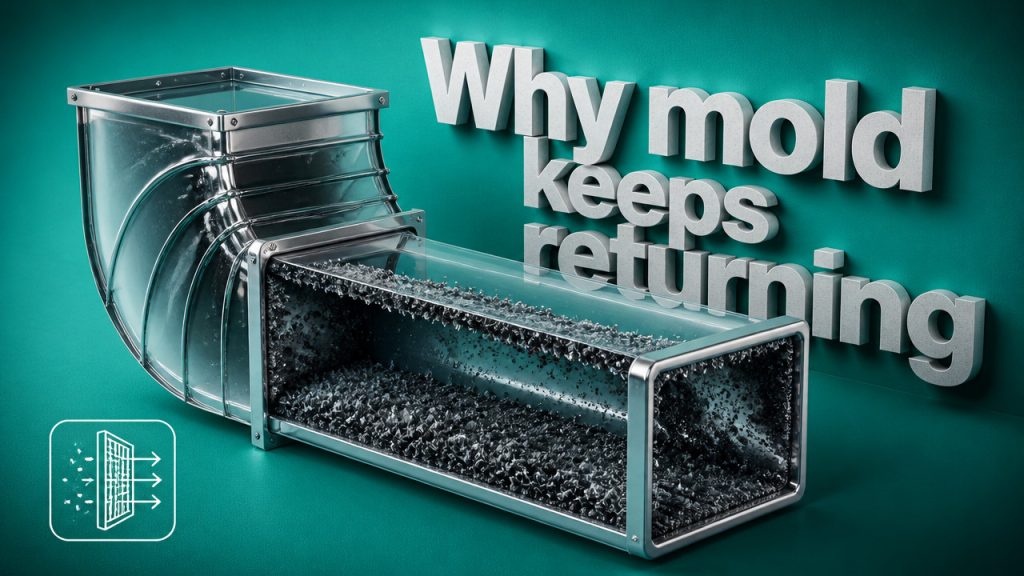
Central Texas humidity creates the perfect breeding ground for mold in your AC ducts a hidden threat compromising your family’s health with every breath. Professional mold remediation eliminates dangerous spores, restores air quality, and protects your HVAC investment. Austin homeowners face unique challenges from our climate, but with advanced cleaning protocols and UV disinfection technology, your ductwork can return to pristine condition within hours, not days.
Quick Answer: The Three-Phase Protocol for AC Duct Mold Removal
When you discover mold in your ventilation system, time becomes critical. Spores multiply exponentially in dark, moist environments like ductwork, spreading contaminants throughout your home with every cooling cycle. Professional HVAC mold removal follows a systematic approach that addresses both visible growth and microscopic contamination.
The process begins with source identification rather than surface treatment. Certified technicians trace mold to its origin point often where condensation accumulates or where ductwork has been compromised by moisture intrusion. specialized duct mold cleaning targets the root cause rather than simply masking symptoms.
- Phase One: Containment Setup Technicians seal affected duct zones using negative air pressure chambers, preventing spore migration to unaffected areas during the cleaning process. This isolation step protects your living spaces from cross-contamination.
- Phase Two: HEPA Extraction Industrial-grade vacuums with HEPA filtration capture 99.97% of particles down to 0.3 microns. These units remove loose debris, dead mold colonies, and accumulated dust that feeds future growth.
- Phase Three: EPA-Registered Biocide Application Antimicrobial treatments eliminate remaining spores and create a hostile environment for regrowth. Professional-grade biocides penetrate porous duct surfaces where mold hyphae have taken hold.
Why Austin’s Climate Accelerates AC Duct Mold Growth [2026 Data]
Austin homeowners face a uniquely challenging environment for indoor air quality. Our region’s climate creates conditions where mold doesn’t just survive it thrives. The combination of high humidity, elevated temperatures, and prolonged cooling seasons means your HVAC system works harder and stays damper than systems in arid regions.
When relative humidity exceeds 70%, mold colonies can establish themselves on organic debris inside ductwork within 24 to 48 hours. Central Texas regularly experiences dew points above 65°F during spring and fall months, pushing indoor humidity levels into the danger zone when air conditioning systems cycle on and off frequently.
| Risk Factor | Austin, TX Climate | Arid Climate (e.g., Phoenix) | Mold Growth Impact |
|---|---|---|---|
| Average Summer Humidity | 65-75% | 10-25% | Austin: 3x higher risk |
| Cooling Season Length | 6-7 months | 4-5 months | Extended condensation periods |
| Annual Rainfall | 34-36 inches | 7-9 inches | Moisture intrusion probability |
| Dew Point (peak months) | 65-72°F | 35-45°F | Condensation on cool surfaces |
Your air conditioning system creates natural condensation as it cools warm, moisture-laden air. When drain lines clog or drain pans overflow, that water creates ideal mold habitat inside your air handler and supply plenums. Learning how duct cleaning improves indoor air quality starts with understanding these environmental pressures unique to Central Texas.
According to the Environmental Protection Agency, mold can grow on virtually any organic substance when moisture is present, and controlling indoor humidity between 30-60% remains the most effective prevention strategy for HVAC systems.
The Health Cost Analysis: Mold Exposure in Residential HVAC Systems
Every time your AC cycles on, it pressurizes contaminated air through your supply ducts, delivering microscopic spores into every room your system serves. For families with infants, elderly members, or anyone with respiratory sensitivities, this constant exposure creates cumulative health effects that often go misdiagnosed for months.
Black mold in vents produces mycotoxins chemical compounds that can trigger inflammatory responses in lung tissue. Children’s developing respiratory systems process air volume relative to body weight at rates significantly higher than adults, meaning mold exposure affects them more acutely. Recognizing signs your air ducts need immediate attention could prevent years of unexplained health issues.
- Chronic cough and throat irritation Persistent dry cough that worsens at night or after being home for extended periods.
- Recurring sinus infections Inflammation and congestion that returns after antibiotic treatment, often tied to indoor air quality.
- Headaches and fatigue unexplained exhaustion and tension headaches that improve when away from home.
- Skin irritation and eye redness Contact dermatitis or conjunctivitis symptoms without other apparent causes.
- Wheezing or shortness of breath Asthma-like symptoms in individuals with no prior respiratory history.
- Allergic rhinitis symptoms Sneezing, runny nose, and post-nasal drip that persists regardless of seasonal pollen counts.
A study published in the Journal of Occupational and Environmental Medicine found that children exposed to indoor mold during infancy had significantly higher rates of asthma development by age seven, emphasizing the critical importance of clean air for families with young children.
How Professional Mold Removal Differs From DIY Attempts
Hardware store mold removal products advertise quick fixes, but they’re designed for surface mold on bathroom tile or window sills not deep-seated contamination inside sheet metal ductwork. DIY approaches often make AC duct mold situations worse by agitating spores without proper containment, spreading contamination throughout the entire HVAC system.
| Factor | DIY Attempt | Professional Remediation |
|---|---|---|
| Containment | None spreads spores | Negative air pressure chambers |
| Equipment | Household sprays, brushes | HEPA vacuums, rotary brushes |
| Visibility | Accessible surfaces only | Inspection cameras for all zones |
| Treatment reach | Surface level | Deep penetration of biocides |
| Verification | Visual only | Post-remediation testing |
| Safety gear | Basic mask (if any) | Full PPE, respirators |
Professional duct disinfection services utilize NADCA-certified equipment and technicians trained specifically for HVAC environments. The National Air Duct Cleaners Association sets rigorous standards for air duct mold remediation, requiring specialized training in both equipment operation and microbiological contamination protocols. complete air duct cleaning service includes these professional-grade protocols that protect both your home and the technicians performing the work.
Step-by-Step: How Noble Air Eliminates Mold From Austin AC Ducts
Austin homeowners deserve transparency about what happens during professional mold remediation. Noble Air’s process has been refined through thousands of Central Texas service calls, addressing the specific challenges of our regional climate and construction styles.
- Video inspection and assessment Technicians feed high-resolution cameras through accessible ductwork, documenting contamination extent and identifying moisture sources that enabled mold growth.
- System shutdown and containment The HVAC system powers down to prevent spore circulation. Technicians seal registers and establish negative air pressure in work zones using HEPA-filtered air scrubbers.
- Physical debris removal Rotary brushes and air whips dislodge accumulated dust, dead mold, and organic debris from duct walls while HEPA vacuums capture loosened material.
- Antimicrobial application EPA-registered biocides are fogged or sprayed throughout affected ductwork, penetrating porous surfaces where mold hyphae have established root structures.
- Sealant application (if needed) Encapsulant coatings seal remaining microscopic contamination and create surfaces resistant to future mold adhesion.
- UV light installation (optional) UV light HVAC disinfection systems can be installed within the air handler to provide ongoing antimicrobial treatment of air passing through the system.
- System restart and verification After appropriate dwell time for biocide effectiveness, technicians restore system operation and conduct visual re-inspection to confirm complete mold removal.
Advanced Remediation: When Standard Cleaning Isn’t Enough [Study]
Not every mold situation resolves with cleaning alone. When contamination has compromised ductwork integrity eating through insulation liner, corroding metal, or infiltrating adjacent building materials more aggressive intervention becomes necessary. Post-remediation verification testing determines whether your deep cleaning your air ducts has achieved acceptable spore counts or whether additional measures are required.
Duct replacement becomes the recommendation when inspection reveals:
- Structural compromise Corrosion has eaten through sheet metal, creating air leaks that reduce system efficiency.
- Insulation degradation Fiberglass liner has broken down, releasing fibers into your air supply alongside mold contamination.
- Widespread black mold Stachybotrys chartarum or similar toxic species have established deep growth requiring material removal.
- Previous failed remediation Repeated cleaning attempts have not eliminated recurring contamination, suggesting the duct material itself harbors mold.
Professional assessment involves more than visual inspection. Air sampling captures spore concentrations before and after remediation, comparing indoor readings to outdoor baseline levels. Surface sampling identifies specific mold species present, which informs treatment protocols and helps determine whether duct replacement represents the safer long-term investment.
Prevention Strategies That Actually Work in Central Texas Homes
Mold remediation solves your immediate problem, but preventing recurrence requires ongoing attention to your HVAC system and home environment. Austin’s climate demands proactive maintenance rather than reactive fixes. A comprehensive guide to air duct maintenance establishes routines that keep your system operating cleanly year after year.
- Filter replacement schedule Change HVAC filters every 60-90 days minimum; every 30 days during peak allergy seasons or if you have pets. Higher MERV ratings capture smaller particles but require more frequent changes.
- Humidity monitoring Maintain indoor relative humidity between 30-50% using whole-house dehumidifiers or adjusting AC settings. Hygrometers cost under $20 and reveal moisture problems before mold establishes.
- Seasonal professional inspections Schedule HVAC maintenance twice annually: spring before cooling season, fall before heating. Technicians identify moisture issues and clean drain pans before problems compound.
- Drain line maintenance Clear condensate drain lines quarterly using wet/dry vacuum suction or professional-grade cleaners. Clogged drains cause overflow that directly contacts ductwork.
- UV light systems Install UV-C lights within the air handler to continuously treat surfaces and airborne microbes before they establish in ductwork.
Key Takeaways: Your Austin Mold Remediation Action Plan
Addressing mold in your AC ducts isn’t just about cleaner air it’s about protecting your family’s health and preserving your home’s value. Central Texas homeowners who act quickly prevent minor contamination from becoming major remediation projects. Noble Air brings local expertise and family-owned accountability to every service call.
- Act immediately upon detection Mold doubles in affected area every 24-48 hours under ideal conditions, meaning delays exponentially increase remediation scope and cost.
- Hire certified professionals only NADCA certification ensures technicians understand HVAC systems specifically, not just general mold removal principles.
- Address moisture sources first Cleaning without fixing condensation problems guarantees mold will return, wasting your remediation investment.
- Schedule residential air duct cleaning services for verification Post-remediation testing confirms success; visual inspection alone cannot detect microscopic contamination that may remain after cleaning.
FAQ: Cleaning Mold From AC Ducts in Austin
How much does professional AC duct mold removal cost in Austin?
Costs vary by contamination scope. | Basic remediation for limited contamination starts around $500-$800, while whole-system treatment with advanced sanitization ranges from $1,200-$3,000 depending on home size. | Full-system remediation costs significantly less than duct replacement, which runs $2,000-$6,000 for typical installations.
How long does the mold removal process take?
Most residential jobs complete in one day. | Standard single-family homes require 4-8 hours for complete remediation, depending on system complexity and contamination extent. | Commercial properties or homes with extensive infestation may require multiple days, but technicians work to minimize system downtime.
Is my family safe during the mold removal process?
Yes, with proper containment protocols. | Negative air pressure setups prevent spores from escaping work zones, and HEPA filtration captures 99.97% of particles. | Many families choose to vacate during treatment for additional peace of mind, though it’s not strictly necessary with professional-grade containment.
Will my homeowner’s insurance cover duct mold removal?
Coverage depends on your policy and cause. | Sudden water damage from a covered event (burst pipe, appliance failure) typically triggers coverage; gradual damage from humidity or maintenance neglect usually doesn’t. | Review your policy’s mold coverage limits, which often cap between $5,000-$25,000 for remediation services.
Can I stay in my home during duct cleaning?
Most homeowners remain home during service. | Containment barriers and HEPA filtration protect living spaces from contamination spread. | Those with severe respiratory conditions may prefer to leave for 2-4 hours during and after treatment as a precautionary measure.
How often should Austin homeowners have ducts inspected for mold?
Annual inspections are recommended minimum. | Austin’s climate creates year-round mold pressure; professional residential duct cleaning insights can identify problems before they become visible in your living spaces. | Homes with history of mold issues, allergy sufferers, or infants benefit from bi-annual inspections during spring and fall humidity peaks.