
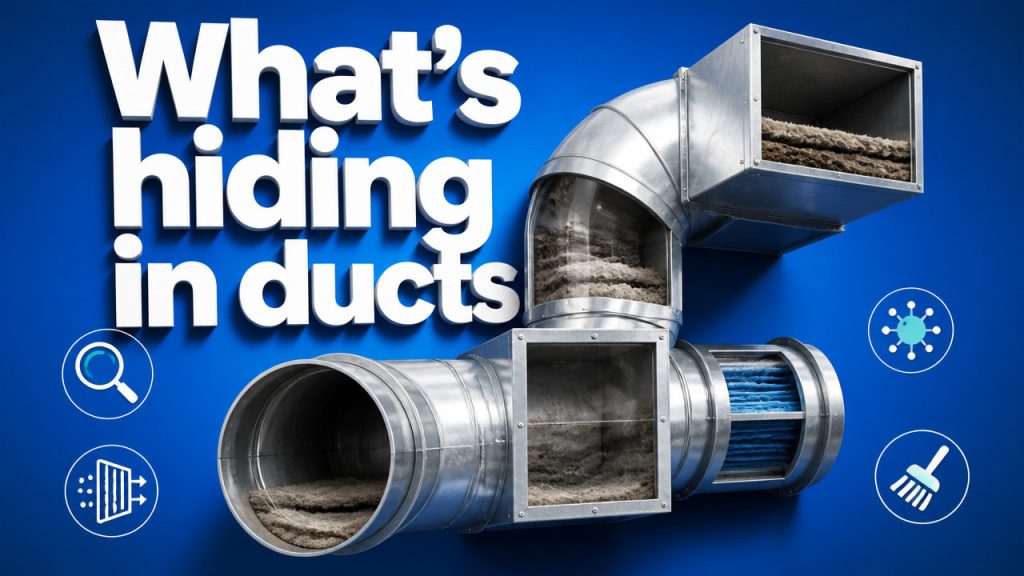
The most effective air duct cleaning combines NADCA-certified negative pressure extraction with HEPA filtration, rotary brush agitation, and EPA-approved antimicrobial treatment removing up to 99.7% of accumulated particulates [2026 Data]. Austin’s high cedar pollen counts and limestone dust make this three-stage approach essential for Central Texas homes. Professional equipment generates 5,000+ CFM suction, dislodging contaminants that standard methods miss while protecting your HVAC system’s integrity and your family’s respiratory health.
Quick Answer: The Three-Stage Professional Method That Actually Works
Finding the best way to clean air ducts means looking past gimmicks and focusing on physics. The National Air Duct Cleaners Association (NADCA) sets the industry benchmark, and their source-removal standard remains the gold standard in 2026. Anything less leaves contaminants circulating through your home.
This isn’t about spraying fragrance or running a shop vac down a register. Real cleaning happens in three distinct stages, each building on the last to deliver air you can actually trust.
- Negative Pressure Extraction: A powerful vacuum system creates controlled suction throughout the entire ductwork, pulling loosened debris toward a containment unit before it can escape into living spaces.
- Mechanical Agitation: Rotary brushes and compressed air tools physically dislodge stubborn particulates from duct walls, breaking up the limestone dust and cedar pollen buildup unique to Central Texas.
- Antimicrobial Treatment: An EPA-registered solution applied only when necessary inhibits future mold and bacterial growth, providing a sanitary finish without overkill.
The combination matters. Skipping any stage compromises the result, which is why effective duct cleaning methods always follow this complete sequence.
Why Source-Removal Beats Every Other Air Duct Cleaning Technique
Some companies show up with a fogger and a prayer. They pump chemical “sanitizers” through your system and call it clean. That approach fails because it doesn’t remove anything it just coats the existing mess in a new layer of chemical residue.
True HVAC duct cleaning methods prioritize physical removal. NADCA studies consistently show that source-removal techniques eliminate the root problem: the debris itself. Without extraction, whatever dust, dander, or mold remains continues circulating every time your system kicks on.
Austin’s environment makes source-removal even more critical. Our limestone soil produces a fine, adhesive dust that clings to duct interiors. Cedar pollen season dumps millions of microscopic particles into our air. These aren’t surface contaminants you can fog away. They require mechanical agitation combined with high-volume suction.
| Method | Contaminant Removal Rate | Austin Home Suitability | Health Impact |
|---|---|---|---|
| Source-Removal (Negative Pressure + Agitation) | Up to 99.7% | Excellent handles limestone dust & cedar | Removes allergens at the source |
| Chemical Fogging Only | 0-15% (no physical removal) | Poor leaves dust intact | Adds chemical residue to air |
| Shop Vac / Portable Vacuum | 20-40% | Fair lacks power for deep cleaning | Partial improvement |
| Contact Cleaning (Brushes Only) | 30-50% | Fair debris re-enters air | Risks redistributing particulates |
The difference shows up in your air quality readings and your allergy symptoms. Source-removal doesn’t mask problems it eliminates them. That’s why advanced air duct cleaning techniques always begin with extraction.
The HEPA Filtration Standard Austin Homeowners Should Demand
Not all filtration is created equal. A true HEPA filter captures 99.97% of particles at 0.3 microns the size range where most allergens and respiratory irritants live. That standard isn’t optional for Austin families dealing with mountain cedar, mold spores, and construction dust.
Professional duct cleaning equipment uses HEPA-filtered collection systems to ensure debris goes into a containment bag, not back into your living room. Consumer-grade vacuums lack this capability. They might pick up visible dust, but they exhaust the microscopic particles that actually trigger allergies.
Central Texas allergens include:
- Mountain Cedar Pollen: Peaks December through February, measuring 10-20 microns easily captured by HEPA but missed by standard filters
- Mold Spores: Thrive in our humid conditions, typically 3-10 microns, requiring true HEPA capture
- Limestone Dust: Fine particulate from local construction and soil, highly adhesive and problematic for cheap filtration
- Pet Dander: Microscopic skin particles that accumulate in ductwork over time
Before hiring any service, verify their filtration specs. Ask for the HEPA certification on their collection equipment. If they can’t produce it, your air quality improvement may be temporary at best. The health benefits of cleaned air ducts depend entirely on proper containment.
How Professional Camera Inspection Reveals Hidden Contamination
You can’t fix what you can’t see. Ductwork runs behind walls, through attics, and under floors. Without inspection, cleaning becomes guesswork. Professional outfits use rigid or flexible video inspection cameras to document conditions before and after service.
This matters more in Austin than in many markets. Our housing stock varies wildly from 1950s construction with original galvanized ductwork to modern builds with flex duct in unconditioned attics. Each presents different challenges and contamination patterns.
Common findings in Central Texas homes include:
- Insulation Gaps: Displaced attic insulation allowing dust infiltration and conditioned air loss
- Pest Evidence: Rodent droppings, insect casings, and nesting materials in return plenums
- Construction Debris: Drywall dust, sawdust, and leftover materials from renovations
- Mold Growth: Visible colonization on interior duct surfaces, particularly near AC coils
Pre-cleaning inspection establishes a baseline. Post-cleaning inspection proves the work. Ask any provider to show you both reputable companies document everything. Knowing signs your ducts need cleaning helps you request inspection at the right time.
Negative Pressure System Setup: Creating the Containment Zone
The vacuum is where proper ductwork cleaning process begins. But not just any vacuum. Effective extraction requires equipment capable of generating 5,000+ CFM (cubic feet per minute) of suction. That’s industrial-level power far beyond what portable units deliver.
Truck-mounted systems offer advantages portable equipment cannot match:
- Higher CFM: Truck-mounted units sustain 5,000-10,000 CFM, while portables typically max out around 2,000 CFM
- Consistent Power: No concern about electrical limitations or breaker trips mid-job
- Proper Containment: Debris travels through large-diameter hoses directly to the truck’s collection bin, keeping messes outside
- HEPA Filtration Standard: Professional truck units include multi-stage filtration meeting NADCA requirements
- Accessibility: Long hoses reach every corner of the ductwork without relocating equipment
The setup process itself follows strict protocols. Technicians seal off supply and return registers, creating negative pressure that pulls air (and debris) toward the collection point. This prevents contaminants from escaping into living spaces during cleaning.
Noble Air’s process exemplifies this approach. Every job begins with complete system isolation, ensuring that when we agitate debris, it has nowhere to go but out. For homeowners interested in deep cleaning your air ducts, understanding this containment principle helps separate professional service from amateur attempts.
The Rotary Brush and Compressed Air Combination Central Texas Needs
Vacuum suction alone cannot remove debris bonded to duct walls. That’s where air duct debris removal gets physical. Rotary brush systems and compressed air whips provide the agitation necessary to break loose what suction cannot reach.
Rotary brushes spin at high speeds, their nylon or polypropylene bristles scrubbing duct interiors. Forward-reverse rotation ensures complete coverage. For flex duct, softer brushes prevent damage while still dislodging buildup. For metal ductwork, stiffer bristles handle heavy accumulation.
Compressed air whips serve a similar function with a different delivery. These tools snake through duct runs, releasing bursts of high-pressure air that knock debris loose. They excel at reaching corners and bypassing obstructions where brushes might not fit.
Limestone dust presents a particular challenge in Austin. Its fine particles bond to surfaces with almost cement-like adhesion. Combine that with our humidity cycles where moisture helps particles stick, then dry conditions bake them on and you have contaminants that resist simple suction. Mechanical agitation breaks that bond.
Dryer vent and return vent cleaning follow similar principles but require specific approaches:
- Dryer Vents: Require specialized brushes that prevent lint compaction while clearing the entire run to the exterior termination
- Return Vents: Often center islands or wall cavities that need careful sealing and cleaning to prevent immediate recontamination
Understanding air duct cleaning’s impact on indoor air quality helps clarify why this mechanical step matters so much.
Antimicrobial Treatment: When It’s Worth It and When It’s Overkill
Not every home needs antimicrobial treatment. Some companies push it as standard protocol. It isn’t. The decision depends on what inspection reveals and what your household requires.
EPA-registered antimicrobial products serve specific purposes: mold remediation, bacterial inhibition, and in some cases, odor control. Applied properly, they create a barrier that prevents microbial growth on treated surfaces. Applied unnecessarily, they add cost and chemical exposure without benefit.
| Scenario | Treatment Recommendation | Rationale |
|---|---|---|
| Visible mold growth in ductwork | Necessary | Kills existing colonization and prevents regrowth |
| Home with infants or immunocompromised residents | Recommended | Provides extra protection for vulnerable respiratory systems |
| Severe allergy sufferers | Recommended | Reduces potential allergen activation |
| Post-flood or water damage | Necessary | Prevents mold establishment in damp conditions |
| Routine cleaning with no issues found | Unnecessary | Source removal already addresses the problem |
| Pet odor concerns (no mold) | Optional | Deodorizing offers relief without antimicrobial claims |
Safety matters, especially for Austin families with babies. Ask about product safety data sheets. Reputable providers use EPA-registered products with established safety profiles and require evacuation only during application with safe re-entry times documented.
Distinguishing sanitizing from deodorizing prevents confusion. Sanitizers reduce microbial populations. Deodorizers address odors. Some products do both. Understanding what you’re paying for helps you finding qualified air duct cleaning companies that won’t oversell unnecessary services.
Key Takeaways for Austin Homeowners Choosing Air Duct Cleaning
Air duct cleaning isn’t a commodity service. Provider selection impacts your home’s air quality, your HVAC system’s longevity, and your family’s health. Austin’s unique environmental factors demand specific expertise and equipment.
- NADCA Certification Matters: Look for technicians trained in source-removal methodology, adhering to the only nationally recognized standard for HVAC cleaning
- HEPA Filtration Non-Negotiable: Ensure equipment captures particles at 0.3 microns, protecting your home during the cleaning process
- Video Inspection Essential: Before and after documentation proves the work and identifies system issues
- Austin-Specific Experience: Cedar pollen, limestone dust, and our humidity cycles require specialized approaches
- Three-Stage Method Superior: Negative pressure, mechanical agitation, and appropriate antimicrobial treatment deliver complete results
- Local Advantage: Noble Air’s understanding of Central Texas conditions means solutions tailored to what your home actually faces
The right choice delivers cleaner air, better HVAC efficiency, and lasting peace of mind. Our comprehensive guide to air duct cleaning provides additional details for homeowners researching their options.
FAQ: Best Practices for Air Duct Cleaning in Central Texas
How often should air ducts be cleaned in Austin homes?
Every 3-5 years for most homes. NADCA recommends inspection annually and cleaning as needed based on contamination levels. Austin’s high pollen counts and construction activity may accelerate buildup, making 3-year intervals common for allergy sufferers.
Does air duct cleaning help with cedar fever symptoms?
Yes, significantly. Professional cleaning removes accumulated cedar pollen from ductwork before it can circulate. Combined with proper filtration, this reduces the allergen load inside your home during mountain cedar season.
Is antimicrobial treatment safe for homes with babies?
Yes, when properly applied. EPA-registered products have established safety profiles. Technicians should provide re-entry timeframes typically 1-3 hours after application. Ventilation during and after treatment further ensures safety.
What’s the difference between truck-mounted and portable vacuum systems?
Truck-mounted offers superior extraction. With 5,000+ CFM versus 2,000 CFM typically for portables, truck systems provide 2.5 times the suction power. This matters for Austin’s adhesive limestone dust and deep-set debris.
Can dirty air ducts affect my HVAC system’s lifespan?
Yes, substantially. Accumulated debris restricts airflow, forcing your system to work harder. This increases energy consumption and component wear. Studies show restricted airflow can reduce system efficiency by up to 20%.
Should I stay home during the cleaning process?
Optional for most of the service. You can observe, though technicians work more efficiently without interruption. If antimicrobial treatment is applied, temporary evacuation may be required your provider will specify duration.
How can I tell if a duct cleaning company is legitimate?
Check for NADCA certification and verify insurance. Reputable companies provide video inspection, written estimates, and detailed explanations of their process. Avoid businesses advertising unspecific “whole house” specials for suspiciously low prices.
Recognizing signs that indicate your ducts need cleaning helps you call professionals at the right time, preventing larger issues and maintaining healthy indoor air for your family.