
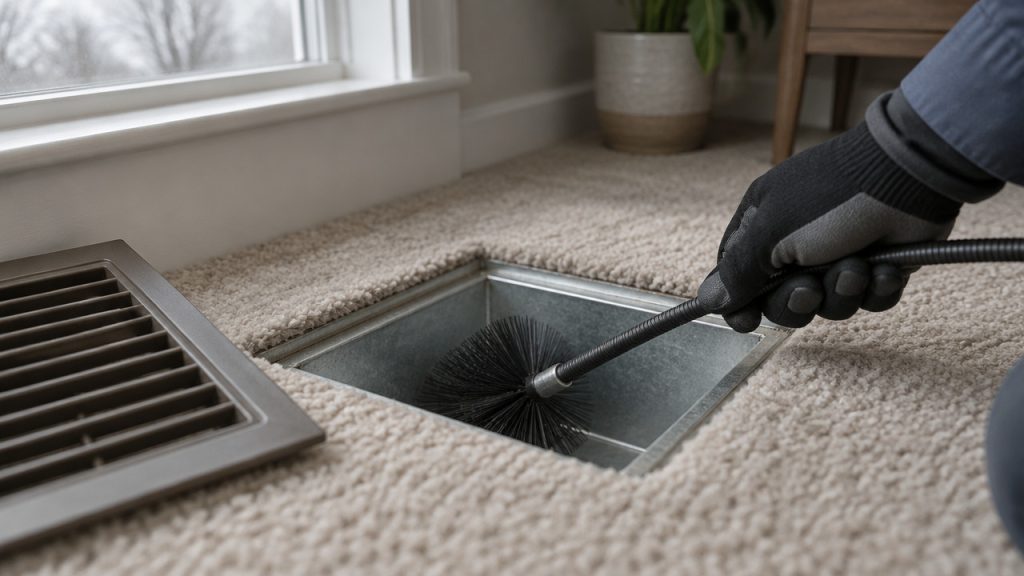
Yes, air duct and carpet cleaning make a good pair, as long as the ducts get cleaned first. Dust loosened inside the vents settles on the floor, so doing the carpets first means vacuuming up the same mess twice. The two jobs also do different work: duct cleaning clears the system that moves air through your home, while carpet cleaning deals with what has already landed on the floor. If allergies, a baby or signs of hidden moisture are in the picture, a basic visit may not be enough, so the real decision is how far to go and which Austin cleaner you trust to do it in the right order.
Should You Clean Your Air Ducts and Carpets at the Same Time?
Pairing these two services works well, provided the ducts are cleaned before the carpets. Scheduling them together saves coordination effort and ensures the whole home feels fresh at once.
- Air ducts move dust through the whole house, while carpets only trap what has already settled.
- Cleaning ducts first prevents dislodged particles from ruining freshly shampooed floors.
- Addressing both improves indoor air quality more effectively than either service alone.
- Homeowners with allergies or babies benefit most from this combined approach.
Think of it this way: your HVAC system is essentially the lungs of your home, constantly inhaling and exhaling air throughout every room. When those “lungs” are clogged with dust, pet dander, and other debris, they redistribute those particles across every surface. No matter how often you vacuum or steam clean, the cycle repeats as long as the source remains untouched inside the vents.
That is why professional air duct cleaning should be the starting point. Getting the air side handled first means that when the carpet cleaners arrive, they are capturing whatever was knocked loose during the duct work, plus what was already embedded in the fibers. One sequence, one mess to clean up, and a genuinely fresher home rather than just a better-smelling one.
Why the Order Matters: Ducts First, Carpets Second
Order matters because duct cleaning is disruptive by design. Technicians use high-powered vacuum equipment and agitation tools to dislodge accumulated debris from inside the ductwork. That debris has to go somewhere. Even with the best vacuum collection systems, a small amount of fine dust can escape into the living space before it gets pulled into the collection unit.
If your carpets were cleaned just before the duct work, that escaped dust settles right into the damp or freshly cleaned fibers. Carpets act like giant filters. They grab whatever floats by. So you would essentially pay to have your floors cleaned, then immediately introduce new dust into them.
Dust, pet dander, and pollen circulate through the HVAC system continuously while the system runs. They land on floors, settle into fabrics, and cling to furniture. Cleaning the carpet without addressing the source means the accumulation starts again the moment the system kicks on. It is a cycle that never breaks until the ducts themselves are cleared.
- Schedule your duct cleaning first. Have the technicians clear the entire HVAC system, including the main trunk lines, supply and return vents, and the air handler if accessible.
- Let the dust settle. Wait 24 to 48 hours after duct cleaning before the carpet cleaners arrive. This gives any airborne particles time to settle so they can be captured during carpet cleaning.
- Do a quick surface vacuum. Run a basic vacuum over hard floors and carpets before the carpet cleaning crew arrives to capture the bulk of what settled.
- Finish with professional carpet cleaning. Now the deep extraction or steam cleaning can address what was embedded before, plus whatever came loose from the ducts.
Following this sequence means you are paying for results that actually last. The comprehensive guide to air duct cleaning explains what to expect during the duct work itself, including how long it takes and what areas get attention.
Duct Cleaning vs. Carpet Cleaning: What Each Service Actually Handles
Each service targets a different part of the home’s dust cycle. Neither replaces the other because they address completely different sources. Duct work removes what is still circulating. Carpet cleaning removes what has already landed and gotten trapped.
Noble Air focuses on the air side: the ducts, vents, registers, and HVAC components. Carpet cleaning is a separate trade performed by specialists who have different equipment, training, and expertise. The two services often coordinate well, but they are distinct skill sets.
| Service | Target Area | What It Removes | When to Schedule |
|---|---|---|---|
| Air Duct Cleaning | HVAC ductwork, vents, registers, air handler | Circulating dust, pet dander, pollen, mold spores, construction debris | Every 3-5 years, or after renovations, pets, or visible mold |
| Carpet Cleaning | Wall-to-wall carpet, area rugs, upholstery | Embedded dirt, stains, allergens trapped in fibers, dust mites | Every 12-18 months, or more frequently with pets or high traffic |
| HVAC Disinfection | Evaporator coil, drip pan, interior air handler surfaces | Mold, bacteria, microbial growth on system components | When mold is detected, musty odors are present, or after water damage |
Duct cleaning clears the highway that moves air. Carpet cleaning clears the destination where that air drops its payload. Both matter, but for different reasons.
For households dealing with persistent odors or concerns about mold growth inside the system, UV light HVAC disinfection is an additional step that addresses microbial growth at the source. This does not replace cleaning, but it can help keep the system cleaner for longer.
Allergies, Babies and Hidden Moisture: When to Go Beyond a Basic Cleaning
Some households need more than a standard cleaning schedule. Allergy sufferers, homes with babies, and anyone who has experienced water damage or high humidity should look closer at what is hiding in the system.
Dust mites, pet dander, and mold spores are well-documented triggers for respiratory issues. When these circulate through the ducts, they get distributed to every room. A baby’s immune system is still developing, making them more sensitive to airborne irritants. For those households, addressing the air side first is not just about cleanliness; it is about creating a healthier environment.
Hidden moisture is another concern. Central Texas humidity can lead to condensation inside ducts, particularly if the system was improperly installed or has damaged insulation. Where moisture sits, mold grows. That mold then gets blown through the house every time the system runs.
- Musty or stale odors when the system kicks on, especially after it has been off for a while.
- Visible dust or debris around supply registers, indicating buildup inside the ducts.
- Recent home renovations that may have introduced drywall dust, sawdust, or other construction debris.
- Unexplained allergy symptoms that improve when you leave the house or worsen at night.
- Recent water damage or high humidity in the attic or crawlspace where ducts run.
Any of these signs suggest the ducts need attention before investing in carpet cleaning. Mold inside the ducts requires specialized treatment. The duct mold cleaning process addresses both the visible growth and the underlying moisture issue that caused it.
How to Vet an Austin Duct Cleaner Before You Book
Not all cleaning companies operate the same way. The Austin area has plenty of options, but the difference between a thorough job and a quick vacuum-and-go comes down to equipment, methods, and transparency.
A trustworthy provider is local, clear about what the service includes, and willing to explain what happens after the job is done. They should be able to tell you how long the work takes, what areas get cleaned, and whether they use cameras or other verification tools to show before and after conditions.
- Check local reputation and reviews. Look for detailed reviews from Austin-area homeowners, not just star ratings.
- Ask about equipment and methods. Professional-grade vacuum collection units and agitation tools do a more thorough job than shop vacs and brushes.
- Confirm residential experience. Residential duct work differs from commercial systems. Make sure the crew has experience with homes like yours.
- Get a written scope. The quote should list exactly what gets cleaned: supply ducts, return ducts, vents, registers, air handler, and any additional services.
- Ask about before and after verification. Some companies use inspection cameras to show the condition of the ducts before and after cleaning.
- Clarify after-service support. Understand what happens if you notice issues after the work is complete. A local company stands behind its work.
For air duct cleaning in Austin, TX, look for a provider who understands Central Texas homes. Humidity, construction methods, and local HVAC configurations all play a role in how ducts accumulate debris and what it takes to clean them properly.
Air Duct and Carpet Cleaning: Your Questions Answered
Can I clean my carpets first if I’m hosting guests soon?
Yes, but expect to vacuum thoroughly after the duct work is done. If a special event is coming up and you need clean carpets immediately, go ahead with carpet cleaning first. Just understand that once the ducts get cleaned, some fine dust will settle on those freshly cleaned floors. Plan for a quick vacuum the morning of your event. The ideal sequence remains ducts first, carpets second, but real life sometimes demands flexibility.
Will duct cleaning make a mess on my floors and rugs?
No, professional duct cleaning uses containment equipment to capture debris. Technicians place the vacuum collection unit under negative pressure, meaning dust gets pulled into the unit rather than blown into the house. Some fine particles may escape, which is why waiting to clean carpets makes sense. But the process itself should not leave visible piles of dust on your floors. If it does, that is a sign of inadequate equipment or technique.
Does a pet-heavy home need duct cleaning more often than carpet cleaning?
Yes, pet dander circulates continuously and accumulates in ducts faster than in carpets. Pets shed skin cells and hair constantly. That material gets drawn into the return air and distributed throughout the system. Carpets trap some of it, but the ducts see continuous exposure. Homes with multiple pets or heavy shedders may benefit from duct cleaning every 2-3 years rather than the typical 3-5 year interval.
Should I have my dryer vent cleaned during the same visit?
Yes, dryer vent cleaning pairs well with duct work and addresses a fire safety risk. Lint buildup in dryer vents restricts airflow and creates a genuine fire hazard. Since the technician is already on site and working with similar equipment, adding dryer vent cleaning is efficient. It does not take long, and it removes a risk that has nothing to do with air quality but everything to do with home safety.
Is duct cleaning safe to schedule when there is a newborn at home?
Yes, though you may want to schedule when the baby can be out of the house. The cleaning process involves some noise from the vacuum equipment and technicians moving through the home. Dust should be contained, but the activity itself can disrupt a nap schedule. Some families prefer to have the work done before bringing a baby home, while others schedule during a time when the infant can stay with family for a few hours.
How do I know if musty smells come from my carpets or my ducts?
Check whether the smell appears when the HVAC system runs. If the odor is noticeable only or primarily when the air kicks on, the source is likely in the ductwork, evaporator coil, or air handler. If the smell is always present regardless of the system, check carpets, upholstery, or areas with water damage. Sometimes both need attention, but the ducts are the first place to investigate when the smell correlates with air movement. home air quality services can help identify the source.