
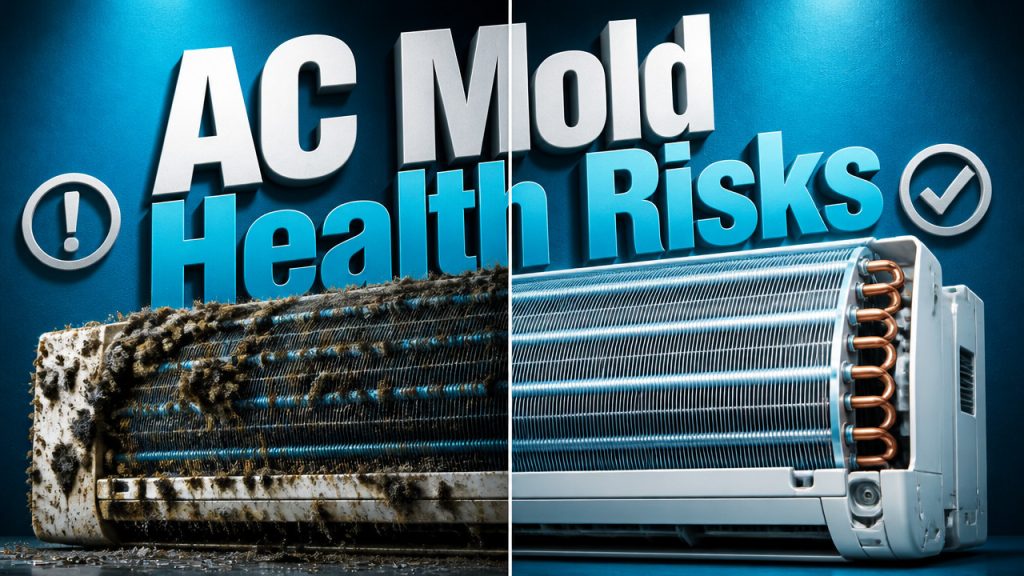
Mold growing inside your AC system isn’t just unsightly it’s actively circulating spores through every room in your home. In Austin’s humid climate, air conditioning units become perfect breeding grounds for toxic mold species, especially when condensation meets dust and organic debris. The good news? Professional AC mold removal eliminates the problem at its source, restores your indoor air quality, and protects your family from respiratory risks but only when it’s done with proper inspection, containment, and verified cleaning protocols.
Quick Answer: When Your AC Needs Professional Mold Removal
How do you know if your air conditioner has a mold problem that needs professional attention? The short answer: if you can see visible growth or smell that characteristic musty odor when your system runs, you need expert HVAC mold remediation not a DIY spray bottle solution.
Professional technicians always start with camera inspection proof before recommending any service. This approach means you see exactly what’s happening inside your ductwork and air handler before spending a dollar. According to 16best, the EPA estimates that between one-third and one-half of all buildings in the U.S. have damp conditions conducive to mold growth, which means your home could easily fall into this category without you realizing it.
Here are the visible symptoms that signal you need immediate air duct cleaning service and mold remediation:
- Visible black, green, or white growth on AC vents, registers, or around the air handler unit.
- Musty or mildew odor that intensifies when the air conditioning cycles on.
- Increased allergy symptoms like sneezing, coughing, or watery eyes when you’re indoors.
- Unexplained respiratory issues or worsening asthma in family members, especially children.
- Visible dust or debris blowing from vents alongside musty smells.
- Water stains or moisture around the air handler, ductwork, or vent registers.
- Recent water damage or flooding in your home that may have affected HVAC components.
Why Austin’s Climate Turns Your AC Into a Mold Factory
Living in Central Texas means dealing with humidity levels that regularly exceed 70% during summer months. Your air conditioner works overtime to remove moisture from the air, but that moisture has to go somewhere. Inside your system, the evaporator coil and drain pan become collection points for condensation and when that moisture combines with the dust, pet dander, and organic debris that naturally accumulates in ductwork, you’ve created a perfect breeding environment for mold colonies.
The problem compounds because Austin homes often have attics that reach temperatures above 130 degrees Fahrenheit during peak summer. When your AC ductwork runs through these superheated spaces, the temperature differential creates additional condensation points inside the system. This constant moisture cycle, combined with our region’s naturally high humidity, means Noble Air’s HVAC services routinely find mold growth that homeowners never suspected.
Local conditions that accelerate AC mold growth include:
- Cedar fever season debris clogging filters and providing organic food for mold.
- Spring pollen surges that overwhelm standard filtration systems.
- Summer thunderstorms that dump humidity into attics and crawl spaces.
- Mild winters that never fully kill off established mold colonies.
Your AC system cycles air throughout your entire home 4-6 times per hour during peak operation. If mold is growing inside the air handler or ductwork, you’re not just dealing with a localized problem you’re actively distributing spores to every bedroom, living area, and bathroom in your house.
The Real Cost of AC Mold Removal in Austin (2026 Pricing)
Let’s talk numbers, because transparency matters when you’re budgeting for home maintenance. AC mold removal cost varies based on the severity of contamination, system size, and which components require treatment. Understanding these variables helps you evaluate quotes and avoid surprise charges.
According to Qualityhomeaircare, the U.S. mold remediation cost averages between $2,200 and $2,400, with most jobs ranging from $1,500 to over $9,000 in 2025–2026. For AC mold removal specifically, most projects fall into a narrower band because the contamination is localized to the HVAC system rather than spreading throughout walls and structure.
| Service Level | How It’s Priced | What’s Included |
|---|---|---|
| Basic Cleaning | Quoted on-site after inspection | Surface cleaning of visible growth on accessible components, filter replacement, basic sanitization |
| Full Remediation | Quoted on-site after inspection | Air handler deep clean, coil treatment, drain pan sanitization, ductwork fogging, camera inspection before and after |
| Preventive Treatment | Quoted on-site after inspection | UV light installation, antimicrobial coating application, ongoing maintenance plan setup |
Variables that affect your final price include home square footage, number of system zones, accessibility of ductwork, and whether mold has spread to connected spaces like attics or crawl spaces. The most trustworthy providers offer free camera inspections upfront this documentation proves the problem exists and exactly what work needs performing.
Beware quotes that seem too low. Proper air handler mold cleaning requires containment setup, HEPA filtration equipment, EPA-registered antimicrobial agents, and trained technicians working safely. Cut-rate services often skip containment or use consumer-grade sprays that address surface growth while leaving root structures intact.
How Professional AC Mold Removal Actually Works
Understanding the actual process helps you identify quality workmanship. Professional technicians follow structured protocols designed to eliminate contamination without spreading spores throughout your home during the cleaning process.
- Camera inspection and documentation. Technicians insert inspection cameras into ductwork and air handler components to identify contamination scope, location, and severity. You see the footage on a monitor no guesswork required.
- Containment setup. The work area gets isolated with plastic sheeting and negative air pressure equipment. This prevents disturbed spores from migrating to clean areas of your home during the cleaning process.
- HEPA vacuuming of loose debris. Specialized equipment with HEPA filtration removes loose contamination, dust, and organic debris from ductwork and air handler surfaces before wet cleaning begins.
- Application of antimicrobial treatment. EPA-registered cleaning agents designed for HVAC systems break down mold structures and kill active growth. These products are formulated to work on metal and plastic without corroding components.
- Physical scrubbing of components. Technicians clean evaporator coils, drain pans, blower wheels, and interior air handler surfaces using appropriate brushes and tools that reach all contamination points.
- Post-cleaning inspection and verification. Camera inspection confirms all visible growth has been removed. You view the before and after footage to verify the work quality.
This systematic approach separates real ductwork mold cleaning from superficial spraying that addresses symptoms while leaving root causes intact. The containment and verification steps matter just as much as the actual cleaning.
What Happens If You Ignore Mold in Your AC System
Ignoring mold growth in your air conditioning system creates cascading problems that extend far beyond the musty smell you notice when walking through your front door. Families with babies, elderly members, or anyone with respiratory conditions face heightened risks when mold spores continuously circulate through living spaces.
According to Wifitalents, the global mold remediation service market was valued at $1.23 billion in 2023 and is projected to reach $1.52 billion by 2030, reflecting growing awareness of mold’s health and property impacts. In the U.S., the industry continues expanding as more homeowners recognize the connection between indoor air quality and family health.
Consequences of ignoring AC mold contamination include:
- Respiratory inflammation and worsened allergy symptoms, particularly dangerous for infants whose lungs are still developing.
- Chronic sinus infections and heightened asthma attacks triggered by daily spore exposure.
- System efficiency decline as mold growth restricts airflow and strains components, increasing energy bills by 15-30%.
- Premature AC component failure from microbial corrosion on coils and electrical connections.
- Mold spreading from ductwork to visible interior surfaces, dramatically increasing remediation scope and cost.
What starts as mold in air ducts becomes a whole-house air quality problem. Your AC system doesn’t just cool air it acts as the delivery mechanism for whatever contaminants exist inside the ductwork and air handler. Every cooling cycle pushes spores deeper into carpets, furniture, bedding, and clothing where they establish secondary growth sites.
UV Light Treatment: The Long-Term Mold Prevention Solution
Professional AC mold removal solves the immediate problem, but preventing recurrence requires addressing the conditions that allowed growth in the first place. Germicidal UV light installation creates an ongoing hostile environment for mold, bacteria, and viruses within your HVAC system.
UV-C wavelength light disrupts the DNA of microorganisms, preventing them from reproducing. When installed strategically inside your air handler typically near the evaporator coil these systems continuously irradiate the moist surfaces where mold typically establishes. This doesn’t replace cleaning if you already have visible growth, but it dramatically reduces the likelihood of recurrence after remediation.
Benefits of professional UV light installation:
- Continuous protection operating whenever your AC runs, unlike one-time chemical treatments.
- Coil efficiency maintenance by preventing biological growth that insulates heat transfer surfaces.
- Reduced drain line clogs from algae and slime that cause overflows and water damage.
- Lower maintenance requirements between professional service visits.
Modern UV systems designed for residential HVAC use minimal electricity and feature indicator lights showing bulb status. Most residential units require bulb replacement every 2-3 years an easy swap that maintains continuous protection. For Austin homeowners dealing with our persistent humidity, UV treatment delivers peace of mind that extends beyond the initial mold removal service.
Key Takeaways: Protecting Your Austin Home From AC Mold
- Camera inspection first: Professional AC mold removal always begins with visual documentation you should see the problem before approving any work.
- Austin’s climate accelerates growth: Our combination of high humidity, intense heat, and heavy AC usage creates ideal mold conditions inside systems.
- Health risks are real: Families with babies, allergy sufferers, or respiratory conditions face heightened danger from continuously circulating spores.
- Professional protocols matter: Proper containment, HEPA filtration, and EPA-registered antimicrobial agents distinguish real remediation from superficial cleaning.
- UV light prevents recurrence: After removal, germicidal UV installation provides ongoing protection against regrowth in moist system components.
- Transparent pricing exists: Reputable providers offer free inspections and clear quotes never pay for work without understanding exactly what’s being done.
Frequently Asked Questions About AC Mold Removal
Can I remove mold from my AC system myself?
No. DIY approaches using consumer-grade sprays typically address surface growth while leaving root structures intact. Professional air conditioner mold treatment, and the problem returns within weeks.
How quickly can mold grow back after removal?
It depends. Without addressing moisture sources or installing preventive measures, regrowth can begin within 2-4 weeks in Austin’s humid conditions. Proper AC mold prevention through UV installation and moisture control extends protection significantly many homeowners go years without recurrence after comprehensive service.
Will mold in my AC make my family sick?
Yes, it can. Continuous exposure to circulated mold spores triggers allergic reactions, worsens asthma, and causes respiratory inflammation. Children, elderly family members, and those with existing conditions face heightened risk their symptoms often improve noticeably once the source gets eliminated.
How do I know if the mold is actually gone after service?
Camera verification. Quality providers perform post-cleaning inspections showing every treated component. You should see clear before and after footage confirming the contamination has been removed from your air handler and ductwork.
Does homeowners insurance cover AC mold removal?
Sometimes. Coverage depends on your specific policy and whether the mold resulted from a covered event like sudden water damage. Gradual growth from humidity typically isn’t covered, which makes preventive maintenance the smarter financial choice.
How long does professional AC mold removal take?
3-6 hours. A standard single-system home requires half a day for proper containment, cleaning, and verification. Larger homes with multiple zones or extensive contamination may require additional time or return visits. Your quote should include time estimates based on camera inspection findings.
Is AC mold removal safe for pets and children?
Yes, when done correctly. Professional technicians use EPA-registered products formulated for occupied spaces. Proper containment during service prevents exposure to cleaning agents, and ventilation after treatment removes any residual odor before you re-enter treated areas.
What’s the difference between mold removal and mold remediation?
Scope and thoroughness. Removal suggests taking out visible growth, while remediation addresses the underlying conditions that allowed growth and prevents spore spread to other areas. True HVAC mold remediation includes containment, moisture source identification, and preventive recommendations not just surface cleaning.
How often should Austin homeowners get AC mold inspections?
Annually at minimum. Our climate creates year-round mold pressure, and early detection prevents costly remediation. Many homeowners combine mold inspection with regular maintenance visits, ensuring their system stays clean and efficient through Austin’s demanding cooling season.