
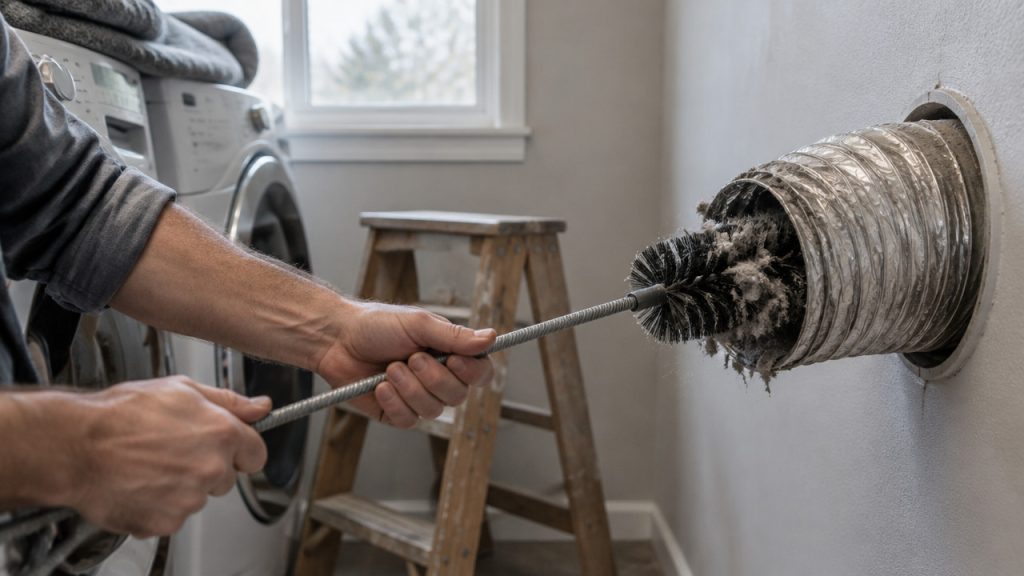
The answer to how often to clean a dryer vent is at least once a year, and sooner if your dryer starts dropping hints. That yearly baseline exists because lint buildup narrows the vent over time, which traps heat, slows drying and creates a real dryer fire hazard. Big laundry loads, a household with babies or allergy sufferers, and clogged dryer vent signs like damp clothes after a full cycle can all move that date up. So the decision is whether your vent is a quick DIY job or one for professional dryer vent cleaning, especially when the run is long or hard to reach.
How Often Should You Clean Your Dryer Vent? The Short Answer
Clean your dryer vent at least once per year, and schedule a sooner service if you spot warning signs like longer drying times or a hot dryer exterior. This yearly checkpoint keeps the airflow moving and prevents the slow creep of lint accumulation that turns a routine chore into a safety hazard.
- Annual cleaning is the minimum baseline for safe and efficient dryer operation.
- Lint is highly flammable and restricted airflow creates a genuine fire risk.
- Clogged vents raise energy bills by forcing the dryer to run longer cycles.
- Warning signs like damp clothes mean you cannot wait for the annual mark.
Homeowners often wonder about how often you should clean your dryer vent when laundry demands fluctuate. The reality is that the yearly rule is a floor, not a ceiling. If your household runs the dryer daily or you notice the machine struggling, that once-a-year appointment needs to move up on the calendar.
Why the Annual Rule Exists: What Lint Does Inside Your Vent
Every load of laundry sends lint through the dryer lint trap and into the vent ducting. The trap catches a lot, but fine particles slip past and settle in the vent walls. Over months, those particles build up and start choking the airflow. The dryer works harder to push moisture out, and the internal temperature rises. That trapped heat sits against a lining of highly flammable material.
The annual cleaning rule exists because it takes time for that buildup to reach a critical point. For most average households, a year is the window where efficiency drops and risk rises. Ignoring that timeline means the system strains against its own exhaust, wearing out components and inviting trouble.
- Restricted airflow forces the dryer to run longer and hotter than intended.
- Longer drying times mean more wear on the motor and drum components.
- Trapped heat increases the chance of the lint igniting inside the vent.
- Higher utility bills result from running extra cycles to get clothes dry.
Understanding dryer vent cleaning basics helps homeowners grasp why this is not just a suggestion. A clean vent is a safety device. When the path is clear, the dryer operates within its design parameters. When it clogs, the machine essentially bakes its own exhaust, and that is where problems start.
Signs Your Dryer Vent Needs Cleaning Sooner Than Planned
The calendar might say your annual cleaning is months away, but your dryer could be telling a different story. Machines communicate through symptoms, and learning to read them prevents small issues from becoming major headaches. If you notice any of the following, it is time to act regardless of the date.
- Clothes are still damp after a full drying cycle finishes.
- Dryer exterior feels hot to the touch immediately after a cycle.
- Burning smell is noticeable when the dryer is running.
- Lint trap is unusually full or debris spills out when you remove it.
- Laundry room feels humid or smells musty after drying a load.
These clogged dryer vent signs indicate that air cannot escape the drum properly. Instead of venting outside, moisture stays trapped with the clothes, and heat radiates back into the machine. Following reliable dryer vent maintenance tips helps you catch these red flags early, but once they appear, action is required. Waiting for the next scheduled cleaning allows the problem to compound.
Does Your Household Need More Than a Yearly Cleaning?
The yearly standard works for a typical household, but typical is a moving target. Families know that laundry needs shift with seasons, new babies, and lifestyle changes. If your household runs a high-volume laundry operation, the vent accumulates lint much faster than a single-person home. More cycles mean more debris moving through the system.
Households with babies present a unique case. Between cloth diapers, spit-up blankets, and daily outfit changes, the dryer often runs daily. That volume speeds up lint accumulation. Additionally, parents focused on indoor air quality have another reason to stay ahead of lint buildup, as a clogged vent can release particles back into the home environment. For families with allergy sufferers, keeping that vent clear is part of maintaining a healthy breathing space.
| Household Situation | Suggested Cleaning Approach |
|---|---|
| Single person or couple | Annual cleaning is usually sufficient |
| Family of four | Clean every 9 to 12 months |
| Busy household with babies | Clean every 6 to 9 months |
| Pet owners with shedding | Clean every 6 months due to fur and dander |
| Allergy sufferers in home | Clean every 6 months for better air quality |
| Dryer located far from exterior wall | Annual cleaning with professional inspection |