
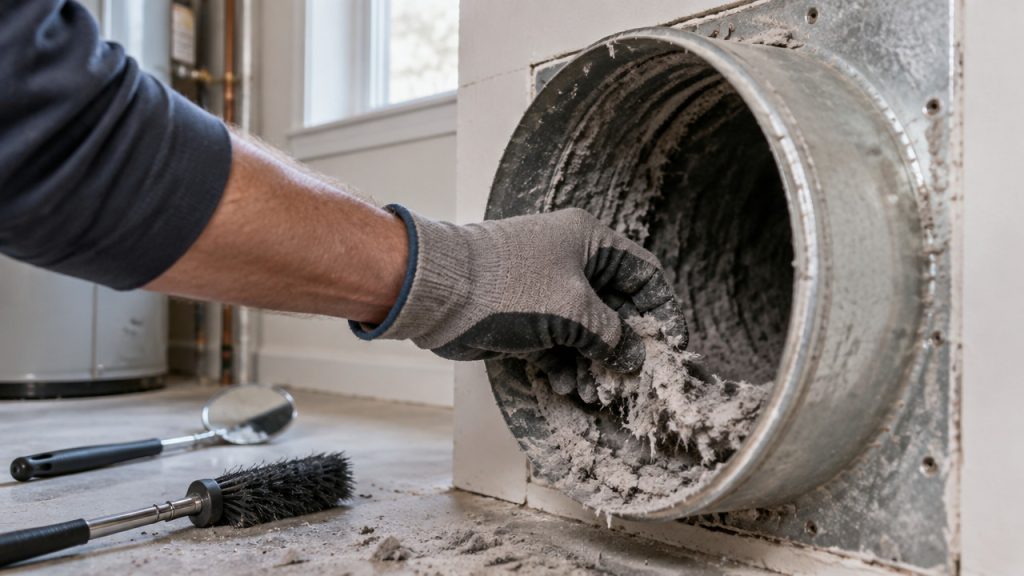
Your air ducts need cleaning when you see dust returning within days of wiping, smell musty odors at the vents, spot mold or pest droppings, notice rising energy bills, or battle unexplained allergy flare-ups. Austin homes get hit harder than most, thanks to cedar pollen, humidity, and year-round AC use. Your ductwork quietly breathes for the whole family, including the tiny lungs in the nursery. Here is how to tell when it is begging for backup, and what to do next.
The Short Answer: Seven Red Flags That Put Your Ductwork on Overdue Notice
If you are scanning this fast, here is the lowdown. The National Air Duct Cleaners Association recommends cleaning your air ducts every three to five years, but Austin’s climate might push you toward the lower end of that spectrum. You should call a professional the moment you spot visual contamination, smell something off, or notice your household allergies worsening for no clear reason.
Recognizing top signs your air ducts need cleaning is really about trusting your senses. If something looks, smells, or feels wrong, it probably is. Here are the seven immediate red flags that mean your HVAC system needs attention.
- Rapid Dust Recurrence: You dust your coffee table, and a grey film settles back on it within 24 to 48 hours.
- Musty or Stale Odors: The air blowing from your registers smells like a damp basement or an old attic.
- Visible Mold Growth: You see black or green spotting inside your supply registers or on the metal surrounding your vents.
- Pest Evidence: You spot droppings, insect shells, or nesting materials near your vent openings.
- Unexplained Allergy Spikes: Family members start sneezing or coughing specifically when the AC or heat kicks on.
- Weak Airflow: You hold your hand up to a vent and the pressure feels significantly weaker than other rooms.
- High Energy Bills: Your kWh usage spikes despite keeping the thermostat at the same setting as previous months.
Dust Boomerangs, Musty Smells, and Sneezing Babies: Symptoms You Can Spot From the Couch
You do not need a toolbox to spot trouble. Most dirty air ducts symptoms announce themselves right in your living room. The most common culprit is dust “boomeranging” the phenomenon where you clean your home, turn on the HVAC, and watch the dust settle right back where it was. This happens because your ductwork acts as a giant conveyor belt, recycling the same particulate matter over and over again.
Then there is the smell. That musty smell from vents is often a byproduct of microbial volatile organic compounds, or MVOCs. Basically, mold or bacteria are growing somewhere in your system, and they are releasing gasses that create that stale, damp odor. It is not just unpleasant; it is a signal that HVAC duct contamination is actively affecting your indoor air quality Austin residents work so hard to maintain.
For parents, the most worrying sign is often a baby who cannot seem to shake a runny nose. Infants breathe faster than adults, meaning they inhale more air relative to their body weight. If your little one seems congested mainly in the nursery or when the air kicks on, your ducts might be the invisible irritant signs that your air ducts need to be cleaned often highlight.
- Dusty Surfaces: If your furniture gets dusty within days of cleaning, your ductwork is likely circulating particulates rather than filtering them.
- Musty Odors: A stale smell when the HVAC starts usually points to mold, mildew, or bacteria buildup on the coils or inside the ducts.
- Allergy Flare-ups: Sneezing, coughing, or watery eyes that get worse at home but improve when you leave point to indoor air triggers.
- Respiratory Issues: Family members with asthma or sensitive lungs may experience more frequent attacks or congestion.
- Sleep Disruption: Poor air quality can cause congestion and throat irritation, making it harder to get a restful night’s sleep.
Why Austin’s Cedar Fever Season and Humid Summers Load Your Ducts Faster Than the National Average
Austin is a wonderful place to live, but your HVAC system would probably disagree. The Environmental Protection Agency states that indoor air can be more polluted than outdoor air, and in Central Texas, the outdoor air is working hard to get inside your ducts. We have “cedar fever” pollen clouds in the winter that coat everything in a fine yellow dust, followed by the spring oak pollen drop. Your AC unit pulls that air in constantly.
Then comes the humidity. When your AC runs almost year-round, it creates condensation inside the air handler. If that moisture does not drain properly or if your ducts have leaks in unconditioned spaces like the attic, that dampness becomes a welcome mat for mold growth. The EPA notes that controlling moisture is the most critical factor in preventing mold growth in ductwork [Analysis]. This combination of heavy pollen loading and humidity means Austin homeowners often need to be more vigilant about duct cleaning frequency than homeowners in drier climates.
Considering air duct cleaning’s impact on indoor air quality becomes essential when you realize just how much environmental debris your system handles daily. Here is how local stressors affect your ductwork.
| Austin Environmental Stressor | Effect on Ductwork |
|---|---|
| Cedar/Juniper Pollen (Winter) | Ultra-fine particulate matter coats internal duct linings and clogs filters rapidly. |
| High Humidity (Spring/Summer) | Encourages microbial and mold growth on duct surfaces, especially near the evaporator coil. |
| Year-Round AC Runtime | Increases total volume of air moving through the system, accelerating dust accumulation. |
| Attic Temperature Swings | Causes thermal expansion/contraction, which can crack duct seals and pull in insulation fibers. |
Visible Mold, Rodent Droppings, and Insulation Debris: The Non-Negotiable Signs
Some things can wait. A little dust on your baseboards is not a crisis. But other signs are non-negotiable if you see them, you need to act immediately for the safety of everyone under your roof.
The big one is mold in air ducts. If you lift a vent cover and see black, green, or white fuzzy spotting on the metal or the drywall around it, do not touch it. Disturbing mold can release thousands of spores into your living space. This creates a serious risk for health benefits of having your air ducts cleaned[/LINK] that far surpass simple dust removal health benefits of having your air ducts cleaned.
Pest evidence is equally urgent. Rodent droppings can carry hantavirus and other pathogens. When your blower turns on, it can aerosolize those droppings, spreading bacteria through your home. Lastly, look for torn insulation. If you have flexible ductwork in your attic and see fiberglass particles at your vents, the inner liner has likely degraded. You are breathing in insulation material, which is definitely something you want to remove.
- Black/Green Spotting: Look inside the supply registers for visible mold colonies on metal or surrounding drywall.
- Rodent Droppings: Check floor vents and return air boxes for small black pellets or urine stains.
- Insect Casings: Look for roach droppings or insect bodies near vent openings.
- Fiberglass Particles: A white or yellowish dust at your vents often signals degraded flex duct liner.
- Wet Spots: Moisture around vents indicates condensation issues that will eventually lead to mold.
The 10-Minute Flashlight Test: How to Inspect Your Own Vents Before Calling Anyone
You might be wondering exactly how to tell if your ducts need cleaning without hiring a pro first. It is actually pretty simple. You can perform a basic inspection in about ten minutes using just a flashlight and a screwdriver.
This DIY check helps you verify what you suspect and gives you concrete details to share when you schedule service. It also empowers you to catch small issues like a clogged filter before they become big ones.
- Grab Your Tools: Get a bright LED flashlight and a screwdriver (if your vent covers require one to open).
- Turn On the System: Set your thermostat to “Fan On” so air is actively moving through the ducts.
- Check the Supply Registers: Hold the flashlight at an angle inside the vent opening. Look for fuzzy debris or dust bunnies stuck to the sides.
- Inspect Return Air Grilles: These are the large vents usually in a hallway or ceiling. They often show the heaviest buildup first.
- The White Glove Test: Wipe the inside of the vent boot with a white paper towel or rag. If it comes back grey or black, you have significant accumulation.
- Check the Filter: Pull out your HVAC filter. If it is caved in or gray, your system has been straining to breathe.
Safety Note: Do not attempt to open your main air handler or crawl into attic ductwork. Those areas contain high-voltage components and require professional handling.
Energy Bills, Weak Airflow, and the Three-to-Five-Year Rule: When the Calendar Makes the Call
Sometimes there is no dramatic sign no smell, no spot of mold. But the calendar is ticking anyway. The NADCA standard suggests cleaning every three to five years as a baseline. However, certain household factors shorten that interval significantly.
If you have shedding pets, your ducts are pulling in fur and dander constantly. If you have completed a renovation, drywall and sawdust definitely made it into your system. And if anyone in the home smokes, those particulates stick to duct walls and create a stubborn film. Restricted airflow from buildup forces your blower motor to work harder, which directly impacts your energy usage [Study]. Keeping your ducts clear is not just about cleanliness; it is about keeping your monthly kWh bill manageable.
While you are thinking about airflow, do not forget your dryer. A clogged dryer vent restricts airflow just like a clogged duct, but with much higher fire risk. Scheduling dryer vent cleaning at the same time as your duct cleaning is a smart maintenance move.
| Household Factor | Recommended Cleaning Interval |
|---|---|
| Standard Home (No Pets/Smokers) | Every 3–5 Years |
| Home with 1–2 Shedding Pets | Every 2–3 Years |
| Post-Renovation or Remodel | Immediately upon project completion |
| Home with Smokers | Every 1–2 Years |
| Family with Severe Allergies/Asthma | Every 2 Years |
Cleaning, Repair, or Mold Remediation? Matching the Fix to What You Found
Not every dirty duct needs the same solution. That snapshot you took with your flashlight determines what actually needs to happen next. Noble Air offers different levels of service to match what is really going on in your system.
Basic cleaning involves using negative pressure vacuums and rotary brushes to dislodge and remove debris. This is standard maintenance. But if you have mold, you need more than brushes. You need antimicrobial treatment and potentially UV light disinfection to kill spores at the source. If you found torn insulation or gaps where ducts meet, you need sealing or repair not just cleaning. A professional professional air duct cleaning in Austin will assess the full picture, not just push a vacuum hose in and call it a day.
| Symptom/Finding | Recommended Service |
|---|---|
| Dust buildup on vent walls, weak airflow | Negative Pressure Air Duct Cleaning |
| Visible mold on coils or duct interiors | Mold Remediation + HVAC Disinfection |
| Persistent odors despite cleaning | UV Light HVAC Disinfection Installation |
| Torn flex duct insulation | Duct Repair or Replacement |
| Drafts or hot/cold spots in rooms | Duct Sealing and Air Balancing |
Key Takeaways: Your 2026 Duct Health Cheat Sheet
Keeping your Central Texas home healthy starts with the air you cannot see. Here is your quick-reference guide for 2026.
- Watch for the Big Seven: Dust, odor, mold, pests, allergies, weak airflow, and energy spikes.
- Austin Factors Matter: Cedar pollen and humidity mean local homes need cleaning more often than the national average.
- Inspect Annually: Do the 10-minute flashlight test once a year to catch problems before they compound.
- Target 3–5 Years: Use that as your baseline, but shorten it for pets, renovations, or allergy sufferers.
- Act on Visuals: Mold and pest droppings are non-negotiable schedule service immediately.
- Match the Service: Cleaning, repair, and remediation are different fixes for different problems.
Ready to breathe easier? Understanding what happens during a residential duct cleaning is the first step toward a healthier home.
FAQ: Straight Answers on Dirty Ducts, Allergies, and Cleaning Costs
How often should air ducts actually be cleaned?
Every three to five years. The National Air Duct Cleaners Association sets this standard interval for residential homes. However, homes with pets, smokers, or allergy sufferers may need service closer to the two-year mark.
Is dirty ductwork dangerous for infants?
Yes, it poses higher risks. Infants breathe 40–60 times per minute compared to 12–20 for adults, inhaling more contaminants relative to their size. Clean ductwork significantly reduces airborne irritants in the nursery.
Can I clean my own air ducts?
Only surface-level cleaning. You can vacuum vent registers and change filters yourself. However, deep cleaning requires negative-pressure vacuums and rotary brushes that reach the main trunk lines, which requires professional gear.
How much does professional duct cleaning cost?
Varies by system size and scope. Pricing depends on the number of vents, the level of contamination, and whether you need additional services like mold treatment. Always request a full inspection and quote before work begins.
Will cleaning my ducts help with my allergies?
Yes, it reduces triggers. Removing pollen, pet dander, and dust mites from your ductwork eliminates the distribution system for those allergens. You should notice improved indoor air quality within hours of service.
For a deeper dive into maintaining your home’s air systems, check out our comprehensive guide to air duct cleaning.