
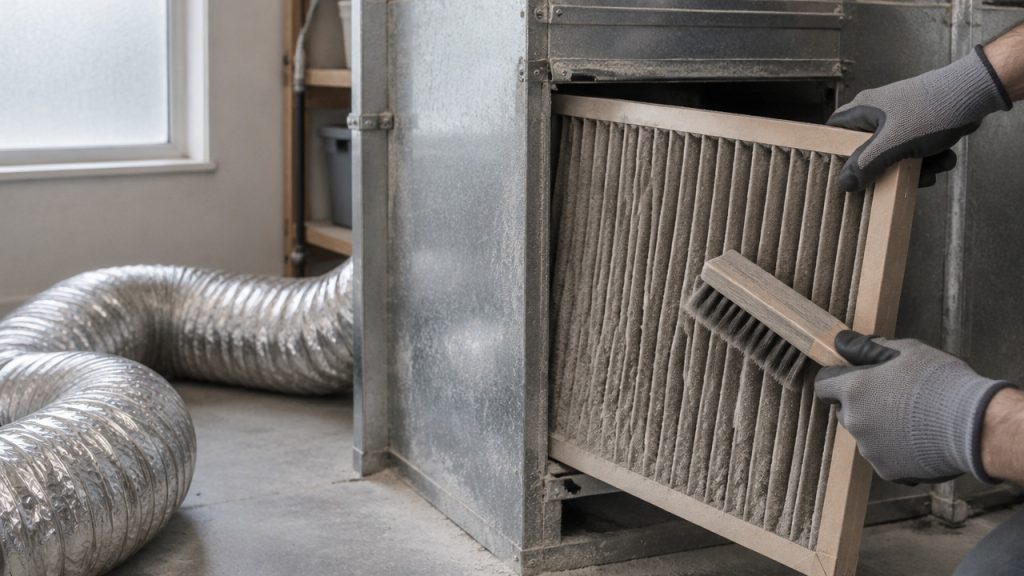
To clean an HVAC system, shut off power at the thermostat and breaker, replace the filter, vacuum the registers, rinse the evaporator and condenser coils, flush the condensate drain line with vinegar, and leave the ductwork to a certified pro. That’s the short version. The long version involves Austin’s cedar pollen, summer humidity, and a baby’s nursery that deserves cleaner air than your attic can offer. Here’s the step-by-step playbook, plus the honest line between a Saturday DIY and a job for NADCA-standard equipment.
Quick Answer: The 6-Part HVAC Cleaning Sequence That Actually Moves the Needle
If you want better airflow and lower energy bills, you need to hit six specific components in order. Skip one, and you’re just moving dust around. HVAC maintenance is a sequence, not a spot treatment filters and coils drive most airflow loss, so they take priority.
- Replace the filter: A clogged filter chokes the whole system and strains the blower motor.
- Vacuum the registers: Dust settled on supply and return vents re-enters the air immediately.
- Clean the evaporator coil: This indoor coil absorbs heat; a dirty coil freezes up and loses efficiency.
- Wash the condenser coil: The outdoor unit sheds heat; debris trapped in the fins blocks airflow.
- Flush the drain line: A clogged condensate drain causes water damage and shutdowns.
- Inspect the blower wheel: Heavy buildup here requires professional agitation tools for safe removal.
For the ductwork which is the circulatory system of your home you’re better off consulting a comprehensive guide to air duct cleaning[/LINK] before attempting anything yourself.
Before You Touch a Screw: Power-Off Rules, Tools, and the $40 Kit That Covers 80% of the Job
Safety isn’t the boring part it’s the difference between a successful Saturday project and an emergency service call. Before you even think about wiping a coil, you have to kill the power completely. That means the thermostat first, then the breaker at the panel, and finally the disconnect box at the outdoor condenser unit. Capacitors inside these units can hold a charge even when power is cut, so never touch electrical terminals with your bare hands.
- Soft bristle brush (for loosening debris)
- Shop vac with brush attachment
- Fin comb (for straightening bent condenser fins)
- No-rinse coil cleaner (foaming formula)
- Distilled white vinegar (for drain line flush)
- Replacement HVAC filter (correct MERV rating)
- Garden hose with spray nozzle (for outdoor coil rinse)
Never rely on the thermostat alone to cut power. HVAC systems have high-voltage capacitors that can deliver a serious shock even after the unit is switched off. Flip the breaker and verify the unit is dead before proceeding.
Gathering these tools takes one trip to the hardware store and about forty dollars money that pays for itself in efficiency gains. For a deeper dive into what these tools accomplish, check out this homeowner’s guide to effective duct cleaning[/LINK].
How to Clean Your HVAC System in 7 Steps, From Filter to Drain Line
This is where the rubber meets the road. Follow these seven steps in order to clean air conditioner coils, clear drain lines, and restore efficiency without calling a technician. Keep your movements deliberate if you rush, you risk bending the delicate aluminum fins on the coils.
- Swap the air filter. Slide the old filter out and slide the new one in, noting the airflow arrow points toward the blower. A fresh filter is the single highest-impact indoor air quality upgrade you can make.
- Vacuum the return and supply registers. Use the brush attachment to remove dust from the grilles and just inside the duct opening. Do not push dust further in.
- Access and inspect the blower compartment. Remove the panel to check for dust on the blower wheel. Light dust can be vacuumed; heavy buildup requires professional cleaning.
- Apply cleaner to the evaporator coil. Spray no-rinse foaming cleaner on the indoor coil and let it sit. The foam lifts dirt and drips into the drain pan.
- Clean the outdoor condenser coil. Clear away leaves and debris, then spray the fins from the inside out with a garden hose. Avoid high pressure, which bends fins.
- Straighten bent fins with a fin comb. Gently run the comb through any mashed fins to restore proper airflow through the condenser.
- Flush the condensate drain line. Locate the cleanout access, pour one cup of distilled vinegar down the line, and let it sit for 30 minutes before flushing with water.
| Step | Time | Difficulty |
|---|---|---|
| 1. Filter Swap | 2 minutes | Easy |
| 2. Register Vacuum | 15 minutes | Easy |
| 3. Blower Inspection | 10 minutes | Moderate |
| 4. Evaporator Coil | 20 minutes | Moderate |
| 5. Condenser Coil | 30 minutes | Moderate |
| 6. Fin Comb | 10 minutes | Moderate |
| 7. Drain Line Flush | 40 minutes | Easy |
These steps handle the visible, accessible parts of your system. For the hidden miles of ductwork running through your attic, deep cleaning your air ducts[/LINK] requires a completely different toolkit.
Why Central Texas Punishes HVAC Systems: Cedar Pollen, 90% Humidity, and Condensate Clogs
Austin homeowners face a unique set of HVAC challenges that our northern neighbors simply don’t understand. Our systems run hard for ten months out of the year, pulling in everything that floats through the Central Texas air. That “musty AC smell” isn’t just unpleasant it’s a warning sign that biological growth is thriving somewhere in your system.
- Cedar Pollen (January-February): Heavy particulate load rapidly clogs filters and coats evaporator coils.
- High Humidity (May-October): Moisture encourages mold in drain pans and on blower wheels.
- Attic Heat Load (June-September): Extreme attic temperatures stress duct insulation and accelerator degradation.
- Long Cooling Season: Extended run times mean more wear on motors and more debris accumulation.
According to the EPA, indoor air can be two to five times more polluted than outdoor air. In Central Texas, where homes are sealed tight against the heat, that ratio can spike during cedar season without proper filtration and cleaning.
This local cocktail of pollen, humidity, and heat is exactly why standard cleaning advice doesn’t always apply here. Utilizing air duct cleaning techniques that work in Austin[/LINK] means accounting for these regional factors.
The 2026 Maintenance Calendar: What to Clean Monthly, Quarterly, and Annually
Cleaning once isn’t enough; you need a schedule. Different components accumulate debris at different rates, and your calendar should reflect that. If you have pets, babies, or allergy sufferers in the house, shift the schedule toward the aggressive end.
| Component | Frequency | DIY or Pro | Austin Note |
|---|---|---|---|
| Air Filter | Monthly check | DIY | Replace immediately during Cedar season |
| Condensate Drain Line | Quarterly | DIY | Critical before summer humidity peaks |
| Outdoor Condenser | Annually | DIY/Pro | Clear debris after oak pollen falls |
| Evaporator Coil | Annually | Pro recommended | Deep clean before cooling season starts |
| Blower Wheel | Every 2-3 years | Pro only | More frequent if you have pets |
| Ductwork | Every 3-5 years | Pro only | Trigger events mean sooner |
Seeing the benefits of regular residential duct cleaning[/LINK] over time helps justify the investment in professional service.
DIY or Call a Pro? The Line Sits Where Your Screwdriver Meets Your Ductwork
There is a time to save money and a time to call for backup. The line generally sits at the point where your tools can’t reach or where the risk of damage outweighs the cost of hiring a pro. You can safely handle filters, registers, drain line flushes, and exterior condenser cleaning. But once you start looking at the internal blower assembly, the evaporator coil deep-clean, or any part of the duct system, the professional approach is the right call.
| Task | Risk Level | Tools Required | Result Quality |
|---|---|---|---|
| Filter Replacement | Low | None | High |
| Register Cleaning | Low | Shop Vac | Moderate |
| Drain Line Flush | Low | Vinegar | High |
| Condenser Wash | Moderate | Hose/Coil Comb | Good |
| Evaporator Deep Clean | High | Chemicals/Pressure | Professional |
| Duct Cleaning | High | Negative Pressure | Professional |
If you spot mold, smell mildew, or notice rooms that never cool down, those are clear signs you need air duct cleaning[/LINK] and professional intervention.
What a Professional HVAC Cleaning Adds That a Shop Vac Never Will
A professional HVAC system cleaning service brings equipment that doesn’t exist in a homeowner’s garage. The core of the operation is negative-pressure vacuuming a truck-mounted or high-capacity portable vacuum that pulls debris out rather than blowing it around. Agitation tools like compressed air whips and rotary brushes knock dust loose from duct walls without damaging the lining, and camera inspections verify the work before the truck leaves your driveway.
- Negative-pressure vacuum extraction: Pulls debris to the collection unit, preventing re-contamination.
- Video camera inspection: Confirms extent of contamination and verifies cleaning success.
- Agitation tools: Physical brushes and air whips scrub duct walls for complete removal.
- Sanitizing treatments: Applied after cleaning to inhibit biological regrowth.
- NADCA-compliant protocols: Standards ensuring the entire system is cleaned, not just the easy-to-reach spots.
For ongoing protection, ask about UV light disinfection installed directly in the air handler to kill mold spores before they circulate. Understanding the advantages of proper duct cleaning[/LINK] helps you decide when to upgrade from shop-vac DIY to professional intervention.
Key Takeaways: Your HVAC Cleaning Cheat Sheet
Here is the quick-hit summary you can stick to your refrigerator or keep in your phone’s notes app.
- Filters first: Checking filters monthly is the highest-impact habit for airflow and air quality.
- Coils are king: Dirty evaporator and condenser coils are the primary cause of efficiency loss.
- Vinegar for drains: Quarterly vinegar flushes prevent the most common AC shutdown cause.
- Know your limits: Blower wheels, duct interiors, and mold remediation are professional territory.
- Austin is different: Cedar pollen and humidity demand a more aggressive schedule than standard advice.
- NADCA matters: Professional cleaning should always follow NADCA standards for effective results.
Keeping your air clean is a year-round job. If you spot any of the top signs your air ducts need cleaning[/LINK], reach out and schedule an inspection with Noble Air.
FAQ: Straight Answers on Cleaning HVAC Systems
How much does professional HVAC cleaning cost in 2026?
Costs vary by system size and scope. A full-system professional cleaning generally ranges based on the number of components serviced, square footage, and degree of contamination. Always get a quote that includes camera inspection.
How often should I clean my HVAC system?
Most components need annual attention. Filters require monthly checks, while ductwork typically needs professional cleaning every three to five years. Homes with pets or allergy sufferers should lean toward annual professional maintenance.
Can I use bleach to clean my condensate drain line?
No, avoid bleach. Bleach is harsh on metal drain pans and PVC pipes over time, and its fumes can be drawn into the airstream. Distilled vinegar is safer, effective, and non-toxic for this component.
Is professional HVAC cleaning safe for babies?
Yes, and it is often recommended. Removing dust, pollen, and mold from the ductwork reduces airborne irritants. Parents concerned with allergies report noticeable improvements in indoor air quality after professional cleaning.
Does cleaning my HVAC system really lower energy bills?
Yes, efficiency gains are measurable. A clean system runs cooler and with less resistance, drawing less electricity. The Department of Energy notes that a dirty coil can increase energy consumption significantly.
Checking for the signs that your ducts need cleaning[/LINK] is the first step toward better home health.