
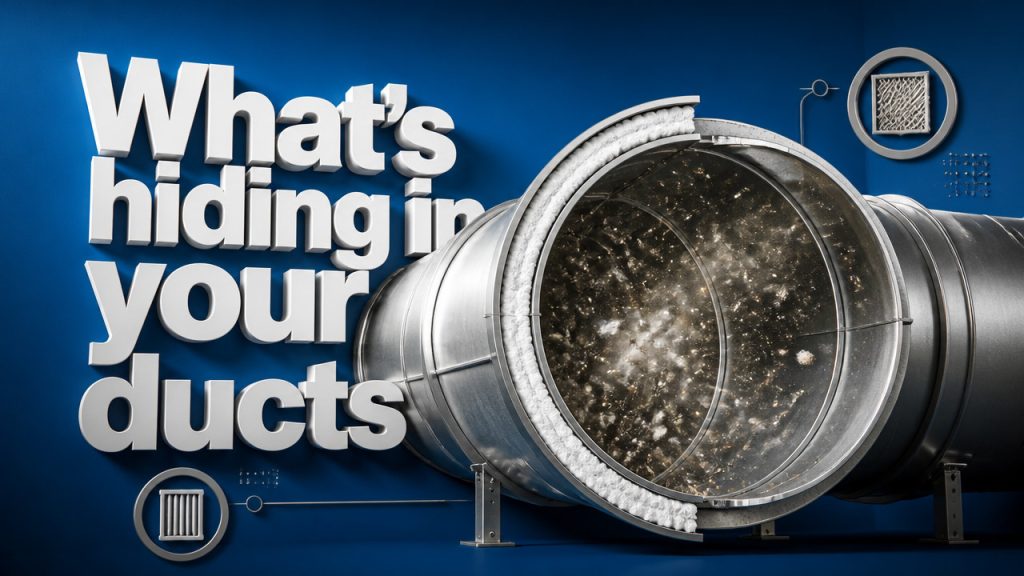
To clean central air ducts, a certified technician inspects with cameras, places the system under negative pressure, agitates debris with rotary brushes and air whips, vacuums it out through HEPA-filtered equipment, and sanitizes surfaces if needed. In Austin, where cedar pollen, limestone dust, and year-round AC runtime collide, that process matters more than most homeowners realize. Think of your ducts as your home’s lungs: if they’re clogged, everybody breathes the consequences. Here’s how to do it right in 2026, without the guesswork or sales theater.
Quick Answer: What a Proper Central Air Duct Cleaning Actually Includes
A legitimate air duct cleaning isn’t a guy with a shop vac peeking into your registers. Real HVAC duct cleaning means sealing the system, creating powerful negative pressure with a truck-mounted or portable HEPA vacuum, and mechanically agitating every inch of the ductwork to break loose dust, debris, and biological growth. Anything less is just expensive theater. For the full breakdown, check out our comprehensive guide to air duct cleaning.
- Video Camera Inspection: Technicians scope the ductwork before and after to verify contamination levels and confirm the job is actually done.
- Negative Pressure Containment: A powerful vacuum unit connects to the system, preventing dislodged debris from blowing back into your living spaces.
- Source Removal via Agitation: Rotary brushes, air whips, and compressed air nozzles physically scour duct walls to knock debris loose.
- HEPA-Filtered Extraction: All contaminants are pulled into a sealed filtration system, capturing particles down to 0.3 microns so they don’t recirculate.
- Optional Sanitizing or Coating: Antimicrobial treatments or sealants may be applied in cases of mold, pests, or heavy bacterial contamination.
Five Warning Signs Your Austin Ducts Are Overdue, Ranked by Urgency
Not every dusty register demands a full cleaning, but some red flags shouldn’t be ignored. The National Air Duct Cleaners Association (NADCA) recommends cleaning when contamination is visible, verified by testing, or causing operational issues. The EPA adds that duct cleaning may be beneficial if you see mold growth, detect a rodent or insect infestation, or notice dust or debris actually blowing out of your supply registers. Here’s how to prioritize what you’re seeing, smelling, and feeling around the house.
If you have visible mold, that’s an immediate health risk. If pests have moved in, you’ve got a contamination and still-a-health-risk situation. Everything else can be scheduled based on convenience and budget, but don’t let it slide forever. Our top signs your air ducts need cleaning goes deeper into what to look for before you book.
| Warning Sign | What It Likely Means | Urgency Level |
|---|---|---|
| Visible mold on vents or inside ducts | Moisture intrusion, potential health hazard, HVAC system contamination | Critical schedule immediately |
| Dust or debris blowing from registers | Heavy accumulation, clogged ductwork, deteriorating inner lining | High schedule within 1-2 weeks |
| Musty or stale odor when AC runs | Biological growth, rodent waste, trapped moisture in ductwork | High investigate source first |
| Signs of rodents or insects | Infested ductwork, droppings, nesting materials, urine contamination | High pest removal first, then ducts |
| Allergy flare-ups at home | Elevated particulates, pollen buildup, pet dander accumulation in ducts | Moderate schedule for quality of life |
The 7-Step Professional Method for Cleaning Central Air Ducts
There’s a right way and a “good enough” way to clean central air ducts. The NADCA standard is source removal physically extracting contaminants rather than just pushing them around or spraying chemicals and calling it a day. A reputable technician follows a predictable sequence that protects your home and actually gets the gunk out. Here’s what that looks like from start to finish. For more context on what you’re paying for, read our homeowner’s guide to effective duct cleaning.
- System Inspection and Access Planning. The technician uses video cameras to assess contamination levels, identifies access points, and determines the cleaning method best suited to your duct type and configuration.
- Containment and Home Protection. Floor guards, drop cloths, and shoe covers go down. Supply and return registers are sealed to prevent debris from escaping into your living spaces during the process.
- Negative Pressure Setup. A HEPA-filtered collection unit (truck-mounted or portable) creates powerful suction, pulling loosened debris toward the vacuum and away from your indoor air.
- Source Removal Agitation. Using rotary brushes, air whips, or compressed air nozzles, the technician mechanically agitates the interior duct walls to dislodge accumulated dust, mold, and debris.
- Vacuuming and Extraction. The HEPA vacuum pulls all dislodged contaminants out of the ductwork and into a sealed collection container, preventing recirculation.
- Coil, Blower, and Component Cleaning. Supply plenum, return plenum, evaporator coil, and blower motor are cleaned separately to ensure the full air path is free of buildup.
- Optional Sanitizing or Antimicrobial Treatment. If mold or bacterial contamination is confirmed, an EPA-registered sanitizer may be applied after cleaning to inhibit regrowth. This is situational, not automatic.
Why Central Texas Dust, Cedar Pollen, and Humidity Punish Your Ductwork
Austin homeowners face a unique cocktail of air quality challenges that make duct cleaning less of a luxury and more of a regional survival tactic. Between December and February, cedar pollen counts explode, triggering the infamous “cedar fever” that has newcomers questioning their life choices. Add in the limestone dust kicked up by nonstop construction, the 280-plus days of air conditioning runtime, and attic ductwork that sweats when humidity tops 60 percent. Your ducts are basically a contamination magnet with a Texas accent.
Central Texas homes don’t follow the same contamination patterns as houses in Phoenix or Minneapolis. We have a longer cooling season, meaning our HVAC systems circulate air almost year-round. More runtime means more particle deposition. Our enhancing indoor air quality through professional cleaning resource goes deeper on why geography matters for your ductwork.
- Cedar Pollen Blooms (December–February): Mountain cedar releases massive pollen clouds that infiltrate homes through doors, windows, and fresh air intakes, settling deep inside ductwork and circulating every cycle.
- Construction Dust and Limestone Particulates: Austin’s rapid growth means constant excavation. Fine limestone dust travels airborne for blocks, entering homes and accumulating in return ducts and filter cabinets.
- Extended AC Runtime (March–November): Central air systems operate almost constantly for 9+ months, keeping particles suspended longer and depositing more debris throughout the duct network.
- Attic Duct Sweating: When humid air meets cold duct surfaces in the summer, condensation forms inside or on flexible ductwork, creating a moisture-rich environment for mold growth at joints and seams.
Allergies, Asthma, and Newborns: What Clean Ducts Can and Can’t Fix
Let’s be clear about something: air duct cleaning reduces particulates in your HVAC system, but it doesn’t cure asthma, eliminate allergies, or replace your home’s filtration strategy. If a company promises that cleaning your ducts will solve your kid’s respiratory issues, they’re overselling. What clean ducts do accomplish is removing one significant reservoir of recirculating contaminants. That can measurably reduce the particle load your family breathes, especially in homes with just basic 1-inch fiberglass filters. For the real story, see our breakdown of the potential health benefits of having your ducts cleaned.
| Outcome | Duct Cleaning Only | Duct Cleaning + HEPA Filtration/UV |
|---|---|---|
| Reduces visible dust on surfaces | Moderately effective | Highly effective |
| Removes mold spores from ductwork | Yes, if source removal is performed | Yes, plus ongoing inhibition with UV |
| Eases allergy symptoms | May help, varies by individual | More consistent relief, plus airborne pathogen reduction |
| Prevents future biological growth | No requires moisture control | Partial UV reduces regrowth, moisture control still essential |
For families with newborns, immunocompromised members, or severe allergy sufferers, a combined approach works best. Clean the ducts to reset the baseline, upgrade to HEPA filtration or a media filter cabinet, and consider UV light HVAC disinfection for ongoing biological control. The duct cleaning alone is one piece. The filtration and UV components are how you keep the air cleaner between professional visits.
Key Takeaways: Your Duct Cleaning Decision in Under a Minute
If you’re skimming, here’s the short version: no fixed schedule dictates when to clean central air ducts. Instead, condition-based cleaning triggered by visible contamination, verified issues, or health symptoms is the industry standard. Austin’s specific environmental factors mean local homes may need service more often than national averages suggest. The right process matters more than the price on the quote, and honest companies show you the before-and-after with cameras, not fancy brochures. For the science behind it all, read about the impact of air duct cleaning on indoor air quality and health.
- There’s no set cleaning interval clean when condition, not calendar, dictates it.
- Professional duct cleaning requires HEPA vacuum extraction and mechanical agitation.
- Austin’s cedar pollen, dust, and humidity accelerate duct contamination significantly.
- Health benefits are real but modest; cleaning won’t cure allergies or asthma.
- Vet companies by NADCA standards, camera proof, and written scope not lowest price.
How to Vet a Duct Cleaner Before They Touch Your HVAC System
The duct cleaning industry has its share of characters. Some companies offer $49 whole-house cleanings that turn into $500 upsells once the technician gets their foot in the door. Others skip the agitation tools entirely and just spray a sanitizer that masks the problem. You need a company that’s NADCA-certified, offers camera proof of contamination before and after cleaning, and provides a written scope that lists exactly what’s included. Noble Air, as a local, family-owned business in Central Texas, builds our process around transparent inspections no gimmicks.
Before you let anyone near your HVAC system, ask these six questions. Their answers will tell you more than their Yelp reviews.
- Are you a NADCA member with certified technicians on staff?
- Will you provide video inspection before and after the cleaning?
- What’s included in your quoted price access holes, agitation, coil cleaning?
- Do you use HEPA-filtered collection equipment rated for duct cleaning?
- Do you apply sanitizer automatically or only when mold is verified?
- Can I get the full scope in writing before you start?
Red Flag Watch: If a technician pressures you to upgrade mid-service, claims you have “dangerous mold” without lab testing, or offers a price well below industry standards without a clear scope, pause and ask more questions. Legitimate duct cleaning takes time, equipment, and expertise. It shouldn’t be a doorbuster deal. When you’re ready to find qualified help, we’ve compiled what to look for in the best air duct cleaning companies in your neighborhood.
FAQ: Straight Answers on Cleaning Central Air Ducts
How much does professional air duct cleaning cost in Austin?
Typically $400–$800 for a standard single-family home. Pricing depends on system size, number of supply and return vents, accessibility, and whether additional services like coil cleaning or sanitizing are needed. Companies offering $49–$99 cleanings rarely perform source removal and often rely on bait-and-switch upsells. Get a written scope upfront.
How long does a thorough duct cleaning take?
Expect 3–5 hours for a full-system cleaning. This varies based on system complexity, contamination level, and whether components like the evaporator coil and blower are included. A rushed job under two hours usually means skipped steps or inadequate agitation. Ask for an estimated time window when booking.
How often should I clean my central air ducts?
No fixed schedule exists clean based on condition, not calendar. NADCA suggests inspection every 2–3 years, but cleaning only when contamination, mold, pest activity, or health symptoms justify it. For Austin homes with high dust, pets, or allergy sufferers, that may mean service every 3–5 years.
Can I clean my own air ducts with a shop vac?
No DIY methods cannot reach deep ductwork or create necessary suction. Household vacuums lack the negative pressure, agitation tools, and HEPA filtration required for effective source removal. You might clean visible register dust, but debris deeper in the system stays put. Improper access can also damage flexible ductwork.
Does duct cleaning remove mold permanently?
Yes, when combined with moisture source correction. Professional cleaning removes existing growth from duct surfaces. If the underlying moisture issue isn’t addressed like a refrigerant leak causing coil sweating or a cracked duct joint mold will return. Antimicrobial treatments can slow regrowth but don’t replace moisture control.
Should dryer vents and air ducts be cleaned together?
They’re separate services, but often worth bundling for convenience. Dryer vent cleaning addresses fire risk from lint accumulation in the exhaust run. Air duct cleaning targets indoor air quality. Both improve safety and efficiency, but they involve different tools and access points. Many companies offer package pricing.
For more specifics on what you can expect from professional service, see our page on how duct cleaning improves indoor air quality.