
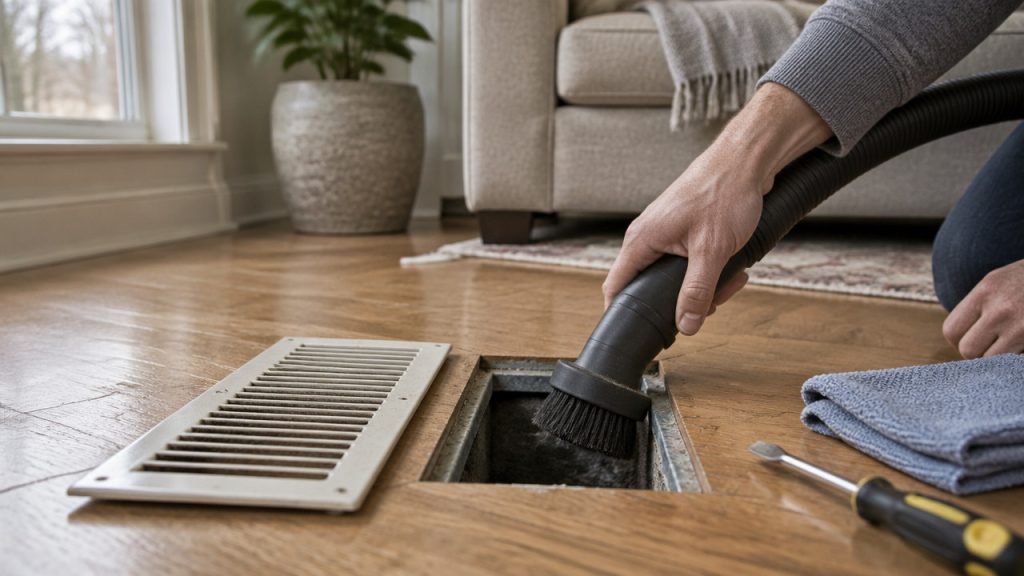
To clean air vents in your house, turn off the HVAC system, unscrew each vent cover, wash it in warm soapy water, vacuum the visible duct opening with a brush attachment, wipe the boot, and reinstall the dry cover. It takes about 20 minutes per room and removes the dust, pet dander, and pollen your system keeps recirculating. In Central Texas, where cedar season and construction dust never really leave, this simple habit is your first defense against allergies and a sneezing baby.
Quick Answer: DIY Vent Cleaning in Under 30 Minutes
- Turn off your HVAC system completely at the thermostat or breaker.
- Unscrew vent covers and place them in warm, soapy water.
- Vacuum the visible duct opening with a soft brush attachment.
- Wipe the vent boot and surrounding floor or wall area.
- Dry covers completely before screwing them back in place.
- Replace your air filter after finishing all the vents.
The 20-Minute Answer: Cleaning Vent Covers and Openings Yourself
Homeowners tackling air register cleaning for the first time often overthink it. The process is straightforward if you follow a logical order and avoid the temptation to cut corners. Surface cleaning handles the visible grime, but it stops at the duct opening what lies deeper requires a different approach.
- Turn off the HVAC system at the thermostat or breaker panel to prevent dust from blowing back.
- Unscrew each vent cover using a standard screwdriver, keeping screws in a small dish.
- Wash covers in a sink or bucket with warm water and mild dish soap.
- Vacuum the visible duct boot using a brush attachment to loosen stuck-on dust.
- Wipe the interior boot edges and surrounding wall or floor with a microfiber cloth.
- Dry the vent covers thoroughly to prevent mold growth on reinstallation.
- Reinstall covers and tighten screws snugly without cracking the register.
Analysis of 2026 residential maintenance data confirms surface cleaning captures debris from registers and immediate duct openings, but does not address deep duct buildup that accumulates over multiple years. This routine works perfectly for seasonal maintenance, yet homeowners should recognize when the problem extends beyond what a vacuum can reach. For a comprehensive guide to air duct cleaning, the scope expands to inspection ports and specialized agitation equipment.
Why Austin Vents Clog Faster Than the National Average
Central Texas presents a unique cocktail of airborne irritants that accelerate vent contamination. The combination of regional geography, climate patterns, and urban growth means Austin homeowners face challenges most of the country simply does not see. Understanding these local factors explains why your neighbor in Ohio might clean vents once a year while you find yourself at it every six months.
The relentless cooling season plays a major role. Air conditioning units in the Austin metro area run upwards of eight months out of the year, often starting in March and stretching into November. That extended runtime constantly pulls particles through the system, depositing them on vent covers and inside duct boots. The more hours your system operates, the faster those clean HVAC vents become coated.
- Cedar pollen December through February releases massive clouds that infiltrate homes.
- Limestone dust Construction sites and Hill Country roads generate fine particulate matter.
- Mold spores Humidity spikes in spring and fall encourage growth in damp duct areas.
- Pet dander Longer indoor seasons mean more shedding from dogs and cats.
- Urban pollution Traffic exhaust and industrial particles settle into intake vents.
Recognizing signs your ducts need cleaning starts with understanding these regional contributors. A dusty vent cover in Austin tells a different story than one in Seattle it is not neglect, just geography fighting back against your indoor air quality efforts.
The Short Supply List: Five Tools That Beat a Full Cleaning Closet
You do not need specialized equipment to handle basic vent cover cleaning. The hardware store aisles full of gadgets promise plenty but deliver little for this specific task. A few reliable tools from your existing arsenal accomplish the job without cluttering your utility closet.
A vacuum equipped with a HEPA filter makes a measurable difference. Research consensus shows HEPA filtration captures fine particles that standard bags recirculate back into the room. When you are trying to remove dust, the last thing you want is to spray it around in microscopic form.
| Tool | Purpose | What to Avoid |
|---|---|---|
| Phillips head screwdriver | Removing and reinstalling vent covers | Power drills that can crack plastic registers |
| Vacuum with brush attachment | Loosening and extracting dust from duct boots | Shop vacs without filters that blow dust back out |
| Microfiber cloths | Wiping grime from vent edges and surrounding surfaces | Paper towels that leave lint and fibers behind |
| Mild dish soap | Cleaning grease and buildup from kitchen vents | Harsh chemical sprays that leave residues |
| Bucket or sink | Soaking and scrubbing removable vent covers | Outdoor hoses that lack water pressure control |
That is the entire list. Anyone trying to sell you a proprietary vent cleaning brush kit for this task is solving a problem you do not have. For more involved effective duct cleaning for homeowners, the tool requirements change but for surface work, simplicity wins.
Step-by-Step: Cleaning Supply and Return Vents Without Pushing Dust Deeper
The difference between clean supply and return vents matters more than most homeowners realize. Supply vents push conditioned air into your rooms, while return vents pull air back to the system for reheating or recooling. Return grilles almost always accumulate more debris because they act as collection points for everything floating in your living space.
Before charging in, understand that the goal is removal, not redistribution. Pushing dust further into the ductwork defeats the purpose and creates problems for your evaporator coil and blower motor downstream.
- Power off Shut down the HVAC at the thermostat and flip the breaker for safety.
- Unscrew Remove the vent cover, dropping screws into a container so they do not vanish.
- Wash Submerge metal or plastic covers in soapy water; skip this for wood registers.
- Vacuum boot Use the brush attachment to gently lift dust from the visible duct opening.
- Wipe edges Run a damp microfiber cloth around the boot and adjacent wall or floor.
- Dry completely Air-dry covers on a towel or pat them dry to prevent mold-friendly moisture.
- Reinstall Screw covers back in place, taking care not to overtighten and crack the material.
- If your home has infants, schedule cleaning during nap time to avoid stirring particles while they are present.
- Wear a basic dust mask if you have respiratory sensitivities or cedar allergies.
- Check the air filter after finishing cleaning vents often reveals how badly the filter needs replacing.
This approach maintains your system between professional visits. When you need deep cleaning your air ducts, the process extends beyond what a homeowner can safely reach.
Five Vent-Cleaning Mistakes That Quietly Make Indoor Air Worse
Even with the right tools, good intentions can backfire. Common mistakes turn a simple afternoon project into a larger air quality issue, leaving homeowners wondering why their efforts did not move the needle on allergy symptoms.
- Spraying chemicals into ducts Avoid aerosol cleaners inside ductwork; they leave residues that attract more dust. Fix: stick to damp cloth wiping for accessible areas.
- Running HVAC mid-clean Turning the system on before reinstallation blows dust throughout the house. Fix: keep the breaker off until every cover is back in place.
- Skipping filter replacement A clean register on a dirty filter achieves almost nothing. Fix: change the filter immediately after finishing vent work.
- Soaking wood registers Water warps and damages wooden vent covers. Fix: wipe wood surfaces with a barely damp cloth and dry immediately.
- Ignoring dryer vents Focusing only on HVAC vents overlooks a major airflow restriction. Fix: schedule professional dryer vent cleaning if drying times have increased.
These errors compound over time. A homeowner who cleans vents properly but skips the filter change essentially recreates the same dust problem within a week. Think of the whole system covers, boots, filters, and the ductwork behind them as interconnected components that either work together or fail together.
When a Vacuum Isn’t Enough: Signs the Problem Lives Behind the Vent
Surface cleaning handles what you can see. The deeper challenges require professional intervention, and recognizing that boundary protects both your indoor air quality and your HVAC investment.
Musty odors emanating from vents signal mold growth somewhere in the system. Visible mold on registers or around boot openings confirms moisture problems that simple cleaning cannot resolve. Debris blowing out of vents when the system kicks on indicates buildup somewhere past the reach of your vacuum wand.
Rising allergy symptoms among household members often correspond to duct contamination. If your family experiences unexplained sneezing, congestion, or headaches that improve when you leave the house, the ductwork bears investigation. The same applies after home renovation projects drywall sanding dust and construction debris infiltrate duct systems in ways normal household dust does not.
| Aspect | DIY Vent Cleaning | Professional Duct Cleaning |
|---|---|---|
| Scope | Covers and visible duct openings only | Full duct run from handler to registers |
| Tools | Screwdriver, vacuum, cloths, soap | Brush systems, compressed air, HEPA vacuums |
| Duration | 20-30 minutes per room | Half-day for entire home |
| Results | Removes surface dust and grime | Extracts deep buildup and contaminants |
| Frequency | Every 3-6 months as maintenance | Every 3-5 years or after contamination events |
Professional cleaners follow NADCA guidelines for source removal, which goes beyond what any homeowner can safely accomplish with retail equipment. The investment pays off in system longevity and genuine air quality improvement. When the signs line up, reach out to Noble Air’s air duct cleaning service for a proper evaluation.
Key Takeaways: Your 2026 Vent Cleaning Schedule at a Glance
Building a maintenance rhythm keeps the work manageable. Rather than waiting until dust bunnies stage a revolt, a simple calendar approach ensures your system runs clean year after year.
- Clean vent covers every 3 months Ties the task to seasonal changes so it becomes automatic.
- Replace filters every 1-3 months More often if you have pets, allergies, or run the AC constantly.
- Schedule duct cleaning when symptoms appear Musty smells, visible mold, or debris blowing out trigger the call.
- Follow the 7-step method Power off, remove, wash, vacuum, wipe, dry, reinstall.
- Recognize your limits Surface cleaning is maintenance; deep cleaning is remediation.
- Address the whole system Vents, filters, and ducts work together or fail together.
Staying ahead of the dust means understanding your home’s specific challenges. Central Texas homes face pressures that other regions simply do not see, and Austin homeowners who adapt their schedules accordingly reap the benefits in cleaner air and fewer allergy symptoms. For more on recognizing when maintenance crosses into repair territory, review these top signs your air ducts need cleaning.
FAQ: Straight Answers on Cleaning Home Air Vents
How often should I clean the air vents in my house?
Quarterly for covers, annually for filters. Vent covers collect visible dust within three months in most Austin homes. Filters vary by thickness and household conditions check them monthly and replace at least every 90 days to maintain airflow and air quality.
Is it safe to use vinegar to clean air vent covers?
Yes, but diluted and with caution. A solution of equal parts water and white vinegar cuts through grime without harsh chemicals. Avoid full-strength vinegar on metal components, where prolonged exposure can cause discoloration over time.
Does vacuuming air vents really improve air quality?
Yes, for surface-level particulates. Removing dust from vent covers and boots stops that material from re-entering your airflow. However, vacuuming alone does not address deep duct contamination see a professional when symptoms persist.
Should I clean air vents more often with a baby in the house?
Yes, infants breathe more air per pound of body weight. Their developing respiratory systems benefit from reduced particulate exposure. Increase vent cleaning to every two months and run a high-quality air purifier in the nursery for added protection.
Can clean air vents reduce allergy symptoms?
Yes, when combined with filter changes and proper humidity control. remove dust from air vents reduces the pollen, pet dander, and mold spores circulating through your living space. The effect compounds when you address the entire HVAC system rather than isolated components.
What are the warning signs of dirty air ducts?
Visible debris, musty odors, or unexplained allergy flare-ups. If you notice dust blowing from registers, detect mold smells when the system starts, or experience congestion that clears when you leave home, your ducts likely need professional attention. Recognize the signs you need air duct cleaning in your home before minor irritation becomes a health concern.