
Our Blog

Does Air Duct Cleaning Help With Dust? an Austin Verdict

Yes, air duct cleaning helps with dust when your ductwork is the source of it. If you wipe the furniture on Monday and the film is back by Thursday, your HVAC system may be recirculating debris every time it kicks on. In Austin, cedar pollen, limestone grit, and year-round cooling make that more likely. Cleaning won’t fix every dusty room, though. Here is what it removes, what it doesn’t, and how to tell which problem you actually have.

Quick Answer: Duct Cleaning Cuts Dust Only When Ducts Are the Culprit

Yes, air duct cleaning reduces household dust, but only when your ductwork is actively holding and recirculating debris. If your home’s dust comes from leaky return ducts pulling in attic insulation or settled construction dust, a professional cleaning removes that reservoir and stops the cycle. If the dust is coming from pets, open windows, or old carpet, cleaning the vents will not solve it.

The key is diagnosing the source before you pay for the cure. Duct cleaning works wonders for specific scenarios, but it is not a magic bullet for every dusty surface. impact of air duct cleaning on indoor air quality shows measurable improvements when the system is the problem, not the furniture.

  • Visible dust streaking around supply registers and vent grilles
  • Dust returning within 2-3 days after deep cleaning
  • Recent renovations that stirred up drywall or construction debris

Why Austin Homes Collect Dust Faster Than the Textbook Says They Should

Austin has a dust problem that most HVAC guides do not account for. The standard advice assumes a “normal” environment, but Central Texas is anything but normal. We have a unique combination of climate and geography that turns ordinary dust into a relentless indoor presence.

First, there is the limestone. Our soil is alkaline and fine, and when the wind picks up during our dry spells, that grit gets into everything. It is not just dirt; it is essentially powdered rock that floats on air currents and slips through the smallest gaps in your home’s envelope. Then there is the cedar. Mountain cedar pollen is notorious in Austin, and it does not just stay outside. It coats porches, cars, and eventually your living room coffee table.

But the real culprit is how often our AC runs. In 2026, Austin homeowners are running cooling systems for nearly 10 months out of the year. That constant airflow means your HVAC is recirculating indoor air almost non-stop. If there is dust in your ducts, it is being pumped back into your living spaces every single day. how expert duct cleaning improves your home’s air quality becomes less of a luxury and more of a maintenance necessity with this kind of usage.

  • Cedar Pollen: Released in massive quantities December through February, fine enough to penetrate homes easily.
  • Limestone Grit: Fine, alkaline dust from construction sites and dry creek beds that coats surfaces quickly.
  • Drought Winds: Dry conditions in summer and fall kick up topsoil and carry it miles across the metro area.
  • Year-Round Cooling: Continuous HVAC operation circulates the same air constantly, never letting dust settle.
  • New Construction: Rapid development across Central Texas means constant airborne debris from building sites.

The Dust Duct Cleaning Won’t Fix (and the Culprits That Will)

Here is where honesty matters more than a sales pitch. Duct cleaning will not fix every dusty room. If your filter is clogged, your windows are open, or your return ducts have significant leaks pulling in attic air, cleaning the supply vents is like bailing water with a teaspoon. You might see a temporary improvement, but the source is still there.

The most common culprit Noble Air sees in Austin homes is leaky return-side ductwork. Your return ducts are under negative pressure, meaning they suck air in. If there are gaps or loose connections in your attic space, they are pulling in fiberglass, cellulose insulation, and whatever else is floating up there. That debris bypasses your filter entirely and heads straight for your blower motor and plenum. Over time, it builds up and gets blown back out through your supply registers. No amount of surface wiping will fix that. why regular duct cleaning is essential for your home often links back to diagnosing these system leaks.

Another overlooked factor is filter MERV rating. If you are using a low-quality fiberglass filter (MERV 1-4), you are catching almost nothing. Upgrading to a MERV 11-13 pleated filter captures significantly more particulate before it ever reaches the ductwork.

A 20-Minute Home Test: Are Your Vents Dusting the Living Room?

You do not need to guess. There is a simple, DIY inspection anyone can do in about 20 minutes. This test helps you determine if your ductwork is the likely source of your dust problem, or if you should be looking elsewhere. Grab a flashlight and let’s take a look at what your system is actually doing. signs that your ducts need cleaning usually starts with what you can see right at the register.

  1. Remove a supply register cover. Use a screwdriver to take off a vent cover in the dustiest room of the house. Look inside the boot (the metal box connecting the duct to the floor or ceiling). If you see thick dust buildup on the interior walls, that is duct debris, not ambient room dust.
  2. Shine a flashlight into the main trunk line. If you have an accessible plenum or return, shine a light inside. You are looking for gray, fuzzy accumulation or fine powder. That is the limestone and pollen mix typical of Austin ductwork.
  3. Check the grilles for gray fuzz. Run your finger along the edges of your vent grilles. If you find gray, fuzzy debris clinging there, it is likely constructed of fiber and dust that has been humidity-caked onto the metal.
  4. Inspect your air filter. Pull out your current filter. If it is completely clogged, airflow is restricted and dust is bypassing it. If it is brand new and clean, you might have a leak upstream letting unfiltered air skip the filter entirely.
  5. Perform the dust-rebound test. Thoroughly dust a side table near a vent. Mark the date. Check it daily. If a visible film returns within 2-3 days, your system is likely the culprit. Normal household dust takes a week or more to become noticeable again.
  6. Check the return air grill. The large return vent (usually in a hallway or living area) pulls air back to the system. If the grill has a heavy layer of dust or pet hair, you know what is being drawn into your ductwork every cycle.

What a Real Cleaning Removes Compared With a Bargain Vent-Sweep

Not all duct cleaning is created equal. You have probably seen the coupons: a whole-house special for 49 dollars. Those deals are rarely what they seem. A bargain vent-sweep typically involves removing register grilles and vacuuming the first two feet of accessible duct. It makes the vents look nice, but it leaves the majority of the debris sitting in your trunk lines. That debris will be blown back into your home within days of the system turning on.

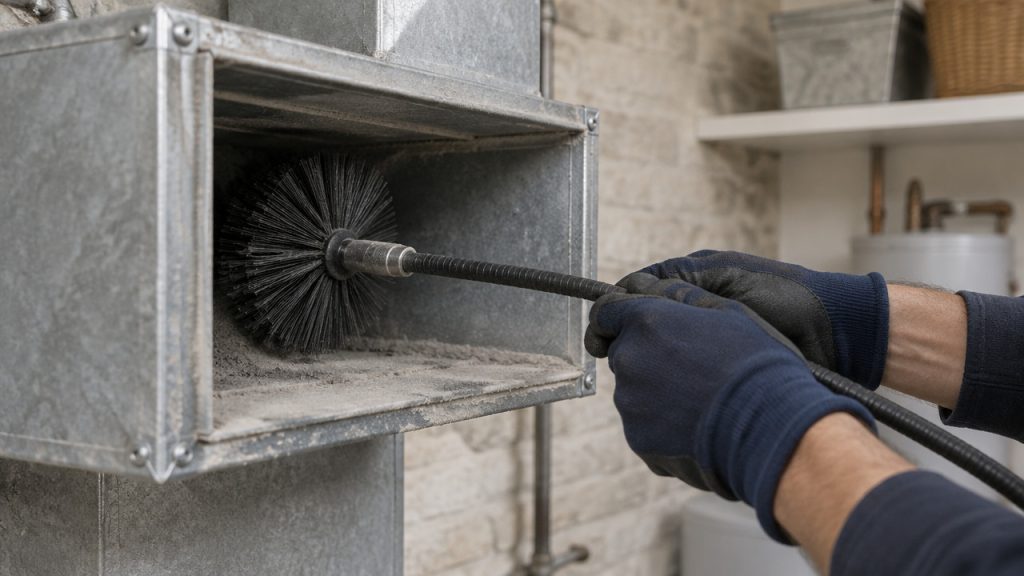
Real ductwork debris removal uses negative pressure and source removal. This involves cutting access holes into the main trunk lines, connecting a massive HEPA-filtered vacuum collection unit, and using agitation tools to dislodge debris so it can be captured. It also includes cleaning the blower motor, evaporator coil, and the interior of the air handler. comprehensive guide to air duct cleaning explains that you are not cleaning ducts; you are cleaning an entire system.

Dust Source Will Duct Cleaning Help? Better Fix
Leaky return ducts in attic Temporarily, until leak persists Duct sealing and repair
Pet dander and fur No, source is ongoing Regular grooming and HEPA vacuuming
Low MERV filter (1-4) No, particles bypass filter Upgrade to MERV 11-13 filter
Construction dust in ducts Yes, significant help Full-system source removal cleaning
Open windows and doors No, source is outdoor air Close windows during high pollen days
Carpet and upholstery fibers No, source is interior materials Steam cleaning and hard surface flooring

Keep the Dust Gone: Filters, Sealed Ducts, and UV Light After the Crew Leaves

Cleaning your ducts is step one. Keeping them clean is step two. If you go back to the same habits that filled them in the first place, you will be calling for service again in a year. A few smart adjustments after your cleaning ensures that your home stays cleaner and your system runs more efficiently. duct cleaning can help reduce energy bills by improving airflow, but only if you maintain that improvement.

One often-overlooked investment is UV HVAC disinfection. A UV light installed in the air handler kills organic growth like mold and bacteria before it can enter your ductwork. In Austin’s humid climate, that is a significant advantage. If your ducts have been remediated for mold in the past, UV lights are essential for preventing recurrence.

  • Upgrade to MERV 11-13 filters: Replace every 60-90 days. Higher MERV ratings capture finer particulate, including pollen and dust mites.
  • Schedule duct sealing: Have a professional check for leaks in return ducts, especially in the attic. Sealing these gaps stops insulation from entering the system.
  • Install UV light disinfection: Keeps the coil and blowers free of organic growth, reducing allergens pushed through the ducts.
  • Clean dryer vents annually: Dryer lint is fine and lightweight; it travels easily into HVAC returns if they are nearby.
  • Check attic insulation: Ensure insulation is not blocking return air intakes or touching leaky duct connections.

Allergy Sufferers and Nursery Households Get the Biggest Payoff From Cleaner Ducts

Not every homeowner sees the same value in duct cleaning. If you are single, have no pets, and keep the windows open year-round, you might not notice a dramatic difference. But for families with allergy sufferers, babies, or elderly relatives, the payoff is significant. Reducing the total dust load in the home reduces the concentration of allergens circulating in the air. reduce allergies and respiratory issues is often the primary reason parents schedule service.

Dust mites, pet dander, and pollen are common triggers. When these particles settle in your ductwork, they are not just sitting there; they are being stirred up every time the fan runs. Studies of indoor air quality show that duct cleaning can reduce the amount of particulate matter circulating in the home, lowering the respiratory load for sensitive individuals. It is not a medical cure, and it will not replace allergy medication, but it removes a significant reservoir of irritants.

Research from the EPA notes that duct cleaning has not been definitively proven to prevent health problems, but it does remove accumulated contaminants like mold, dust, and vermin. For families with known allergies, this reduction can improve overall comfort and reduce daily exposure.

For nursery households, the stakes are different. Infants breathe more air per pound of body weight than adults, and their respiratory systems are still developing. Lowering the dust load in the nursery means fewer irritants in their immediate environment. Pairing duct cleaning with a high-quality filter and a HEPA air purifier creates a cleaner breathing zone. noble Air often recommends this combination for new parents preparing a nursery.

Key Takeaways: The Dust Verdict in Six Lines

  • Duct cleaning helps when your ductwork holds debris; it does not fix dust from pets, carpets, or open windows.
  • Austin homes need cleaning more often due to cedar, limestone grit, and near-year-round cooling system use.
  • Leaky return ducts in attics are the #1 hidden cause of persistent dust problems in Central Texas.
  • Full-system source removal is the only effective method; quick vent wipes leave 90% of debris behind.
  • MERV 11-13 filters and sealed ducts are essential maintenance to keep ducts clean after service.
  • Allergy sufferers and families with babies see the biggest benefit from reducing total dust load.

Ready to kick the dust for good? Noble Air is a local, family-owned team specializing in comprehensive HVAC cleaning and benefits of regular residential duct cleaning for Austin homeowners. We live here too, and we understand exactly what Texas air does to a home.

FAQ: Dusty Vents, Dusty Furniture, and Duct Cleaning in Austin

How soon will I see a difference in dust after cleaning my ducts?

Most homeowners notice a measurable reduction in surface dust within 3-5 days. This assumes the ductwork was the primary source. If you notice no change after one week, the culprit is likely elsewhere: carpet, pets, leaky returns, or poor filtration. A rebound test after cleaning confirms whether the service worked.

How often should Austin homeowners clean their air ducts?

Every 3-5 years is the standard recommendation for Central Texas homes. Homes with pets, allergies, or recent renovations may need service every 2-3 years. The ongoing construction throughout Austin and the constant cooling cycle mean we accumulate debris faster than homes in milder climates.

What makes one duct cleaning quote higher than another?

Price differences usually reflect the scope of work and equipment used. A full-system clean including trunk lines, branches, blower motor, and coil takes 3-5 hours. A quick vent sweep takes under an hour. Ensure your quote specifies source removal, negative pressure vacuum, and full air handler access.

Can duct cleaning remove mold from my HVAC system?

Yes, professional duct cleaning removes settled mold spores and growth from inside the ductwork. However, it does not fix the underlying moisture issue that caused the mold. Mold remediation should be paired with duct sealing or UV light installation to prevent recurrence. Noble Air offers UV HVAC disinfection for this reason.

Is duct cleaning safe for homes with babies?

Yes, duct cleaning is safe and often recommended for nursery households. Removing dust, pollen, and dander from the ductwork reduces what circulates in the baby’s room. The process itself is isolated to the HVAC system and does not release debris into the living space when proper negative pressure equipment is used.

Why does my house get dusty again right after I clean?

Rapid dust rebound (within 2-3 days) usually signals a HVAC or return-duct issue. Normal household dust accumulates slowly over a week or more. If you are wiping surfaces daily, your system is pushing dust out faster than it can settle naturally. This is a strong indicator that your ducts hold debris or your return ducts are pulling in attic insulation. health benefits of having your home’s air ducts cleaned start with removing this constant recirculation loop.

According to the National Air Duct Cleaners Association (NADCA), the most effective way to clean air ducts is through source removal, which uses mechanical agitation and HEPA-vacuum extraction to pull contaminants from the system. Surface cleaning alone does not address the full volume of dust in the trunk lines.

CONTACT US

Get a price quote, or schedule a FREE onsite evaluation!

Criteria Full-System Source Removal Quick Vent Wipe
Vacuum Equipment HEPA-filtered, negative-pressure collection unit Shop vac or portable vacuum
Debris Access Entire trunk line and branch runs Only visible register boot
Agitation Tools Air whips, brushes, and skipper balls None or manual brushing
Air Handler Cleaning Blower wheel and coil included Not included
Result Duration Lasts 3-5 years with proper maintenance Dust returns within 1-2 weeks