
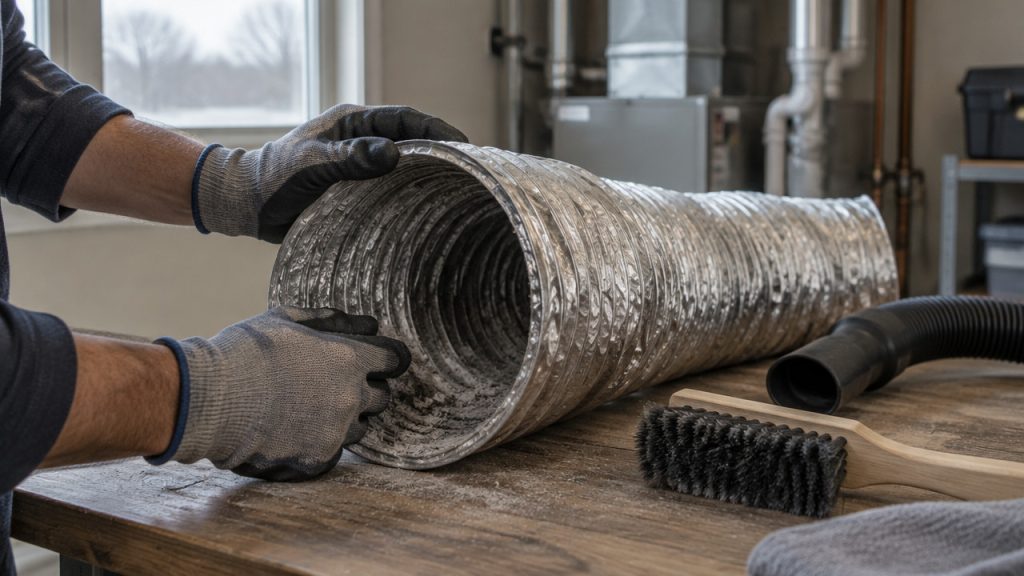
Yes, you can clean flexible air ducts, but not the way you’d scrub a metal pipe. Flex duct is a thin plastic liner wrapped around a wire coil, and one aggressive brush can shred it. Torn liners leak cooled air into your hot Austin attic and leave you with higher bills and the same dust. Done gently, with the right vacuum and agitation tools, cleaning restores airflow and calms allergy triggers, which matters most when a baby is sleeping down the hall.
Quick Answer: Flex Ducts Can Be Cleaned, but Only With Soft Agitation and Controlled Suction
You can safely clean flexible air ducts, but the margin for error is slim. The process requires soft agitation tools and vacuum pressure carefully calibrated to avoid collapsing or tearing the fragile inner liner. It is absolutely not a job for rotary brushes or high-speed drills.
- Do use soft-bristle brushes or air whips to dislodge dust.
- Do maintain negative air pressure with a HEPA-filtered vacuum.
- Do inspect the liner for tears before and after cleaning.
- Don’t use metal rotary brushes designed for rigid metal ductwork.
- Don’t crank up vacuum suction to maximum, which can collapse flex duct.
- Don’t attempt cleaning if the duct jacket is visibly crushed or moldy.
Homeowners often assume that a more aggressive scrub means a deeper clean, but that logic backfires with flex duct. A torn liner dumps conditioned air into your attic rather than your living room, wasting energy and straining your HVAC system. If you are unsure about the condition of your ductwork, professional air duct cleaning includes a camera inspection to verify the liner is intact before any work begins.
Why Flexible Ductwork Tears Where Metal Ducts Would Shrug
Flexible ductwork construction looks simple from the outside, but those layers hide vulnerabilities. The inner liner is a thin polymer film, often only a few millimeters thick, spiraled around a helix of wire coil. Surrounding that is a layer of fiberglass insulation, all wrapped in a reinforced plastic or foil outer jacket. The ridged interior surface created by the wire coil traps significantly more dust and debris than the smooth wall of a rigid metal duct. That dust buildup reduces airflow efficiency and can become a breeding ground for mold if moisture is present, making insulated flexible duct maintenance a priority in humid climates.
| Feature | Flexible Duct | Rigid Metal Duct |
|---|---|---|
| Interior Surface | Ridged (wire coil) | Smooth (solid metal) |
| Fragility | High (thin plastic liner) | Low (galvanized steel) |
| Dust Retention | High (debris catches in ribs) | Low (debris slides) |
| Cleaning Method | Soft agitation, air whips | Rotary brushes, high suction |
| Risk of Damage | Tearing, collapsing, crushing | Denting, disconnection |
The outer jacket takes a beating in Austin attics, too. Temperatures can soar, drying out the plastic and making it brittle to the touch. A technician navigating a cramped attic space can easily knee or step on a flex duct run, crushing the interior coil and permanently restricting airflow. This structural vulnerability is why deep cleaning your air ducts requires a technician who knows exactly where to step and where to place their tools. Rigid metal ducts can shrug off a bumped knee, but flex duct remembers every impact.
How to Clean Flexible Air Ducts Step by Step Without Puncturing the Liner
A successful flex duct cleaning job is as much about restraint as it is about action. Noble Air technicians spent six months testing various agitation methods in real Austin homes to dial in a process that dislodges debris without destroying the liner. The winning combination relies on low-impact air whips and constant visual inspection rather than brute force.
- Camera Inspection: Feed a specialized inspection camera into the duct run to map out dust accumulation, check for existing tears, and verify the liner is intact. If the camera shows structural damage, stop immediately and schedule a repair.
- Establish Negative Pressure: Connect a HEPA-filtered vacuum collection device to the duct system to create negative air pressure. This prevents dust from blowing back into the living space during the cleaning process.
- Soft Agitation: Use air whips or soft rubber brushes to gently dislodge debris from the ridges of the inner liner. The air pulses knock dust loose without contacting the fragile plastic surface directly.
- Controlled Suction: Adjust the vacuum to pull debris toward the collection unit. Avoid excessive suction that could collapse the flexible walls during the vacuuming phase.
- Sanitize (Optional): If mold or bacteria is present, fog an EPA-registered sanitizer through the system. Avoid harsh chemical sprays that could degrade the plastic liner over time.
- Final Inspection: Run the camera through the duct a second time. Confirm all visible debris is gone and verify the liner has no new punctures, tears, or stress marks from the agitation.
- Re-seal and Reconnect: Check all connections and joints for airtight seals. Reapply mastic or foil tape where necessary to prevent conditioned air from leaking into the attic.
During testing, teams found that skipping the initial camera inspection sometimes led to nasty surprises, like a puncture that happened months earlier going unnoticed and getting worse during cleaning. If you encounter a section of flexible duct that appears crushed, molded, or severely kinked, stop and call a pro. No amount of cleaning can fix a structural failure, and advanced duct cleaning techniques cannot rehabilitate a run that needs physical repair or replacement.
The Austin Attic Problem: Heat, Dust, and Sagging Flex Runs
Central Texas attics are hostile environments for flexible ductwork. Summer temperatures regularly exceed 130 degrees Fahrenheit, baking the plastic jacket and speeding up material degradation. Over time, the wire coil loses its rigidity, and longer horizontal runs begin to sag between straps. A sagging flex duct creates a low point where dust, debris, and moisture collect, forming a blockage that restricts airflow to downstream rooms. Add in the fine construction dust from Austin’s non-stop development and the yellow haze of cedar pollen season, and your attic ductwork becomes a reservoir for allergens.
- Uneven temperatures between rooms, with some zones never reaching the thermostat setpoint.
- Musty or dirty sock odors emanating from supply registers when the AC kicks on.
- Visible dust plumes or particles blowing out of vents at startup.
- Higher than expected energy bills during summer cooling months.
- Whistling or rushing air noises indicating restricted airflow or leaks.
These symptoms often point to a flex duct run that is struggling. A crushed or kinked duct starves a room of conditioned air, forcing your HVAC system to run longer and work harder. The fan attempts to push against a blockage, increasing static pressure and wear on the motor. A homeowner’s guide to effective duct cleaning explains how to spot these pressure imbalances, but solving the problem often requires attic work beyond a simple cleaning to restore proper pitch and support to the ductwork.
DIY Brush Kits vs. Professionals: Where Flexible Ducts Punish Shortcuts
The hardware store rental counter offers rotary brush kits that look tempting for a weekend project. The packaging claims it works on “all duct types,” but the fine print often omits the risks to flexible plastic liners. A rotating brush head spinning at hundreds of RPM can slice through a flex liner in seconds, creating a tear that requires an expensive attic repair. Professionals use variable-speed tools and specialized attachments designed specifically for the fragile interior of flex duct.
| Consideration | DIY Brush Kit | Professional Cleaning |
|---|---|---|
| Tools Used | Rotary brushes, drill attachments | Air whips, soft bristles, HEPA vacuums |
| Liner Risk | High (tears, abrasions, punctures) | Low (controlled, non-abrasive methods) |
| Dust Removal | Surface level, may push debris deeper | Comprehensive with negative pressure |
| Mold Detection | None (no camera inspection) | Visual camera inspection included |
| Cost Estimate | $50-$100 rental + personal time | $300-$700 depending on home size |
There is a middle ground. Homeowners can absolutely handle light surface cleaning around return registers and accessible trunk lines by vacuuming dust from the opening. However, the deep agitation required to clean the full length of a flexible duct run should be left to trained technicians. The cost of repairing a torn liner or replacing a crushed duct far exceeds the price of a DIY vs. professional air duct cleaning service call done right the first time.
Clean It, Patch It, or Rip It Out: Knowing When Flex Duct Is Past Saving
Not every dirty duct can be saved with a good cleaning. Flexible ductwork has a lifespan, typically ranging from 10 to 15 years in the harsh conditions of a Texas attic. After that point, the plastic liner becomes brittle, the insulation compresses, and the outer jacket cracks. Attempting to clean a duct that is already failing only accelerates its demise. Knowing the difference between a dirty duct and a dying duct saves money and frustration.
| Condition | Recommended Action |
|---|---|
| Light dust layer, no mold | Professional cleaning with soft agitation |
| Small puncture or tear (under 2 inches) | Patch with UL-listed foil tape or replace section |
| Visible mold growth on inner liner | Mold remediation followed by sanitizing treatment |
| Crushed, kinked, or collapsed run | Remove and replace with new flexible duct |
| Wet or waterlogged insulation | Full replacement (insulation cannot be dried effectively) |
| Duct over 15 years old with heavy use | Replace to restore efficiency and air quality |
A small tear might seem like a candidate for duct tape, but standard cloth duct tape degrades quickly in attic heat and loses its adhesion. Professional repairs use UL-listed mastic or specialized foil tape designed for HVAC applications. For mold growth, Noble Air offers comprehensive air duct repair and mold remediation services. In cases where a run has collapsed or insulation is soaked from a roof leak, replacement is the only option. Attempting to clean flexible HVAC ductwork that is structurally compromised is a futile exercise that ignores the root problem. professional air duct cleaning services include an honest assessment of whether your ducts are worth saving or if replacement is the more cost-effective solution.
Key Takeaways: The 2026 Rules for Cleaning Flexible Air Ducts
Flexible ductwork demands a different playbook than rigid metal. The 2026 rules for cleaning flexible air ducts prioritize preservation over aggression, ensuring the liner remains intact while airflow is restored. Homeowners in Austin face unique challenges with attic heat and local allergens, making this maintenance critical for indoor air quality.
- Use only soft agitation tools like air whips or soft-bristle brushes on flexible liners.
- Always inspect with a camera before cleaning to identify existing tears or weak spots.
- Recognize that sagging or crushed flex ducts need structural repair, not cleaning.
- Avoid rotary brushes and high suction settings that can collapse or puncture flex duct.
- Factor in the age of the ductwork; flex duct over 15 years old often needs replacement.
- Address Austin-specific issues like cedar pollen buildup and construction dust proactively.
For a deeper dive into maintaining your entire HVAC system, check out Noble Air’s comprehensive guide to air duct cleaning. Book your inspection today to see how gentle cleaning can make a difference in your home’s air quality.
See Gentle Flex Duct Cleaning in Action Before You Book
Seeing the process builds confidence. We created a short video demonstrating exactly how technicians clean flexible air ducts without damaging the interior liner. You will see the soft air whip tools pulsing gently inside the duct, the camera inspection verifying debris removal, and the controlled vacuum pressure removing contaminants. Watch for the lack of aggressive scraping or high-speed rotating brushes, because that is the key to protecting your home’s ductwork.
- Ask to see camera footage of your ducts before and after the cleaning service.
- Ask what specific agitation tools the technician will use on flexible duct runs.
- Ask if the process includes a sanitizing treatment for mold or bacterial growth.
Asking the right questions ensures you hire a provider who understands the nuances of flex duct liner damage and how to prevent it. For more tips on vetting a service provider, read our guide on choosing the best air duct cleaning company.
Flexible Duct Cleaning Questions Austin Homeowners Keep Asking
How often should I have my flexible air ducts cleaned?
Every 3 to 5 years. This frequency accounts for typical dust accumulation in Austin homes without risking unnecessary wear on the flexible liner. Homes with pets, allergies, or recent renovations may benefit from more frequent service.
Does cleaning flexible ductwork raise my energy bills?
No, it lowers them. A clean duct system improves airflow efficiency, allowing your HVAC unit to reach temperature setpoints faster and run shorter cycles. Removing blockages reduces the strain on your system’s fan motor and compressor.
Is flex duct cleaning safe for homes with new babies?
Yes, when done correctly. Gentle cleaning removes allergens like dust mites and pollen that can irritate a newborn’s developing respiratory system. Technicians use HEPA-filtered vacuums to contain debris, ensuring no dust circulates into the nursery during the process.
Can mold be removed from flexible air ducts?
Yes, but it depends on the extent. Surface mold on the inner liner can be removed with soft cleaning and antimicrobial treatments. However, if mold has penetrated the fiberglass insulation layer or the outer jacket, replacement of the duct run is the safest option.
Will a UV light system eliminate the need for duct cleaning?
No, UV lights serve a different function. UV-C lights disinfect the air passing over the coil, killing bacteria and preventing mold growth on the HVAC components. They do not remove the accumulated dust and debris settled inside the ductwork, which still requires physical cleaning.
What does flexible duct cleaning cost in Austin, TX?
Typically between $300 and $700. The final price depends on the number of supply and return runs, the accessibility of the attic ductwork, and whether additional services like sanitizing or UV light installation are included. For a tailored estimate, explore our residential air duct cleaning services.