
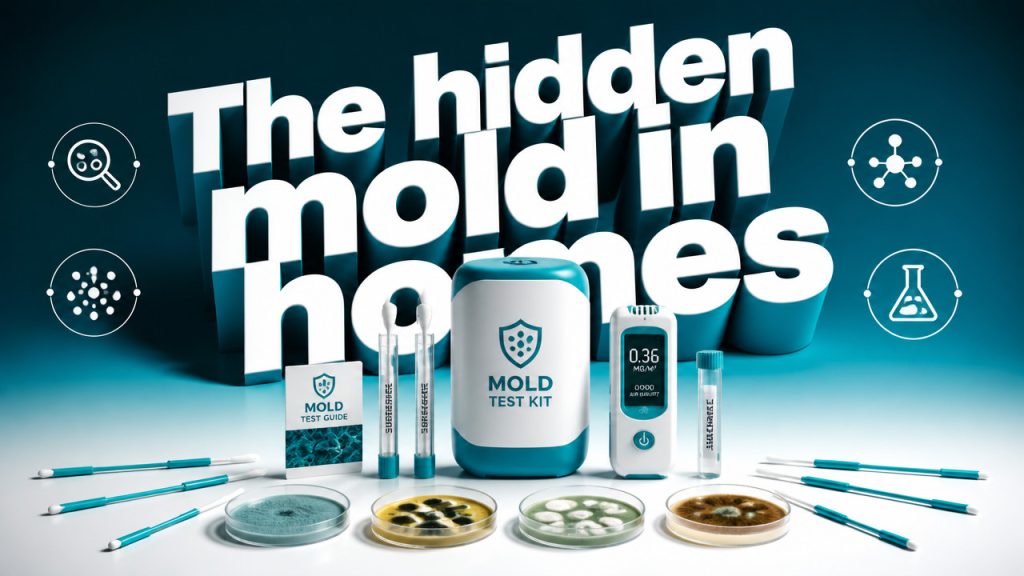
Testing your home for mold requires a strategic approach combining visual inspection, moisture detection, and air quality sampling. In Central Texas’s humid climate [2026 Data], mold can thrive in hidden spaces like air ducts, attics, and behind walls. This guide walks you through proven DIY testing methods and professional assessment techniques to identify mold before it compromises your family’s health and your home’s structural integrity.
Quick Answer: Three Essential Mold Testing Methods for Austin Homeowners
When you suspect mold in your home, time matters. Austin’s humidity creates perfect breeding conditions, especially during our long summer months. The good news? You have options ranging from free visual checks to professional-grade analysis.
Your approach depends on what you’re seeing, smelling, or feeling. Sometimes a quick look behind the refrigerator tells you everything. Other times, you need lab-verified data to understand what’s making your family sneeze. A proper indoor air quality assessment combines multiple testing methods for the most accurate picture of your home’s condition.
- Visual Inspection: Check for discoloration, water stains, and fuzzy growth on surfaces especially in bathrooms, kitchens, and around windows.
- DIY Test Kits: Petri dish collectors and air sampling devices provide basic spore identification, typically costing between $10 and $50 per kit.
- Professional Air Sampling: Certified inspectors use calibrated equipment to capture airborne spores and deliver lab-analyzed results with species identification.
Identifying High-Risk Mold Zones in Your HVAC System
Your HVAC system works as both a potential mold habitat and a distribution network. When mold colonizes inside your ductwork, every cycle sends spores throughout your living spaces. Understanding where mold hides helps you target your inspection effectively.
The most problematic areas aren’t always visible. While you might spot growth on vent covers, the real trouble often lurk deeper. Evaporator coils, with their constant moisture during operation, create ideal conditions for fungal growth. Drip pans that don’t drain properly become standing water reservoirs. Flexible ductwork can trap moisture in wrinkles and low points.
Recognizing the signs your air ducts need cleaning early prevents widespread contamination. Musty odors when your system kicks on, visible debris around vent registers, and unexplained allergy symptoms all warrant closer investigation.
signs your air ducts need cleaning
| Visible Mold Locations | Hidden Mold Locations | Risk Level |
|---|---|---|
| Vent register grilles | Evaporator coil fins | Moderate to High |
| Exterior duct insulation | Interior duct walls | High |
| Around air handler access panels | Drain pans beneath coils | High |
| Return air plenum surfaces | Flexible duct joints | Moderate |
| Filter housing edges | Behind supply diffusers | Moderate |
Sheet metal ducts tend to show mold growth more readily on insulated portions, while flexible ductwork can harbor contamination throughout its length if moisture penetrates the liner.
DIY Home Mold Test Kits: What Actually Works [2026 Analysis]
Walk into any Austin hardware store and you’ll find an array of mold test kits promising answers. The question is whether those answers have any real value. Let’s separate useful tools from money-wasting gimmicks.
Petri dish settlement plates remain the most common and affordable option. You expose the dish to air for a set time, seal it, and wait for growth. Here’s the problem: they only capture spores that happen to settle. A room with active air currents might show minimal results while harboring significant contamination. They can identify presence but not quantity or source location.
Air sampling pumps offer better data. These battery-operated devices pull a measured air volume through a collection media, giving you actual spore counts. At $30-80 per kit, they cost more but provide semi-quantitative results you can actually use.
Professional duct mold cleaning sometimes becomes necessary even after DIY testing, simply because home test kits can’t access the hidden zones where mold thrives most aggressively.
professional duct mold cleaning
- Settlement Plates: Effectiveness rating 3/10 Cheap but unreliable; only captures settling spores, not airborne concentrations.
- Air Pump Samplers: Effectiveness rating 7/10 Better accuracy with measured air volume; limited by sample location access.
- Surface Lift Tape Kits: Effectiveness rating 6/10 Good for visible growth identification; requires existing suspect areas.
- Instant Stain Kits: Effectiveness rating 5/10 Quick results but no species identification; false positives possible.
- Combined Air/Surface Kits: Effectiveness rating 8/10 Most comprehensive DIY option; higher cost but better overall picture.
The Environmental Protection Agency notes that DIY test kits have significant limitations. According to EPA guidance, sampling results depend heavily on methodology, timing, and interpretation factors that trained professionals manage more effectively.
According to the EPA, “In most cases, if visible mold growth is present, sampling is unnecessary… mold sampling is rarely useful for determining the level of cleanup needed.”
The Professional Mold Inspection Process: What to Expect
Calling in a professional mold inspector doesn’t mean surrendering control of your home. Understanding their process helps you know what you’re paying for and what questions to ask.
A thorough inspection starts with a comprehensive walkthrough. Experienced inspectors develop a sense for mold-prone environments they notice that slightly musty hallway, the discolored grout line, the paint bubbling near the window frame. This visual assessment guides the technical investigation.
Moisture mapping comes next. Using thermal imaging cameras, professionals detect temperature variations that indicate moisture behind walls and under floors without demolition. These cameras reveal what your eyes cannot see cool zones where water lurks and mold likely grows.
Professional air sampling follows strict protocols. Inspectors use calibrated spore traps to collect a measured air volume, typically running pumps for specific durations at multiple locations. They establish outdoor baseline samples for comparison, since mold exists naturally in all environments. Understanding air duct cleaning costs in Austin helps you budget for remediation if testing reveals HVAC contamination.
air duct cleaning costs in Austin
Lab analysis identifies spore types and concentrations. This matters because different mold species present different health risks. Stachybotrys chartarum so-called “black mold” releases particularly concerning mycotoxins. Aspergillus and Penicillium species cause allergic responses in sensitive individuals. Your report should detail species present, concentrations, and comparison to outdoor controls.
Reading Mold Spore Counts: Understanding Your Test Results
Getting your lab report shouldn’t feel like deciphering a foreign language. Here’s how to interpret what those numbers actually mean for your home and health.
Mold concentrations get measured in spores per cubic meter of air (spores/m³). Lab reports also reference colony-forming units (CFU), which estimate viable spore quantities capable of growing. These aren’t interchangeable spore counts include both viable and non-viable fragments, while CFUs measure growth potential.
Context determines significance. A thorough air quality guide helps you understand that indoor spore counts should generally remain below outdoor levels in similar conditions. When indoor counts exceed outdoor baselines significantly, you likely have an indoor mold source requiring attention.
comprehensive air quality guide
| Spore Level (spores/m³) | Classification | Health Implications |
|---|---|---|
| 0 – 500 | Low/Normal | Typical background levels; low concern for most individuals |
| 500 – 1,500 | Moderate | Elevated; may trigger sensitive individuals and allergy sufferers |
| 1,500 – 3,000 | High | Significant elevation; likely indoor source present |
| 3,000+ | Very High | Active growth probable; remediation recommended |
| 10,000+ | Extreme | Major contamination; immediate action required |
Specific species matter more than total counts in some cases. Even moderate levels of toxigenic molds like Stachybotrys warrant investigation, while higher counts of common Cladosporium might simply reflect seasonal outdoor conditions.
The American Industrial Hygiene Association states that “there is no established threshold for ‘safe’ or ‘unsafe’ mold spore levels,” emphasizing that interpretation requires professional judgment based on site-specific conditions.
For Austin homeowners, seasonal variations affect baseline expectations. Spring pollen season and fall cedar fever periods can influence indoor air measurements, so timing your testing appropriately matters.
Central Texas Climate Factors That Accelerate Mold Growth
Austin doesn’t just get hot we stay hot for months. That extended heat season, combined with humidity from the Gulf and afternoon thunderstorms, creates perfect mold conditions. Understanding these patterns helps you anticipate problems before they start.
Your HVAC system works overtime here. That constant operation means more condensation, more air movement, and more opportunities for moisture problems. A properly maintained system actually dehumidifies your home, but neglected systems can spread contamination throughout living spaces.
Professional residential duct cleaning techniques become essential maintenance for Austin homes, where air handlers run virtually year-round.
thorough residential duct cleaning techniques
- Spring Storm Season (April-June): Heavy rainfall events create water intrusion opportunities; foundation leaks and roof penetrations introduce moisture that fuels attic and wall cavity mold.
- Peak Heat Months (July-August): HVAC systems run continuously; condensation drain problems and temperature differentials create mold-friendly microclimates in ducts and around air handlers.
- Humid Autumn (September-October): Declining temperatures don’t reduce humidity immediately; warm walls meet cooler air creating condensation zones inside exterior walls.
- Mild Winter Temperature Swings (November-February): Intermittent heating creates condensation cycles; poorly insulated attics and crawlspaces develop moisture problems during temperature transitions.
Central Texas homes without proper humidity control routinely exceed 60% relative humidity indoors during certain seasons. That threshold matters because active mold growth accelerates above this level on organic surfaces.
When to Schedule Professional Mold Remediation vs DIY Treatment
Not every mold situation demands professional intervention. Small, contained areas think a few square feet on bathroom tile or around a window can often be addressed with proper cleaning techniques and moisture correction.
But there’s a point where DIY becomes dangerous. Surface cleaning visible growth while contamination continues unseen behind walls essentially wastes your effort. Professional remediation becomes necessary when contamination exceeds roughly 10 square feet, when HVAC systems are involved, or when vulnerable family members face health risks.
Babies, elderly residents, immunocompromised individuals, and people with respiratory conditions face elevated risks from mold exposure. Their presence in your home should lower your threshold for calling professionals rather than attempting DIY solutions.
Choosing deep cleaning for healthier living means addressing not just visible mold but the underlying conditions allowing growth in the first place.
deep cleaning for healthier living
Professional remediation follows containment protocols that DIY approaches cannot replicate. Negative air pressure prevents cross-contamination during removal. HEPA filtration captures airborne spores released during disturbance. Proper disposal prevents recontamination. These techniques matter when mold infestations are significant.
The Occupational Safety and Health Administration provides guidance on mold remediation worker protection that illustrates why extensive contamination requires trained professionals. OSHA recommends specific personal protective equipment and containment procedures for different contamination levels.
Key Takeaways: Protecting Your Family from Hidden Mold
Testing for mold isn’t about creating anxiety it’s about giving yourself actionable information. Austin homes face real moisture challenges, but knowledge lets you address problems before they become health crises.
Regular inspection habits matter more than dramatic interventions. Knowing what to look for, understanding your home’s vulnerable zones, and maintaining systems properly prevents most serious mold problems from developing.
Recognizing air duct cleaning needs early saves money and protects your family from prolonged mold exposure through your HVAC system.
recognizing air duct cleaning needs
- Test Annually: Have your HVAC system inspected for mold contamination yearly, particularly before peak cooling season when systems run hardest.
- Control Humidity: Maintain indoor relative humidity between 30-50% to discourage mold growth throughout your home.
- Address Water Damage Within 48 Hours: Mold can begin growing on damp surfaces within two days rapid response prevents establishment.
- Trust Professional Results Over DIY: When health symptoms suggest mold problems, invest in professional testing rather than relying on limited home kits.
- Monitor High-Risk Family Members: Pay attention to respiratory symptoms in babies, elderly relatives, and allergy sufferers as early warning signs.
- Act on Musty Odors: That characteristic smell indicates microbial volatile organic compounds follow your nose to the source quickly.
Noble Air understands Central Texas homes and the challenges our unique climate creates. Local expertise matters when interpreting test results and planning remediation strategies that actually work for Austin conditions.
FAQ: Home Mold Testing Questions Answered
How much does professional mold testing cost in Austin?
Pricing varies. Professional mold inspections in Central Texas typically range from $300 to $600 for comprehensive assessment including lab analysis. That investment covers equipment, technician expertise, lab fees, and detailed reporting you can act upon.
Can I test for mold myself?
Yes, but with caveats. DIY test kits provide basic presence/absence information for roughly $15-80 per kit, but they cannot match professional-grade accuracy or identify specific contamination sources. Home tests work best as preliminary screening before professional investigation.
How long do mold test results take?
Results vary. Professional lab analysis typically returns results within 3-7 business days depending on testing depth and lab workload. Rush processing sometimes reduces turnaround to 24-48 hours for additional fees in urgent situations.
Is black mold dangerous to babies?
Potentially yes. Stachybotrys chartarum produces mycotoxins linked to respiratory problems, and infants have developing immune systems less equipped to handle exposure. Any significant mold presence in homes with babies warrants immediate professional evaluation.
When is mold testing unnecessary?
When visible growth is obvious. If you can clearly see extensive mold growth covering more than 10 square feet, testing adds little value you already know remediation is needed. Focus resources on containment and removal instead of confirmation testing.
Does homeowners insurance cover mold testing?
Sometimes. Coverage depends on your policy and the mold’s cause sudden water damage from covered events often includes testing and remediation, while maintenance-related mold problems typically don’t qualify. Review your policy details carefully.
Should I test air ducts specifically for mold?
Yes for thorough assessment. HVAC ductwork can harbor and distribute mold throughout your home, and standard home test kits cannot access interior duct surfaces. Finding local air duct cleaning experts ensures proper sampling from within your system’s hidden zones.